Search This Blog

Saturday, March 29, 2014

Arya and Lady Snowblood

A few days ago George R. R. Martin released an Arya chapter from the yet-unpublished "The Winds of Winter" (the date on the Web page is wrong). He claims that he had been doodling on this particular chapter off and on for over a decade.

The chapter itself is wonderful and eerie. A strong sense of familiarity plagued me from the first word to the last. First it seems like an imagined version of life in The Globe Theatre circa 1600. The last bit was familiar in a different way, a strand of memory I could not put my finger on.

After reading it last night I rushed to ask Mr. S: "Do you know of a genre, subgenre, or sub-subgenre in Japanese manga about girl assassins?" He shook his head, "I have just heard of one such series, but I've not read it so ..."

I said never mind, as the origin of that floating strand of memory surfaced at that moment.

Lady Snowblood.

In the early days of my Internet life, I found home among figure skating fans and geeks who dug Asian movies --- no, Asian cult cinema, which included old-school Hong Kong Kung Fu movies (where my own interest lay), Japanese anime, and various action and exploitation movies, and later Korean and Southeast Asian cinema.

Apparently women occupied an interesting place in Asian cult cinema. They are often the object of "the male gaze," but are sometimes also male oppressors' worst nightmare. The line between exploitation and empowerment is pretty blurred. However, above all it is primarily about spewing blood, lots and lots of it. The movie was paid homage to in Quentin Tarantino's Kill Bill Volume 1.

Lady Snowblood was first a series of manga and later made into popular movies. The heroine is a beautiful young woman on a deadly path of revenge for her family who had been slaughtered before she was born and her mother who died in a prison after giving birth to her. Like a lot of manga series, it featured some sex scenes along with the blood spattering and a variety of clever ways of killing people. 

Shakespeare and Japanese manga are not as dissimilar as you might think. Blood revenge, sometimes of such barbarity that makes modern readers uneasy, is a frequent theme in both. The tireless mix-and-masher GRRM has done it again, even instilling a whiff of the sexual elements with death from the manga. He is walking a fine line here with the Arya storyline.

Tuesday, March 4, 2014

A Historical Day in My Life

March 4, 2014

I did crossovers! While gliding!

Since I started learning to skate a year ago, the idea of crossing one foot over the other foot and leaning the body outward has haunted me. It has always seemed unspeakably terrifying to do. I've hesitated and delayed learning forward crossovers because of mental images of stumbling and falling conjured up by my brain.

Today I did it. I crossed one foot over the other. I took the leap (figuratively speaking)! And I'm fine. No falls. No broken nose. It was not pretty, but the mental block was overcome and I can now practice and improve.

The video below shows what (good) crossovers look like:

Sunday, March 2, 2014

Richard III (Folger Shakespeare Library)


Director: Robert Richmond. Lead: Drew Cortese.

The set design was marvelous and clever. Every victim --- and there are many --- is ceremoniously shoved down a hole in the floor tinted in eerie blue light. In the center of the stage "buried" under glass floor was a skeleton, evoking the bones excavated two years ago in a car park in Leicester that have been confirmed to belong to the hunchback king.

It's a long and hard play. I cannot complain the quality of the production, except the costume design. The supporting male cast all wore black and many had on trench coats. For the first half I couldn't distinguish Buckingham from Hastings.

Cortese was nowhere close to looking grotesque (rather the opposite) and made no attempt to be so. This decision possibly led to the director's interpretation of the scene between Richard of Gloster and Queen Elizabeth, in which she kissed him despite all the hate speech. Hmm... I am not fundamentally against this interpretation but it does not quite work here. Something was off. In fact both of Richard's women-wooing scenes (the other is with Lady Anne) that nearly bookend the play are not done to my satisfaction.

I know this is cliche, but what red-blooded woman can resist the urge to imagine exactly how the evil bad man seduces and turns a woman who hates him with sheer wit and charm and lies and pure daring?

Monday, February 24, 2014

Edward Hopper Impression (Aug 2013)

Whitney Museum: E 75th + Madison

Hopper, the sense of peeking into others' lives, no more than a peek, somewhere between knowing and not knowing, distance and intimacy. Staying in the space between a glimpse and a story.

Office at Night: Physically close but psychologically far away. The relative postures between the two people evolve over sketches and vary in suggestiveness.

The subject matters he chose reveal a deep curiosity over the hidden and private thoughts of people. The framing however hints at watching without involvement. A detached observer with an urge of plunging into the mystery.

"What are you after?"
"I'm after me." Hopper confessed.

The realism adds to the sense of confusion. Other modern works declare their intention "this is my subjective feeling and perception." He deceives you into thinking you are looking at a real scene and then distorts reality with mood.

Gazing at the golden light from a window while standing outside in the darkness. The half closed window, slightly lifted curtain. A photograph on the nightstand. The misty space between your mind and mine.

Thursday, February 13, 2014

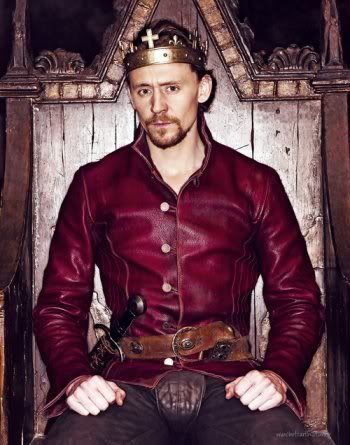
Henry V (2012)


 一边看 DVD 一边想象 Tom Hiddleston 用肯德基口音,即正宗十七世纪英语口音,表演亨利五世。啊哈哈哈太逗了。

这一版的亨利五世让我很不满意,简直不比 Olivier 那一版强。Olivier 还有战争时期鼓舞爱国主义的作用,Thea Sharrock 有什么借口?不择手段地美化亨利五世,把剧本里所有灰色不那么 flattering 的段落统统砍掉,连吊死老友 Bardolph 都给遮掩过去了,直追独裁国家里替领袖粉饰的那一套。

Hiddles 演玩乐胡闹的 Prince Hal 挺合适的,演嗜血而有城府的亨利五世就太绵羊了,太不象了。导演不遗余力的将之弄成下乡的党支书形象,好错乱。反而是结尾油嘴滑舌勾引法国公主那段很恰当。

Sunday, February 9, 2014

The Importance of Being Earnest

Two hours of nonstop jokes, puns, satire, and sharp observations about truth and sentiment. Oh man. No wonder it's Oscar Wilde's most popular play.

Monday, February 3, 2014

Philip Seymour Hoffman


I don't think it's quite real to me (yet) that he's dead and I won't get the chance to see him on stage ever again.

The only time I saw him on stage was "Death of a Salesman" a couple of years ago. My seat was really too far to see the full scale of his performance, but I did see him frown, a kind of disbelieving despair, as if the darkness that is closing in on him could not possibly be real, and yet here it is.

Nothing about PSH is beautiful, not his face, his body, or his voice. I fell in love with him the first time I saw him in Magnolia. His male nurse is maybe the only thing I remember from the film. Him and the raining frogs.

No, actually Magnolia was not the first time I saw him. It was a season 1 episode of Law and Order, in which he played a preppy little shit who raped a girl and then got acquitted. That was his first role.

In Capote, every emotion, every fleeting thought, every repressed urge was utterly transparent through a frown, a look, a gesture, a flicker of the eye, a crack in his voice. Every moment I knew exactly what the character was thinking. But in Doubt he was complete opaque and unknowable. In The Master he was both unknowable and ... omnipotent, or so he convinced me.

To me the worst of all this is that he's not going to ... No, who am I kidding? The worst part to me is that I will never get to see another movie directed by PSH or watch him lumbering around and twitching his eyebrows on stage. It's my loss. Why didn't I go see his Iago? Or a bunch of other theater performances, when I still had the chance? Perhaps because I thought I'd have loads of time ...

Once in a while, or hardly ever, you encounter a kind of terrifying and irresistible intimacy and vulnerability that is not of this world. "Nobody knows anybody. Not that well," said Gabriel Byrne in "Miller's Crossing." In life I've learned the truth of it. Yet, here's someone who gave you the most naked truth about humanity in all its blood and guts, searing with the inexplicable glory and horror. He was raw not as crisp green vegetables or even fresh red meat; he was RAW as a gaping wound that's gushing bright red blood and life. He forced you to know him and, in turn, yourself. I don't know if I really want to, but I can't look away.

We all survive on lies we tell ourselves, happy lies to feel somewhat good about ourselves and keep going. He came along and showed you the truth, which sends a chill down your spine. 

When I saw his only directorial effort, "Jack Goes Boating," in 2010, I found myself bawling uncontrollably a few hours afterward, alone in my car on the road. It was a quiet and restrained little chamber piece, packing a much-delayed punch. It had a happy ending for god's sake! His character got himself a steady job and even a lovely and warm girlfriend. But the darkness was unmistakable and unshakable. A melancholy with a smile of resignation.

That is why I cannot shake the suspicion that somehow he wanted it --- to die early, I mean --- even if not consciously. That is why I wonder, maybe, the two decades of his life he had shared with us is a fluke, a gift, and pure, undeserved luck.

(P.S. I guess I'm moving through the grieving steps because I'm finally crying now.) 

The Ending of Le Samourai (1967), Explained

A quick online search after watching Jean-Pierre Melville's Le Samourai confirmed my suspicion: The plot is very rarely understood by E...