Search This Blog

Showing posts with label TV. Show all posts

Monday, February 10, 2025

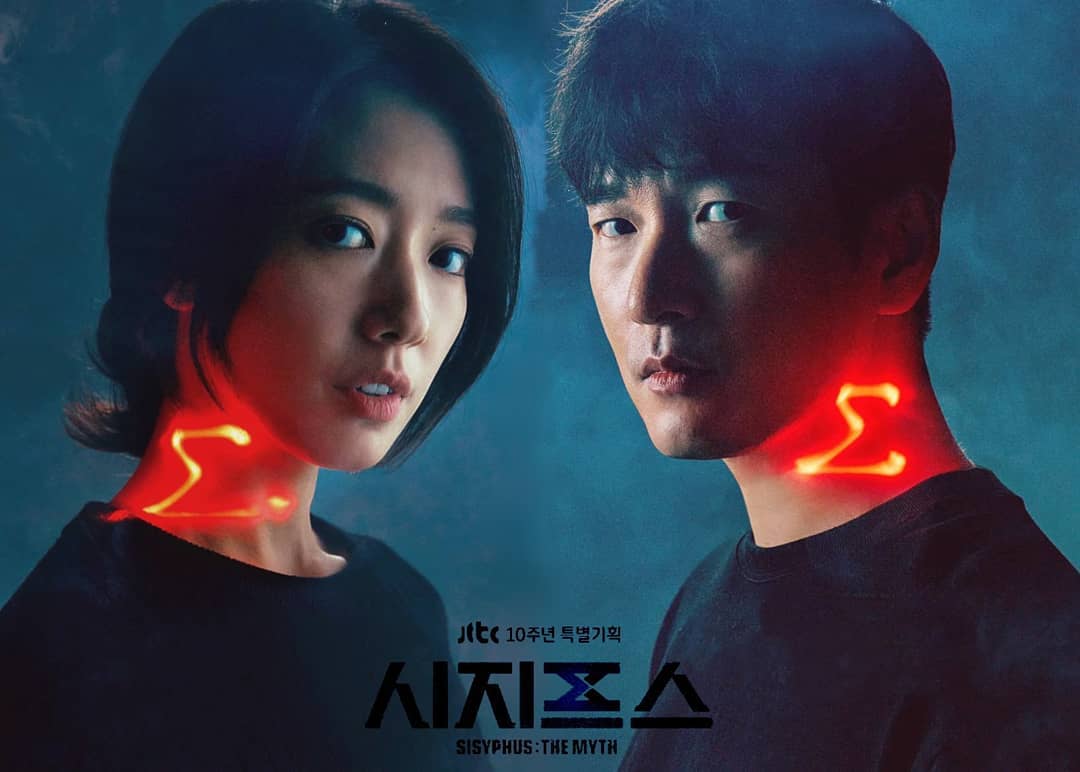
Sisyphus: The Myth (Korean, 2021), An Interpretation


"Sisyphus: The Myth" is by no means a perfect series. If we expect a fresh take on the time travel trope or a K-drama version of "The Terminator," we are destined to be disappointed. It has all the inherent problems of a 16-episode Netflix K-drama, such as mandatory romantic plot at the center (teary hugs alert!), inadequate action scenes (despite expensive sets and special effects), and casting popular actors and actresses who can't fight and have no time to train. Not to mention the impossibility of a logical solution to the time-travel paradox. It doesn't exist, as the movie "Primer" has clearly shown us. Either we make allowance for all the plot holes in the depiction of the "uploader" and "downloader" or we throw up our hands and dismiss the premise from the start. That's a lot to set aside, but if you can indeed set these issues aside, you would be rewarded with a moody story with a profound message. 

<Spoilers ahead>

By the end of the series, in the climax, the writers (the husband-and-wife team Lee Je-in and Jeon Chan-ho) reveal the true villain of the story, which is none other than the hero Han Tae-sul. I am willing to bet that the vast majority of viewers, regardless of whether they are steeped in the Eastern or Western culture, would never agree with or spontaneously realize this point. On paper, the line between the good guys and bad guys are very clear. The cause of all the mayhem and suffering is petty jealousy and insecurity of a couple of losers, aided and abetted by the selfishness of people around them. Perhaps many viewers are annoyed by the endless excuses made for every bad guy's motivation: Everyone has a sob story, childhood trauma, attachment to family, etc., etc., which adds up to the end of the world. Oh well, here we go again, just like other mushy sentimental K-dramas, always promising salvation through love and forgiveness and other trite stuff that nobody believes any more in the year of 2021. Losers are always full of excuses. It's their hatred and envy toward the winners in our society, ie, Tae-sul, that lead to all the crime and violence. In this familiar narrative, we identify with the heroic Tae-sul and the woman who loves him, Kang Seo-hae,  and goes back in time to save him, and lament his cleverness and sacrifice. Indeed, the chief villain, Sigma, has all the hallmarks of a supervillain, from the evil grin to shiny golden pajamas. We want the good guys to beat the bad guys. We want them to win win win.

And yet, the only solution to the time loop in which the nuclear disaster inevitably happens again and again, as the writers point out, is to kill Tae-sul. I wonder if everyone secretly lets out a sigh of relief at this most logical (and fairly obvious) end point. Even though the writers somewhat conceal their intention by making him likable, cute, in love with the heroine, and played by the irresistible actor Cho Seung-woo, and, most important, telling half of the story from his point of view, they also repeatedly finger him as the root of everyone's problems. Both the primary villain, Sigma, and the secondary villain, Eddy Kim, accuse him of hurting them deeply with the contempt in his eyes, which gives them the nudge down the road of death and destruction. Even if you dismiss this reasoning as the usual whiny trope of villain psychology, there is no denying that Tae-sul's invention is the root cause of everything, and killing him is the only correct answer to prevent war it will always cause. From the start, Seo-hae's missions to save the world and to save Tae-sul are incompatible, and she indeed fails, fails, fails. 

What is curious about the series is that it can be interpreted both ways. If you are a believer of social Darwinism and the virtue of winners in society, the portrait of villains as pathetic losers could fit neatly into this world view. If you enjoy stories in which villains have their reasons and sob stories and identify with Thanos and Killmonger and pat yourself on the back for seeing "both sides", there is plenty of material to validate this view, too. But I see a third approach to look at this story. It is a story about not only regret but also responsibility. 

In nearly every subplot, a character's desire for time travel (limited to backward travel) is rooted in regret. Most of the key characters, except Seo-hae, want to travel back in time in order to erase their old mistakes and problems, be it past humiliation and failures or errors and omissions. Some recognize their own assholery, such as the owner of the Chinese grocery store and the young policeman who join the border police; some want to avenge other people's assholery, like Sigma and Eddie Kim. Tae-sul's journey is his progressive self-reflection on his own assholery, which culminates in his final act of saving the world. With the ending, the writers are saying that the solution for regret is NOT time travel and the erasure of your past mistakes but rather taking responsibility and remedial action NOW. 

Throughout the series, despite the obligatory romance and action scenes, there permeates a sense of melancholy. It is perhaps the main reason that drove me to watch and finish all 16 episodes, even though I realized early on that the writers are not too concerned about plot holes and world-building. Usually I would have given up half way. Even though the premise is to change the past, the characters all demonstrate how their regrets and grief live on and on. The series would have been an interesting mood piece if it were only about regrets, but the writers elevate the theme by having Tae-sul go through the internal journey and arrive at the final act.

One might argue that haters gonna hate and losers gonna lose. Should Tae-sul be blamed for provoking envy and resentment and hatred in others less fortunate than him? Ah, but that is not the point. Tae-sul cannot control how other people feel about him, nor can he prevent others' envy, but he can and should remember Eddie Kim's birthday. That's on him. No one is blameless. Everyone's selfishness, blind spot for one's own flaws, and obliviousness toward other people collectively contribute to this world of the brutal border bureau and the ultimate destruction. 

I have been thinking about the issue of personal responsibility for a while now, especially watching "The Sopranos", in which nobody considers himself/herself a bad person. Everyone has their reason to stay in their personal hell and never leave. As long as we refuse to look ourselves in the mirror and see the asshole looking back, warts and all, we will keep pushing the boulder up the hill just to watch it roll down again. We will keep making the same mistakes over and over and blame other people for our regrets. We will not change. Hence the title. 

------

It's so ironic as to be almost hilarious to compare this series with Disney's Marvel Cinematic Universe, in which superheroes do not die, and nothing is ever at stake, and any error or failure committed by you, dear audience who imagine yourself as a superhero, can be erased through magic stones that let heroes go back in time. You will always win win win.

Thursday, August 22, 2024

The Sopranos (1): A Mechanistic Explanation of the Ending


Twenty-five years after its premier, I finally came to The Sopranos and binged all 6 seasons in a couple of weeks. I'm sure I'll rewatch it at some point. It is a rich and complex piece of art with profound observations and commentary on the American society and culture. Maybe I'll write more about its themes and throughlines, but right now I only want to examine the ending.

Tons of people have dissected and analyzed and interpreted the ending, in which the screen is cut to black just when Meadow comes through the door of the diner and Tony looks up. Is he killed by an assassin in that moment and the blackout is the abrupt end of his point of view? Is this just an arbitrary artistic device for the audience and signifies nothing? Does Tony live happily ever after with his family? (No.) A very cursory look online gives me an impression that the majority opinion is that Tony is killed there, but a sizable minority believes otherwise (such as TV critic David Bianculli). There are other interpretations, such as the one based on Schrodinger's Cat by the highly detailed site Sopranos Autopsy. Your guess is as good as mine, but below is mine. I cannot guarantee that mine is a unique view, but I am not going to do a thorough literature search to make sure that no one has said the same thing before.

I thought about it from David Chase's point of view. The series were initially not planned for 86 episodes long (with Season 6 split into 2 parts) but were renewed again and again by HBO due to its critical acclaim and popularity, until Chase decided to end it. So we can be certain that Chase definitely had thought about how to end the series for at least a year. This was not a rushed ending due to a last-minute cancelation like Deadwood. Imagine, for a moment, that you were Chase and knew that this was your magnum opus. How would you approach the ending?  

All threads in the entire Season 6 foreshadow basically 3 possible outcomes: 

1) Tony is assassinated by the Brooklyn rival gang. This would be a natural conclusion of the story arc of the season and parallel the demise of Phil Leotardo, Silvio, and Bobby. This outcome is also the most heavily implied in the diner scene and perhaps the most "logical" in terms of story-telling and logically inevitable in the universe of The Sopranos. This road has been illustrated again and again through the dozens of deaths throughout the series. No suspense there.

2) Tony is indicted by the FBI and probably convicted and jailed for the rest of his life. As the lawyer Mink tells Tony, Carlo has flipped and there is an 80-90% chance of an arrest. This outcome has been hanging over Tony for the entirety of the series. The plot devices that had got Tony out of trouble was becoming a bit too contrived. What's left of Tony's life will be more or less the same as the fate of Johnny Sacrimoni or cousin Tony B. 

3) Nothing happens to Tony. He continues to rule his mafia family and evade the feds for a few more years, and then enter retirement with his offshore money. He will most likely repeat Uncle Junior's final years. The best case scenario is a fairly peaceful end, which, in the indifferent universe of David Chase, would be in a place like Green Grove or the posh prison psych ward at best. His dominance may last another 5 or 10 years, tops. Then what? We see the "then what" in Uncle Junior's blank, unrecognizing eyes. Or perhaps his golden years would be more like Mother Livia's, full of bitterness, hatred, and despair for his children. 

All 3 likely scenarios of Tony's future have been described in other characters throughout the series. If Chase was to give us the whole thing, he would be just repeating himself yet again. There is already quite a bit of repetition in the series -- Tony B., Vito, and Christopher (among others) all had multiple opportunities to escape their gangster fates, but they chose to stay in their track to a violent death. Feuds and assassinations happen again and again. Best case scenario? Little Carmine who detaches himself from the family business and goes into the porn business. Worse case scenario? Being beaten to death with baseball bats. One of the criticisms of the series is indeed a sense of repetition, a sense of "been there, done that." The characters are stuck in the same destructive choices over and over, killing others and being killed, or ending up in jail. But that's intentional and a part of the series' theme: People rarely escape their destiny, even young ones like Meadow, Anthony Jr, and the Jasons. 

Which of the 3 outcomes occurs to Tony Soprano is not that important; they are merely variations on the theme of hell. What's important is that he is not able to quit and become a healthier and more ethical person. The path to salvation, presented as a possibility when he walked into Dr. Melfi's office in the first episode, becomes increasingly narrow in season after season, until it is permanently shut off, like Dr. Melfi's door in the penultimate episode. The moral death of Tony Soprano is basically written in block letters for the entire Season 6 and sealed long before the screen goes black. 

---------

One question remains: Does the ending have to be undefined? Why not choose one of the 3 scenarios anyway? If nothing else, the undefined ending is more artistic and provocative. The reactions since its airing on June 10, 2007, prove that Chase made the right choice. Why shoot one definitive ending when you can have all 3 live on in people's imagination?

Beyond the artistic value, I can see a case against explicitly presenting any of the 3 outcomes explicitly. Do we really want to see Tony being killed, jailed, or dying from the cruelty of old age? The certainty adds nothing. Showing him killed may seem like the hand of God (Chase) doling out punishment on Tony Soprano. Putting him in jail may turn The Sopranos into another episode of Law and Order. Watching him grow old and decrepit is just too boring. More important, Chase and the writers have demonstrated throughout the series a tendency to avoid the appearance of straightforward judgment or revenge, as nothing is worse than leaving the audience with a false sense of TV justice to sooth their anxious heart. Instead, they much prefer to use ironic twists that achieve the same effect. For example, the escalating conflicts between Tony Soprano and Richie Aprile lead us to believe Richie will be whacked before the end of Season 2 by TV conventions. It eventually does happen, but not in the way we expect. This is a trick that the series use over and over and eventually got a little old. Such plots rarely conclude at the end point of their "natural" progression, but they don't veer off too far either (it's not like Richie, Ralphie, or Christopher had a chance to survive in the Sopranos world).

If none of the 3 potential endings feel satisfactory, the natural conclusion is not to use any. In some ways this impossibility stems from the series being a little too long, exhausting all possibilities on other characters than Tony. Of course, a couple of non sequitur outcomes theoretically exist, such as Tony retiring (escaping) immediately to the Bahamas or turning witness for the feds, but they do not fit into the logic of this world. 

---------

In a media interview in 2021, David Chase admitted that he had intended for Tony to be killed, albeit in a different setting. However, it is hard to imagine how he would have designed the post-death scenes to wrap up the series. A funeral showing shattered family members and young gangsters jostling for the Don's throne? The New Jersey crew being taken over by the Brooklyn management? Title cards outlining each major character's fate in the next decade? ("Carmela moved in with Meadow who is a junior lawyer in some small firm in rural NJ. Anthony Jr. was killed in Iraq.") Ducks flying off in the sky? I have to suspect that all of these scenarios had gone through Chase's mind and been discarded. 

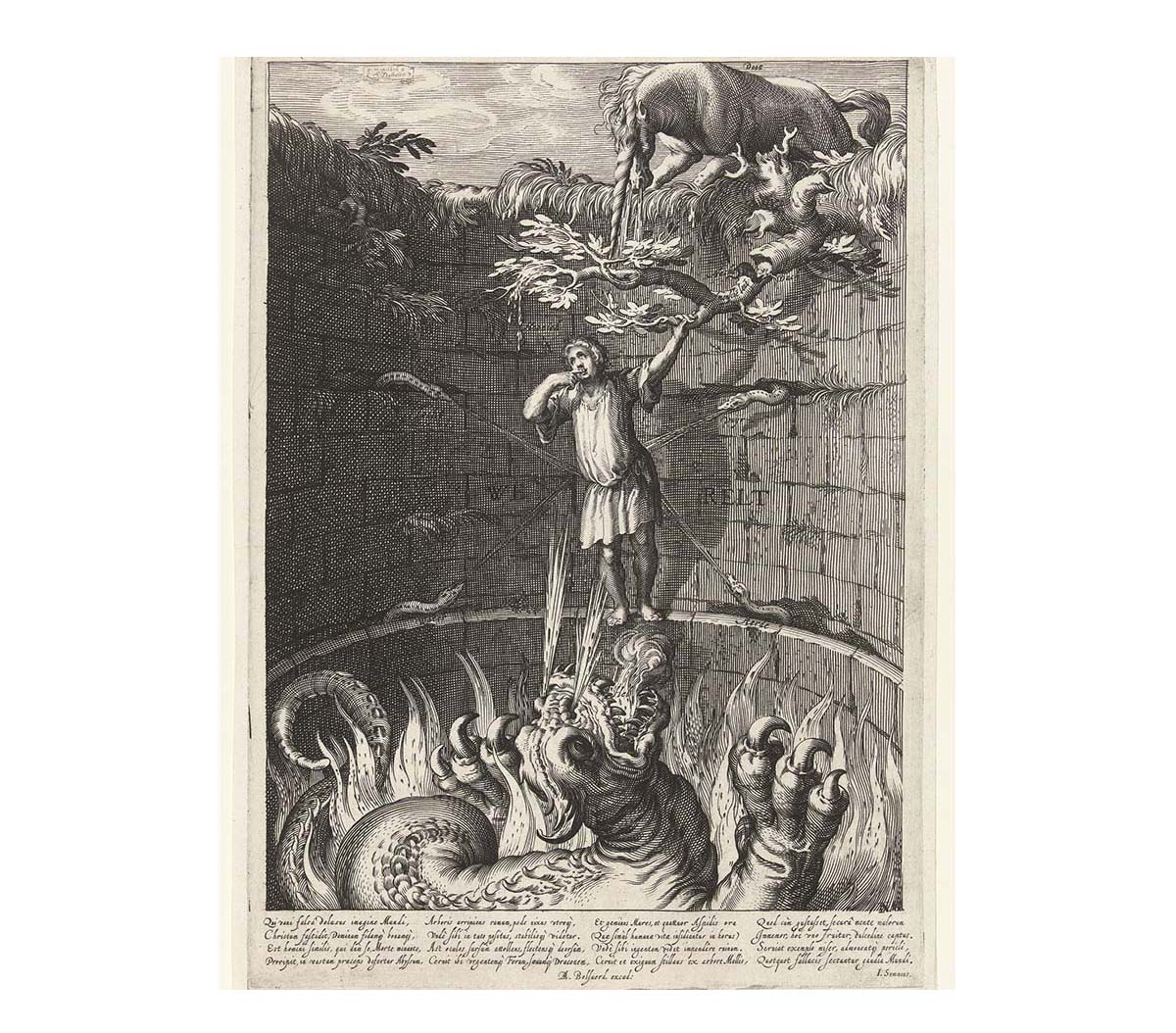
That Tony was to die sooner or later without a taste of relief from his anxiety and depression is never in doubt. He may or may not die at Holten's diner, but his days are numbered, just like all of us. The difference from Tony is that we, like the man in the Indian folk tale who is licking honey while dangling from a tree and surrounded by beasts, can still have moments of joy and love, if we so choose, before the screen cuts to black.  


Thursday, June 20, 2024

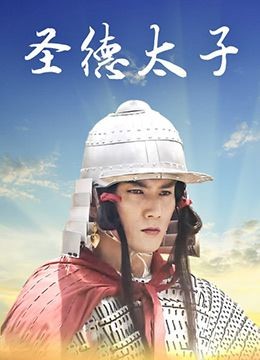
圣德太子:池端俊策的借古喻今


池端大叔的中世纪三部曲中的第一部,“圣德太子”(2001),剧情尤其缓慢,下集看到一半的地方我还在想 where is this going?然而,在最后一场戏中,圣德太子对(剧中的,非历史的)死敌苏我马子说,“我们害死了伊真。” 以及“为了赎罪,只要我活着一天,大和国就不能再打仗。” 这时再迟钝的观众也应该看得出作者的暗示和寓意——然而,根据我的经验,只有更迟钝没有最迟钝,所以也难说。

日本历史剧一般很少提及外国对本国历史进程的影响,除了黑船事件,而是习惯在几个争权的大佬之间打转。然而这三部曲中有极大篇幅强调从隋唐经由朝鲜半岛(尤其是是百济与新罗两国)传入的佛教和政治理念对于倭国/大和国的重要影响与变革的诱因,这本来就是相当罕见的写法。

“圣德太子”把虚构人物,新罗移民伊真,作为男主角的 BFF (剧本特意强调不是男主的跟班 sidekick)来刻画绝非偶然,明显是借古人之口表达作者自己的立场和寓意:入侵占领朝鲜半岛是日本历史上反复出现的目标,朝鲜人民是反复的受害者。朝鲜给日本带来了这些外来文化,得到的回报是贪婪的抢劫,侵略,殖民。例如丰臣秀吉发动的朝鲜战争,19世纪末的甲午战争,以及对朝鲜半岛的长期殖民。动机在剧中也通过苏我马子之口直说了:在内部权力斗争中胜利的贵族们需要得到赏赐与土地,然而本国的土地都赏完了怎么办?只好去朝鲜半岛抢分给群臣。苏我马子比谁都仰慕朝鲜文化,还精通百济语,侵略是一种实用主义的必要而非歧视或仇恨。所以,“好人”圣德太子与“恶人”苏我马子并非不共戴天黑白相反,而是一体两面,代表日本历史中的精神分裂,有时是追求“以和为贵”,有时则发动嗜血战争。绪形拳饰演的苏我马子从头到尾都暗示着微妙复杂的内心纠结,而把太子演得伟光正的本木雅宏在最后一幕崩溃地接受了自己的 complicity. 两个人物融合在一起承担共同的罪恶。

当然历史剧从来都不(完全)是忠实地重现历史,不论如何强调考据真实性,剧本总是人写的,真要完全还原历史观众也不爱看。但是,池端俊策把借古喻今提升到了新高度,也或者是莎士比亚历史剧的旧高度,反正就是以自己的意图为优先,以历史为背景——只不过他对于历史的态度比莎士比亚稍微更严肃一点,而自己的意图稍微更隐秘一点,倒也不多,一点点而已。历史上的圣德太子固然写下了“以和为贵”的宪法第一条,但朝廷多次想要出兵入侵新罗也是事实,只不过限于客观条件而未能成功。这些都是次要的,是素材,服务于作者的反战主题。

本剧也保持了池端剧本里一贯的特点,常有看似随意而含义深长的台词,值得细品:例如圣德太子两次说,阳光普照大地,平等地洒在每个生物之上;例如苏我马子说,最近总是想吃肉,怎么吃也不觉得饱足,甚至越吃越饿。在两部续集中也常有这种奥妙的细节。

传说中的圣德太子戴着佛一样的光环,一不小心就会写成假人。剧中保留了一些异能细节,通过有点神神叨叨的手法表现出来,但其作用并非神化主角,而是在跟苏我马子的对比中探讨佛与正义的理论 vs 现实。圣德太子面临着所有道德原则在现实中碰上的墙壁:如果佛教的原则是非杀,你头戴着佛像去杀了物部守屋(政敌)怎么算?作者把理论纯洁性的讨论推向不可避免的困境(对比迪士尼那种为了保存主角的道德纯洁性而把剧情扭成麻花的写法),并通过苏我马子的实用主义表达出来:如果佛不能马上救我/他自己,佛不就是没有法力的吗?没有法力的佛为什么要信他呢?不能给我带来利益的佛,为什么要信他呢?如果我的欲望跟佛理相悖,那就暂时把佛像收起来,等到一致的时候再拿出来不就好了?当圣德太子把刀指向他痛恨的苏我马子,杀人的冲动涌上心头的时候,作者也没有回避文艺作品中被回避一万次的质问:如果好人杀了坏人,他们之间的差别在哪里?(这不是 moral relativism,而是说这个问题值得细看与追问,而不是按照标签站队。)历史题材的文艺作品习惯于马后炮地把胜利者编派为正义者,从而制造出正义必胜的“历史规律”,偶尔会有池端这样的偏要刨根问底。

池端俊策作为还记得战争/战后的一代知识分子中为数不多的存留者,也许是最后一个反战主义的倔老头了,孤独地游离于对战争并无感性认识的 cynical 的新新人类之外,继续写着不再时髦的反战主题历史剧。但理想主义不等于脱离现实的空想:如果把三部曲里每一部拿出来单独看,全都遵循大众文艺作品的规则:男主角/好人/反战者/革新派最终战胜了死敌/坏人/好战者/反动派,正义与和平获得了胜利。然而把三部连起来看,拼出来的是一张悲观的图画。圣德太子活着时维持了和平与改革的盛世,但他死后朝廷又陷入激烈的斗争,留下的子嗣也遭到灭门。每一部的主角谁不是想要改革现状创造更美好的世界?然而同样的故事在历史中反复重演,还可以一代一代地写下去没完没了。对内也好对外也罢,战争与苦难谁也消灭不了,哪怕你是佛祖下凡也没用。

Tuesday, June 11, 2024

A Claustrophobic Succession


Approximately half way through binging the series of Succession (2018-2023), I got so bored and annoyed that I went to watch the Chinese historical soap opera series 后宫甄嬛传 ("Empresses in the Palace" [2011], viewable for free on YT with English CC). It was only after binging all 76 (!) episodes of 甄嬛传 that I could come back and finish Succession in a hurry. 


In many ways, Succession is very similar to 甄嬛传. Both are soap operas about multiple characters sniping and backstabbing each other to gain power within a toxic and confined space (the Roy family business or the Qing royal harem), groveling for the favor of that one absolute monarch (Papa le roi or the emperor nicknamed the big orange cat). Both are political and family dramas, suggesting a parallel between the world within and outside of the home. Both have at least the intention to expose the corrosive effect of power --- not only the absolute power at the top but also inside the many layers of hierarchy. Both series have dense dialogs that carry subtext and subtle messages. 

Alas, in terms of quality, Succession is vastly inferior to 甄嬛传, despite its "prestige TV" status and HBO pedigree. While neither series is intended to be realistic, 甄嬛传 at least strives for believable psychological profiles for its characters and their relationships over a period of several years. Succession, on the other hand, tries and fails, even if critics endlessly try to excuse the gaping plot holes by proclaiming it as a "character study."

As a story about ultra-rich people fighting over control of a multinational corporation, based obviously on News Corp and Disney, the corporate plot feels like nothing more than some busy handwaving that bets on the ignorance of the average TV viewer. It is true that I have zero idea what board meetings look like, but the depiction in Succession looks more like lazy fantasies than a stab at comedy or satire, much less comedy based on research. Many plot twists throughout the series hinge on the question of money, but the deeper we get into the series, the less the money talk makes sense. For example, the early episodes of Season 4 spend an inordinate amount of time over the upstart tech/media company GoJo's offering price to acquire Waystar/Royco (imagine a deal for Facebook to acquire, say, Fox News), and GoJo's boss Mattson gave an offer the shareholders could not refuse. It is obvious, at this point, that Kendall and Roman did not have enough company shares between them to stop this deal. Then the offer price is never discussed ever again, and somehow, for no clear reason, the company board went into a tie in the climactic vote in the finale. There is some vague mention of GoJo's financial problems and suggestion that the offer price is no longer so favorable, but it is never fully explained what the offer is and why some board members want to sell but others don't. 

That the series have always tightly focused on the motives of the 4 members of the Roy nuclear family (Connor and Tom are often just lurking without any real impact) can be considered by design, at least in the first 1.5 seasons. Later, however, this design becomes an excuse to blatantly use side characters as plot devices at will, ie, a sign of no more than lazy writing. For example, there is very little to foreshadow Tom's betrayal of Shiv at the end of Season 3, and zero reason for Stewy and Sandy to vote no on the GoJo deal. In comparison, 甄嬛传 juggles at least a dozen key characters, all with their own motivations and alliances consistently throughout the series (although some are killed off at various times). Most important, these characters continue to pursue their own interests rather than serve to trigger just another cheap twist. 

I consider the sporadic and unreliable money talk to be a major flaw of this show centered around rich people. Don't tell me rich people do not incessantly think and talk about money just because they have billions to throw around. It is particularly jarring that the much-praised episodes after the death of the patriarch are entirely devoid of any talk of the will and inheritance. The plot is all about control of the company, but no mention of a will? A tycoon like Logan Roy would have a will that is probably as thick as the Bible, executed by half of a law firm. All that crying and sobbing and grief after Logan's death feels particularly phony to me. Only Roman admits, much later, that he had thought about this moment (but still no mention of money). Surely, Logan had the largest amount of company shares, but there is no mention whatsoever about how they are distributed among his children and relatives. It is laughable that there is not even one line of dialog from anyone talking, much less complain, about who got more than who in Logan's will. In fact, the entire seven post-death episodes ring false. You want to show children's resentment of parents' uneven distribution of affection and attention? You want to expose the bloody war of sibling rivalry? Nothing is more raw and focal than the room where the will is read. To completely avoid the issue of Logan's will is an in-your-face omission. 

Both Succession and 甄嬛传 thrive on the large number of plot twists and reversals, conflicts and betrayals. In 甄嬛传, the twists follow dramatic conventions: setup over at least a few episodes followed by a payoff and perhaps a few repercussions. The effect is a complex web weaved in arcs that cover 10 to 20 episodes. Succession belongs to a modern breed of dramatic TV series that throw out many twists quickly to mask a transparent lack of patience, plotting, and characters' internal logic. Before Tom decided to betray Siobhan to Logan in Season 3, there was very little setup for it, as Siobhan's treatment of Tom was in fact hardly as bad as Season 2, when she was ready to send him to jail as the family scapegoat. So why would Tom take revenge at this particular time? A case can be made to explain it, but the writers choose not to. Another glaring example is the utility of Uncle Ewan, who would pop up occasionally to scold Logan's soullessness but never even a feeble attempt to use his power (supposedly a substantial share of company stocks) to influence the GoJo deal or ATN's politics, even after Logan's death.

Even in the first two seasons, the writers display a casual disregard for long-term plot arcs. Stewy and Sandy's plan to take over Waystar is concluded in the laziest possible way: Sandy's stroke terminates everyone else's ambitions. Really? Don't they already have the majority shares? Shareholder meetings and board votes are hyped up again and again, only to fizzle in again and again. If these supposedly critical events can be so easily postponed by Logan at a wave, then why are they hyped up as each season's climax? For example, the three children try to vanquish their father by snatching the Pierce network from Logan's clutch in early Season 4. Their success also leaves them with the consequence of having to pay ten billion dollars to the Pierce family, which forces them to support the GoJo acquisition, but then the need for that ten billion dollars just goes "puff", never to be mentioned again, and Kendall and Roman go right back to opposing the GoJo deal, just because Kendall desperately wants to keep ATN, which is something he showed no interest in the first season. 

The series lost all credibility with me long before Season 4, but the particular hastiness of Season 4 serves as a perfect example of why the entire series is pure fantasy. Fantasies are not inherently bad, but it would be nice if there is some indication that the writers are fully aware that they are writing fantasy, with no effort to conduct any research into the real corporate world. What's worse, the lack of realistic details render the satire of the elite class toothless. I don't mind a lack of sympathetic characters or someone to root for, but if there is clearly no context suggesting a larger world outside of the frame of the screen and no interest in the psychology and motivation of characters not named Roy, the story becomes claustrophobic. Worse, it implies a dehumanization of people outside of the central few. To my mind, Jesse Armstrong has a lot more genuine love and awe for absolute monarchy (ie, "the father figure") than the writers of 甄嬛传, making Succession less of an attack on the system and more like whining that papa does not love him. To quote Logan's assessment of his children, the writers of Succession are also "not serious people." 

If I have to watch a series with an endless stream of plot twists and amnesiac characters that form and break and reform and rebreak alliances every few episodes, I would much prefer Shonda Rhyme's Scandal. At least it doesn't pretend to be prestige TV.  


Monday, April 22, 2024

大佛开眼 (2010)


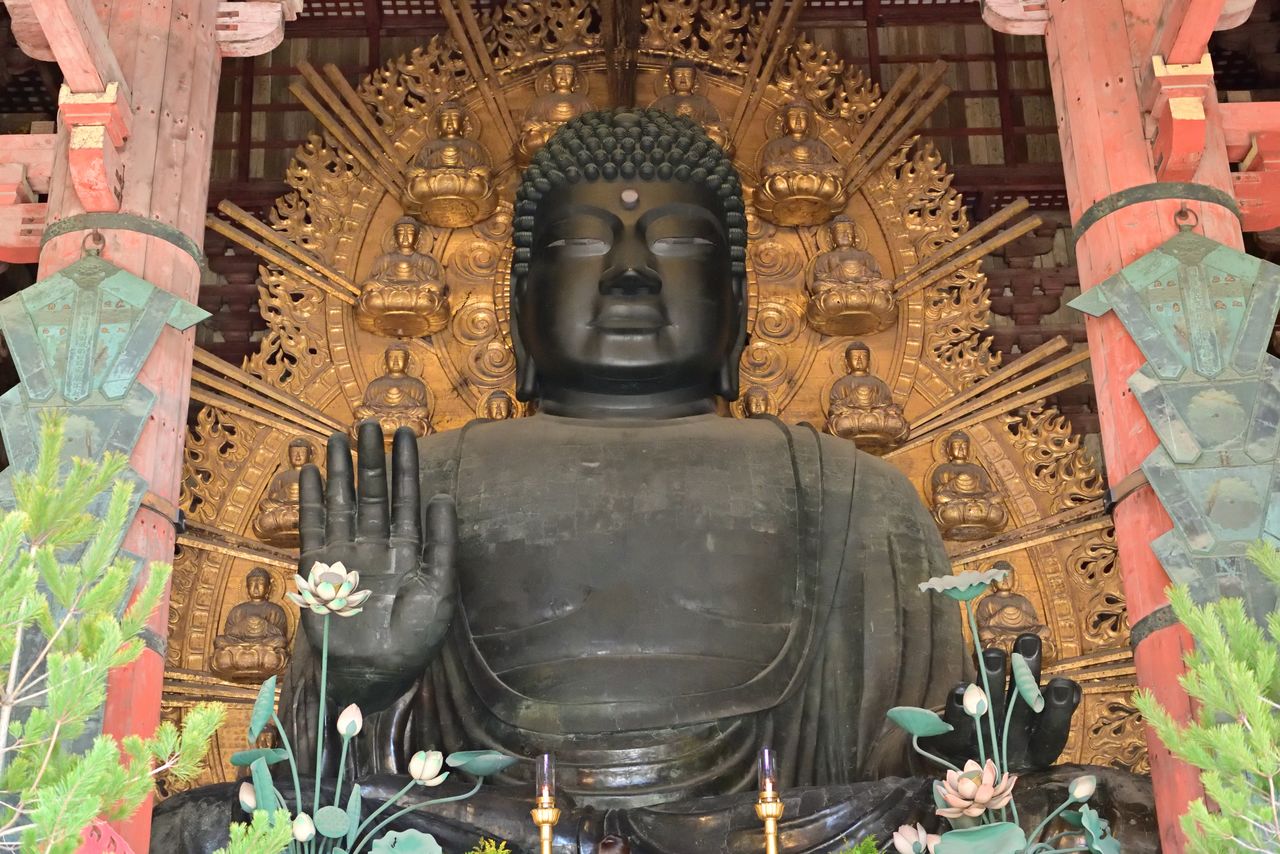
奈良东大寺卢舍那佛

毫无疑问,《大佛开眼》这部上下集共3小时的剧,是池端俊策对于《太平记》中腐烂的木神像的进一步阐述,这次借助八世纪中期的政治动荡来探讨人在历史中的奇怪行为与动机。

公元734年,在大唐留学多年的遣唐使吉备真备和僧人玄昉回到故国时,面对的是一个政局动荡,天灾人祸,民不聊生的局面。玄昉提议的救国方案是:模仿大唐造一座旷世大佛,就可以保佑人民安居乐业;而真备提供了现代 skeptic 的视角:如果把造大佛的巨量资源用在赈灾和 infrastructure 上面,能救活多少条人命啊。

随着时间的推移和形势的继续恶化,越来越多的人 ... 支持造大佛,从手无实权的圣武天皇,到手握实权的大臣藤原仲麻吕。当僧人行基刚出现时,似乎印证了真备的立场,修桥筑路,实实在在地造福百姓,百姓也对他爱戴追随,齐心协力改善自己的生活处境,为什么要把他们拉去造大佛呢?(令我意外的是,行基并非虚构的理想人物,而是确有其人其事。)然而最终连行基也支持造大佛了,因为 ... 人民需要信仰,需要心灵的安慰。

我还记得第一次去欧洲旅行,被金碧辉煌的宫殿与教堂深深震撼;第二次去欧洲就有点儿矛盾的心情:如果没造这些宫殿(王权)和教堂(神权),省下来的资源能多养活多少人?能多支持多少人不必种地做饭而是去搞工程和科技造福大众?但是如果古代没人建造这些建筑,我现在也就没地方仰望和赞叹了,让最多人民安居乐业的时代没留下痕迹,怎样让后人膜拜?后来读了一些书籍探讨宗教在文明历史中的作用,似乎得出结论,如果没有宗教对大规模人群的凝聚力,也许庞大的国家,高度分工合作,甚至一天到晚不停工作的动力,就从来不会存在。

这个结论是否正确倒也不一定,但是信仰的作用的确不假。一位身高五尺面目模糊的陌生人跑来命令你为他日夜劳作还吃不饱饭,你肯定会叫他滚蛋,但是如果他站在雄伟庄严的宫殿门前,或者高耸入云的教堂里,振臂高呼,而你被匪夷所思的壁画或金墙震撼得不知所措,跟着四周群众一起伏倒在地三呼万岁,绝不会生出抢它丫的,或者王侯将相宁有种乎,此类念头,再说还有天堂的承诺和神明的保佑呢,值!

剧中对于建造大佛过程的展现——省下战争戏的钱来拍摄大佛坯子,也很值——让我产生一个奇怪的假设:或许这种看似毫无实际回报的劳动,相对于真金白银的利己劳动(例如种田养鸡),是对于人类的驯化训练,训练个人接受甚至享受螺丝钉的角色,你不需要从鸡蛋开始养鸡直到宰杀和烹饪都一手包办,你日复一日地服从命令重复劳动,融化在集体的事业中,相信你跟成千上万的人一起搬砖造出来的大佛或 Cathedral 或皇宫,最后 somehow 会给你个人带来生命的意义和满足感,哪怕你在工程结束之前就死了,哪怕你永远也看不到自己劳动的真实结果。(参见剧集 Andor 第一季结尾,男主角永远也不会知道,他在监狱里参与生产的零件,将被放进 Death Star。)逐渐地人类就这样形成了越来越庞大而复杂的社会结构,你再也不需要从头到尾手制一件产品在眼前成型,all you need to do is believe。

剧中的真备虽然给观众提供一个现代视角,同时他也是身处其中的参与者。作者一边质疑建造大佛的代价,一边承认信仰对群众的精神凝聚力,并且暗示无人能够超脱现实与形势的席卷挟裹。大佛建成了,震撼人心,普天同庆,然而大佛并不能保佑人民风调雨顺无灾无难,也不能防止政治内斗导致战争爆发。一直洁身自好的真备,最后也不得不起兵讨伐藤原仲麻吕,且向大佛诚心祈祷战胜,并且在一条小船上茫然驶向未知的远方。

神像也许只是木块雕刻而成,一些年后腐烂成面目全非的木片儿,但是人们虔诚的膜拜的感情都是真的,而且他们为信仰而劳动制造出来的成果也是真的,看得见摸得着,就象这镀金铜制的大佛。池端俊策的高明之处在于他并不给观众标准答案,就算是貌似反派人物的藤原仲麻吕和玄昉也表达了真实而普遍的人性,没什么可鄙视的,谁还不是一样。上集开头,大臣问刚返国的真备,大唐制度是否非常先进,我们是不是应该照抄就好了?真备答道,大唐制度好不好先等等再说,我们应该先观察一下现状到底是啥。这似乎也是池端写剧本的原则:睁眼观察历史和人性的真实面目,至于批判什么赞美什么倒没那么重要。

我又联想到 Jared Diamond 在 "Collapse" 这本书里描述的,复活节岛上的社会之崩溃。岛民也曾过上好日子,食物丰盛,劳力剩余,部落首领们为了加强自己的权威和号召力,命令属下人民采伐树木,修建庙宇,为自己雕刻越来越大的石像。一些年后,树被砍光,农业崩溃,大家不是饿死就是坐船逃难,岛上只剩下面向大海的石像,既不能吃也不能带走。

----

后注:恰巧看到油管上的古埃及专家说了一句话: We absolutely have the technology to recreate the pyramids. It's a social choice that we don't build pyramids any more. 

也许人类不是全无进步的。Eric Cline 喜欢开玩笑说,一些年后考古学家挖出我们的时代的遗迹,结论大概是我们都崇拜绿色的长发人鱼图腾 (Starbucks)。

Saturday, April 13, 2024

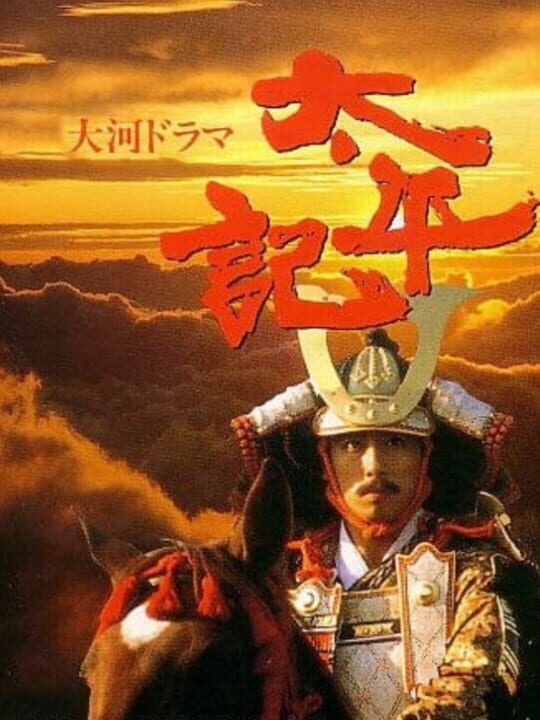
太平记 (大河剧1991)


这部池端俊策主笔(虽然有几集是仲仓重郎写的)的大河剧的中心问题在于:第一集童年足利高氏在佛龛里找到的朽烂的神像象征了什么?

显然,这不是一个批判或质疑宗教的故事,虽然主角足利尊氏偶尔描绘佛像。

从一个相对简单的问题入手:此剧美化了足利尊氏吗?虽然我对日本历史的知识都是从维基上学来的,但也能看出,肯定美化了啊!足利尊氏的名声就是大反贼,一生反来反去,在名义上的主公(们)之间跳来跳去,换山头比换袜子还迅速。然而剧中不厌其烦地细细描述他每一次的重大背叛都是形势所迫逼不得已,让人难免有点怀疑其真实性。

对比三谷幸喜所作的大河剧《镰仓殿的十三人》(2022),其中主角北条义时也是从纯朴的少年形象出场,同样是喊着 “开创新时代” 的口号,后面变成一个阴险狠辣的霸主,就比《太平记》要更加 cynical ,对各人动机的揣测比较不留情面。一般来说我对于历史大人物的态度是比较接近三谷的,也就是 “别跟我说什么心地善良的黑手党,心地善良的人当不了黑手党” 的原则。然而太平记给我留下的印象完全翻转了我一贯的态度,即使明知终生胸怀创造太平盛世的理想的男主角跟现实中的足利尊氏相距甚远(那简直是一定的),也拦不住我被池端大叔的剧本和真田广之以及剧组各位演员的表演深深感动。 It doesn't have to be realistic to convey a certain truth. 这也算是意外的收获吧。

仅看尊氏的生平记录,习惯了二极管两党制的现代人多半会被搅晕。从幕府下第一臣子,到尊王倒幕的关键人物;从后醍醐天皇面前的大红人,到把后醍醐天皇流放孤岛的朝敌;搞出了南北朝分裂之后还从北朝倒向南朝又跟南朝翻脸互殴 ... 让我不得不重温前阵子琢磨了半天的思路: ideology 的虚幻性。别以为14世纪的室町幕府时代没有 ideology,当时的各武士栋梁们可没少辩论大义呢!到底追随哪位领袖才算是大义?是忠于天皇还是幕府?跟天皇打仗算不算下克上?因为日本历史上缺乏乌央乌央的大批御用文人和史官们替当权者拼命洗地,用头头是道天花乱坠的说法蒙倒众人,但又捉襟见肘地想要模仿左邻的儒家理论为己所用,反而帮助我们认识到一切 “忠义” 体系的荒谬性和虚伪性。

池端大叔提出的问题看似老生常谈:是英雄造时势还是时势造英雄?他用令人信服的叙事给出了答案:任何一方的领袖都可能被周围的人群和浪潮挟裹,即使自以为正在带领同志们开拓新政建立新时代,其实不知不觉已经不知道自己在干什么(虽然绝大多数领袖不会象剧中主角那样具有自省能力,而是终生以为自己掌控了方向)。也有例外,如执拗坚定地反时代潮流的后醍醐天皇,屡战屡败而屡败屡战坚决不肯认输,第一次读他的维基条目已经被惊到了——当时镰仓幕府已经建立百年,天皇的地位越来越弱,但他绝不放弃做中式皇帝的梦想!但是大多数领袖,如尊氏和弟弟直义,经常很难分清他们的选择是来自个人的强烈意志还是周遭的推波助澜。当时制度下,战争极度依赖各武家出兵结盟,每家都在打自己的小算盘,多角 alliance 极不稳定,说不定谁就带兵倒戈了。如果你诟病尊氏叛变得快,那是因为你没去注意佐佐木道誉代表的大多数武家。这样复杂而多变的忠诚 (or the lack of) 定义一直持续到关原之战,甚至在幕末亦成疑问。

虽然日本历史上的这种武力割据导致的状态跟其它国家有很大差异,但是如果我们放弃以国家为边界的历史观,观察区域性的演变或结构复杂的帝国,充满背叛和不稳定的多角关系普遍且真实,常见的二分对立才是陈腔滥调。对我来说,最近几个月恶补大河剧与相关历史,更加证实了历史的混乱性和偶然性,掺入了道德的历史规律(“得道多助失道寡助”)基本上可以丢弃不理了,而且领袖的个人意志的作用也远远比我们想象得要低。

放弃了道德体系和个人英雄主义的历史观之后,池端大叔就有充分的自由和空间表达他的终极关注: humanism. 在他的画布上就完全不需要好人vs坏人的角色,进步vs落后的设定,每一个重要角色都浸透了人性,值得理解与同情,只要观众能放下自己对于定义或坐标的执念,都可以被打动甚至叹息流泪,我们对于正确vs错误的执念也就自动融化消失了。非常重要的是,他也完全不需要流行的武士道忠君义理来激发观众的情绪(虽然这段历史里处处有陷阱)。不管是北条高时身上透出的绝望感,还是足利直义最后的执拗,都是以独立的个人呈现出来,邀请观众去共情人物的独特处境和动机,说不定能稍微增加一点慈悲的能力。No shortcuts,每一个都是扎实地写出来,完全没有陈腔滥调或迎合大众(这一点三谷幸喜在《真田丸》里就没做到,多半是因为真田幸村代表的 “忠义” 符号太深入文化太难颠覆了)。

这不是说作者没有自己的立场和好恶。可以说不论大小没有丑化任何一个角色,但是明显他对于某些人物寄托了更多自己的情感与投射。其中之最显然是楠木正成,我以为藤夜叉也是作者的化身(可惜对于17岁的宫泽理惠来说超纲了, not her fault)。这两个角色是教科书式的怎样写正面人物,怎样倾注真情而避免陷于滥情或煽情。楠木正成在明治之后被用作忠君保皇大英雄来宣传,如果一不小心就会落入窠臼甚至令人作呕,但此剧中弱化了他的“忠义”,而重点描述一种朴素的反战态度,细想简直是打了官方说法一记耳光的感觉。在这部 historic fiction 里,是否忠于史实让位于作者想要表达的情感与理念:楠木说跟着妹妹的猿乐团周游四方表演为生的日子才是人生里最幸福的时刻,对儿子说不要战死沙场而是回家播种谷物驱散乌鸦,什么时候才能让百姓都过上这样和平安稳的生活呢?没有人知道。

对于主角、配角、乃至反派人物,池端比三谷温柔一百倍,但是,我不认为这样的刻画是一些评论中所说的洗白或者美化!剧中的尊氏也许跟真实的尊氏差别巨大,但是通过这个人物的挣扎和矛盾来表达作者对于理想的探讨和辩论完全没问题:以太平盛世为目(口)标(号)的战争能不能给人民带来太平盛世?That's a serious question. 结合最近我在考虑的一个问题:人类历史的进步(更多的人过上好日子)是一个自然现象/偶然结果,还是有方向有目标的努力导致?还是,甚至, the road to hell is paved with good intentions? 

所以,这就是我对于开头的问题的答案:木刻神像腐烂成小木片所象征的意义,就是理想。

池端俊策也许比三谷幸喜更温柔悲悯,更多人文主义,更少 cynicism,但是他并不更乐观。

----

象征不限于一种解读,腐烂的小木片让我联想到那段著名的对白, What is power? It's a shadow on the wall. 池端在剧集里并没有详细地阐述,但那些站队倒来倒去的诸位武家家主,是因为什么原因而选择跟随这边还是那边?我们知道很多家族的 loyalty 是建立在地域上的远近,彼此联姻的历史,个人层面的交情,当时的形势,以及,当然,利益所在。这方面的复杂性,在《真田丸》里也是一条主线,而每一次关原之战被重拍都会拉出小早川秀秋鞭尸一通,我们都知道日本历史上的叛徒实在数不胜数。值得细看的是,为什么武家选择站队与追随,而跳出来自扮天下人的诸侯很少呢?后醍醐天皇有个人魅力来说服楠木正成与新田贞义为他去打仗送死(虽然他的政策削减武家权力),足利尊氏也是一呼百应号召力无比,弟弟直义在占尽上风的情况下都不敢直接废除他的征夷大将军名号。为什么呢?他们不是肉身凡人吗?却被其它人当成木制神像来膜拜和跟随。这个问题牵涉到为什么日本历史一千多年,天皇制度长立不倒;也让我联想到很多年前我问别人, Dick Cheney 权倾朝野,为什么自己不去当总统?得到的答案是 he lacked electability. 所以这 elusive electability 是什么东西?佛龛里腐烂的小木片。

Monday, January 29, 2024

The 13 Lords of the Shogun


Episode 15 of the 2022 NHK taiga serials, The 13 Lords of Shogun, is quite possibly as shocking and riveting as The Red Wedding in A Song of Ice and Fire. I have often wondered about the unique political structure of historical Japan, and the complex relationship between the superiors and subordinates, such as those between the Emperor and Shogun and between the Shogun and his chief counselor. It is unlike the political system in China, in which the surest path to the height of power is to the Emperor's throne, with an entire apparatus supporting him, or the European system, in which kings must contend with both the Pope in Rome and the feudal lords. 

It is absolutely fascinating how, throughout history, people struggle for power. While in each period and circumstance, the political and cultural structures may differ vastly, the insatiable desire for power and the necessity of using other people for one's own purpose are always the same. Blood must be spilled, and money must be spent; alliances must be made and broken; friends and families must be formed and betrayed. How does one man drive others to obey his orders and do his bidding? By any means necessary. But one person's will is always insufficient, and there has to be something in it for everyone, even if that something is quite intangible and perhaps deceptive. Even if only one man's name remains on top of a page in the history book, there were many people who used each other to get to where they were. 

Written by the highly regarded Koki Mitani, the series are surprisingly clear-eyed and uncompromising (the occasional humor notwithstanding). It is not interested in making heroic myths or taking the side of whoever's point of view it's narrating from. There are no good guys or bad guys, only political and military expediency in a particular place and time. The characters do not have a hint of historical hindsight to allow them the luxury of posturing or moralizing their choices. 

It is often claimed that the Japanese society was (and perhaps still is) rigidly hierarchical and people were somehow naturally loyal or obedient. Such simplistic theories can never withstand a closer look. There is a saying in Chinese that can be roughly translated as "Rules are dead but people are alive," which means that people both rely on rules/hierarchy and violate them all the time, depending on the circumstances. Theories and reality, words and behaviors, are never exactly the same. 

Thursday, December 8, 2022

Andor and THX1138

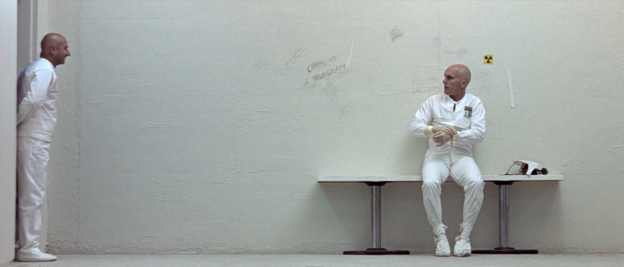
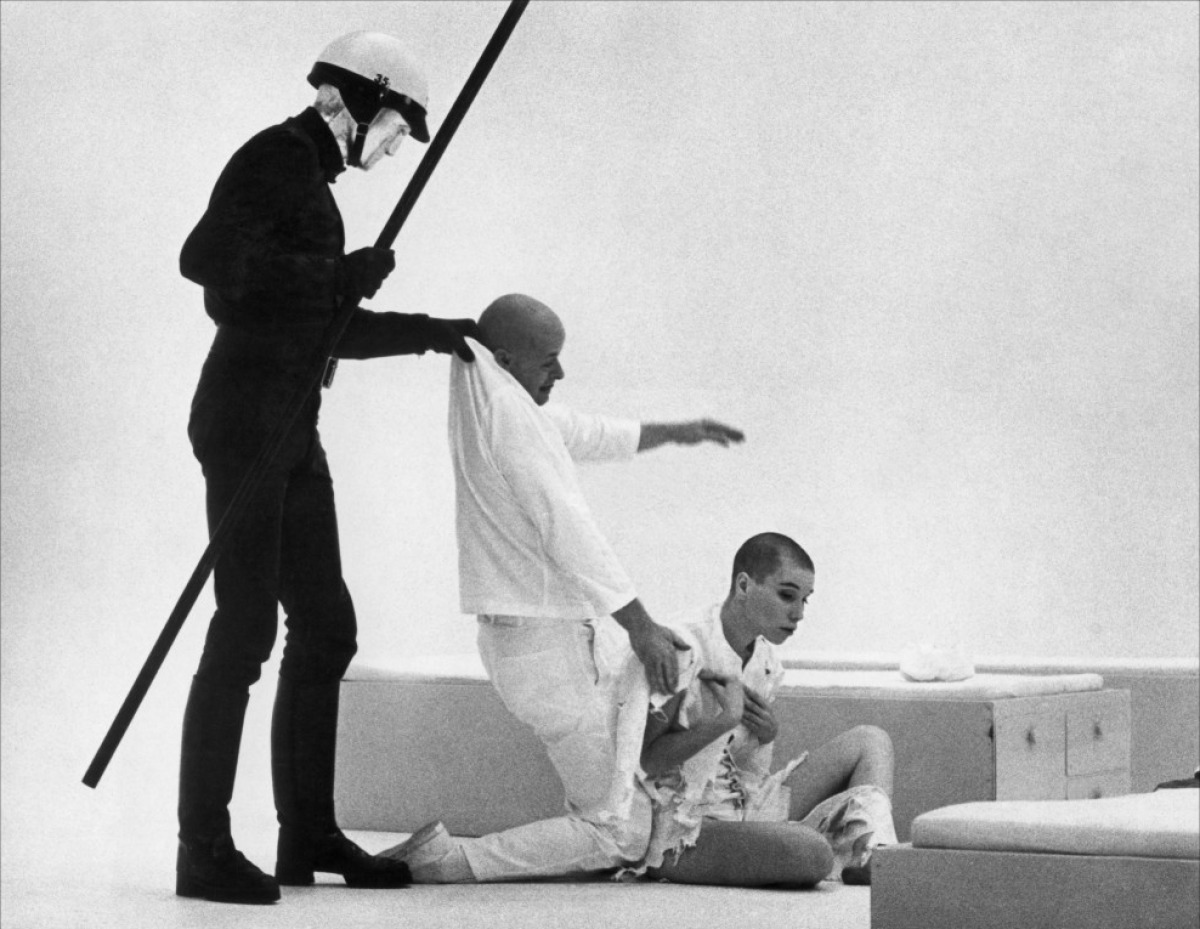
When I watched the prison break episodes in "Andor", I felt there was something familiar about the set design but couldn't put my finger on it. Eventually, the buried memory surfaced. The all-white prison interior is almost certainly a conscious reference to THX1138, which was George Lucas' first feature film, released in 1971, before "American Graffiti" won him wide critical acclaim. Actually he made a short film THX1138 at USC and later expanded it to feature length, casting Robert Duvall in the lead role. 

Of course, THX1138 was hardly the first dystopian science fiction movie, and the influence of 1984, Brave New World, and the Cold War was unmistakable. Super original it was not. Nevertheless, the aesthetics was quite stunning.


Compare this visual style with the set of prison in Andor. 


The orange stripes are the only visual relief from the oppressive whiteness in this world. After all, this is a Disney series, not an experimental art film. 

The question of whether Tony Gilroy talked to Lucas before making Andor remains unanswered. It tickles me to death what the latter thinks of Andor, although I doubt he would comment publicly.  

Coincidentally (not!), THX1138 is, at least metaphorically, also a prison break movie. L.O.L.

Saturday, December 3, 2022

Andor and the Contradictions of Star Wars


The showrunner Tony Gilroy said he was not a fan of the Star Wars series. However, as one of the best script doctors in Hollywood, he got roped into fixing up "Rogue One" and subsequently was given the (I'm sure a lot of) money to do the spinoff series "Andor" for Disney's streaming business. 

Nevertheless, the relatively dark and menacing "Andor" series caused me to revisit the contradictions in the heart of George Lucas' original Star Wars series. Critics have commented that "Andor" is tonally different from the SW franchise and more "adult" in its depiction of war, police state, oppression, the prison-industrial complex, and revolution.  

For example, the torture scene is quite disturbing in "Andor", even though it is much less graphic than the scene in "The Last Jedi," but we should not forget that there was also one in A New Hope, in which Princess Leia was tortured by Darth Vader (who turned out to be her father, think about that symbolism for a moment) with no apparent effect afterward. (Yes, when they want to show an entity is evil and to induce sympathy and outrage, the go-to device is that they torture and rape/kill women. Everyone knows the trick.)

Another example of parallel plot is how a reluctant central character makes the decision to join the rebellion. Does anyone still remember the turning point of Luke Skywalker? The imperial troopers killed Uncle Owen and Aunt Beru. Similarly, it was only when his mother Maarva had died that Andor decided to stop running from his destiny. His father had been executed by the Empire years ago. Of course Maarva was not directly killed by the empire, but it was close enough. 

So my argument is that Gilroy was really trying to hew pretty close to the original SW, which is pretty dark and sinister if you look closely. And yet, the series also "disneyfied" itself from the start, making it palatable to the American mass audience. It was Lucas' conscious decision to make the deaths completely bloodless, when SW was financed by 20th Century Fox. Hell, the dead characters even come back as smiling, approving ghosts (a device cleverly echoed but not exactly endorsed in "Andor" with the holographic recording of Maarva).

This manipulation cannot be blamed on Disney's production of episodes 7 to 9, unless we consider the decades-long effect Disney had had on the American popular culture since it started to convert dark and vicious folktales into cute cartoons. I was struck, in "Attack of the Clones", how indifferent and meaningless the action scenes were, because the killing was enacted upon thousands and thousands of fleshless droids. There is no feeling, no stake, and nobody cares. But it was intentional to protect the audience from seeing any blood and real death.  

We should also consider the contradiction at the heart of SW. What is the empire an allegory for? Commentators and the public assume that the empire refers to the British Empire and the rebellion the American revolution --- All the imperial characters spoke with an English accent while the heroes spoke with an American accent, and that's no accident. Sometimes Lucas tacitly approved of this interpretation, but occasionally he said openly that ROTJ is an allegory of the Vietnam war, implying that the empire is the American one. Nevertheless, he took care not to be too loud about it. 

I gotta hand it to his sophisticated manipulation. George Lucas is the best case of "having his cake and eat it" that I have ever seen. This is how you do it, baby! We do not need to worry that the audience may recognize themselves in the evil empire (and some actually do so). Contrary to the logical awareness "Are we the baddies?", the human instinct shields people from such uncomfortable reflections, and everyone believes he is one of the good guys. Besides, Ronald Reagan told everyone who the evil empire was --- those guys over there! 

Sunday, November 13, 2022

The Princess and the Queen


After finishing the first season of HBO's House of the Dragon, I hastily read the novella on which the series is based, "The Princess and the Queen", published in 2013. The novella is not that interesting, as this fake-history format barely provides any room for character development. The reader has zero opportunity to bond or identify with any character. Nevertheless, it is easy to see that GRRM has some degree of emotional investment in three characters: Prince Daemon, his final lover Nettles, and another bastard dragonrider named Addam. As for the rest of the aristocracy of the Targaryen court, he has shown very little sympathy for either the Greens or the Blacks. He is more interested in the random nature of history and how the average people are crushed regardless of who rules. The story might also be a sly ode to the surprising power of an angry and desperate populace, which is not something the American TV industry or culture is interested in, and I doubt the series will be able to do it justice in future season(s). 

The novella itself is not all that good, but I am glad I finally read it. Why? Because it is obviously the clue to the laughable dumpster fire that is the ending of the Game of Thrones series. In the last two seasons, without any ASOIAF materials to go on, the pathetic incompetence of Benioff and Weiss was on full display with various dead-end plot lines and out-of-character characters and stiff, trite, cringy dialogs and nonsensical twists to hastily wrap up the series. The worst choice was in the disintegration of Daenerys Targaryen's character and her demise. It's not that she could not, theoretically, become a megalomania and threat to civilization, but the way to get there is a prime example of how lazy, unimaginative, and dumb the writers are.

Regardless, it has now become clear to me that they did not even come up with that storyline with their own mind, which is not surprising. Nearly everything they had independently come up with was either stupid or nonsensical, or both. The only interesting ideas and twists in the series, some executed well and some poorly, came from GRRM. One could safely bet that Sansa's betrayal of Uncle Littlefinger came from GRRM, even if not done in the way shown on TV, while the death of the Night King at Arya's dagger did NOT come from GRRM. Now I can also safely bet that Daenerys' turn into a tyrannical idiot after her occupation of King's Landing also came from GRRM, except not from ASOIAF but instead from Rhaenyra. In addition, the writers took the idea of the scorpion, a dragon-slaying weapon akin to shoulder-launch missiles, from this and perhaps other related stories.

It is curious to observe that all the other 5 or 6 prequels in development were killed off by HBO, while the only 2 series that have received enough money to show up on our screens are both based on a single idea of a woman in power who is stupid and tyrannical and is severely punished for her folly. There is one remaining series in development, which centers on the most boring leads in the ASOIAF, Jon Snow. How very predictable.

Anyway, now that I am fairly confident that GRRM did not tell the bozos the full ending of the series, I have my own idea about how Daenerys came to her demise. As I previously pointed out, the final chapter of Book 5 in ASOIAF previewed the battle between her and the army of the Others. That is the end. She and the Others will perish together, bringing about the end of the winter and leading Westeros into a new cycle. Even The Princess and the Queen has demonstrated GRRM's fondness for mutual destruction. I don't think he can resist the elegant symmetry of such an ending.

Saturday, January 23, 2021

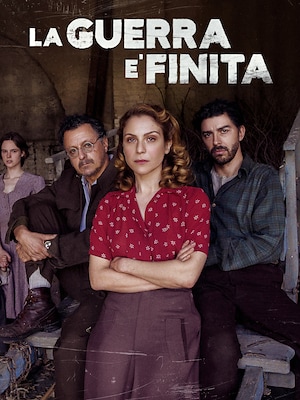
La Guerra E Finita

It was serendipitous that MHz Choice (a streaming service) started an Italian TV series called La Guerra E Finita last Tuesday, January 19, 2021. The series is based on a nonfiction book, The Selvino Children, about the experience of hundreds of Jewish underaged refugees, who had survived the Holocaust, on a Northern Italian estate, where they were cared for and educated, in the post-WWII years. They eventually emigrated to Israel. 


The title "The War is Over" and the mood of the characters, both adults and children, after their gruesome ordeals and traumas, are eerily resonant. 

I wonder about those average Italians. They lived with their Jewish neighbors for decades without strong resentment, suddenly got swept in Fascist power and propaganda, and became willing participants of the persecutions and violence against their old neighbors and friends. Then one day, suddenly, they were told, The war is over. You lost. 

I have seen many books and movies and TV series depicting the period before the rise of the Nazis, before the war, and during the war, all the way up to the end of the war. But this is the first time I think about what happened after the war in the minds of most average Italians or Germans. Most stories about the postwar period keep their eyes on the resistance fighters or those who simply disliked Fascism or Nazism, but the fact is that a very large proportion, perhaps a majority, of average Italian and German people, as well as Polish, Ukrainian, Hungarian, and French people agreed with the Nazis. One might suppose they were convinced by the forceful propaganda or they wanted to side with the power, or they were brainwashed. While pogroms occurred periodically throughout history, most areas did not have deep-seated or widespread racial hatred. Nevertheless, when Nazis came into power, many people joined them, and many more accepted the new ideology with little reflection or resistance. The new leaders say this is right (and they look so tough and strong!), so it must be right.

That's not an isolated phenomenon in human history. 

So, what happened to the believers and supporters when the war is over? Even if they had to claim that they were merely following orders, did they really change their mind? 

Recently I decided to re-read Christopher Isherwood's "Berlin Stories". They were semi-fiction about the social conditions and people in Berlin in 1930 to 1933, until Hitler came to power. He wrote them before the war and, at the time, did not know that Nazis would eventually lose. The depictions of Nazi thugs and the police who sided with them were chilling, but not as chilling as how average Berliners, weighed down by economic distress and frustrations, gradually accepted Hitler as their rightful leader and somehow realized that they, too, hated Jews and communists. Nazism was going to make Germany great again. Hurry and get on the bandwagon. When the alternative is terror and death, conformance suddenly becomes voluntary and even heartfelt.

What happened to their moral compass when they lost the war and it was all over? How many abandoned or renounced their previous beliefs without difficulty? Surely it could not have been easy to deal with the cognitive whiplash in the post-war era. Did some think Nazism and racial hatred were not wrong, except it lost? Or did some believe that only the right side can win the war, and therefore "we" must have been wrong?

Perhaps the same questions can be asked of the American Civil War, in which the anti-slavery Union side won. But, it was less of a mystery what the people on the losing side had thought about all this, after the war was over. Their actions spoke louder than any words. History has recorded what both sides did in the next 150 years. People went on pretty much along the same ideology as they had before. Losing a war did not significantly changed their minds. The same ideas and feelings, including hatred, went on and on, perhaps even grew more intense, after the war was over. 

This realization is very different from the common view of turbulent events in history, such as wars and war-like periods (see also Stalin's Purge and the Cultural Revolution). We tend to assume that the end of such an event or period inevitably brings a fundamental change to people and society, including what they believe and how they behave. We are under the impression that people have changed when the war is over, because, look, the Holocaust has not occurred again, slavery has not returned, the same things are not repeated in history. But that's stupid. People remain largely unchanged, but the circumstances have. So their beliefs and ideology manifest in superficially different ways. History does repeat itself, but we just refuse to see it. 

Because the war is never completely over. "The past is never dead. It's not even past."

Friday, March 20, 2020

The Blemish

In the very last few minutes of the last episode of the 1972-73 TV series Nemuri Kyoshiro, the lead actor of Kyoshiro, Tamura Masakazu, appeared in modern costume as himself and walked around Kyoto for a few brief scenes. In these shots, a dark spot the size of a dime, is clearly visible on his right cheek. It gave me a shock.

Why such a shock? Perhaps because the blemish had been covered with makeup throughout the series. Well, that is not entirely true. In a number of scenes, when the directors almost casually allowed Tamura Masakazu's right side to take up the whole screen, the spot was in fact faintly visible. However, my brain refused to acknowledge it. After all, Tamura Masakazu is renowned for his beauty in Japanese audience throughout his long career from the 1960s to the early 2000s. In the dozens of TV series and movies he starred, there was never a hint of this spot on his face. He might have had it bleached at some point, or it went away on its own. And yet, here it is on his nearly-perfect face, captured on film, in open air.


Below is a shot in the Nemuri Kyoshiro series with period costume and full makeup.


I don't know why it has such a strong and lasting effect on me, to see that ... thing ... on his face the first time. In some ways, it reminds me of the portrait of Dorian Gray, except it is the reverse.

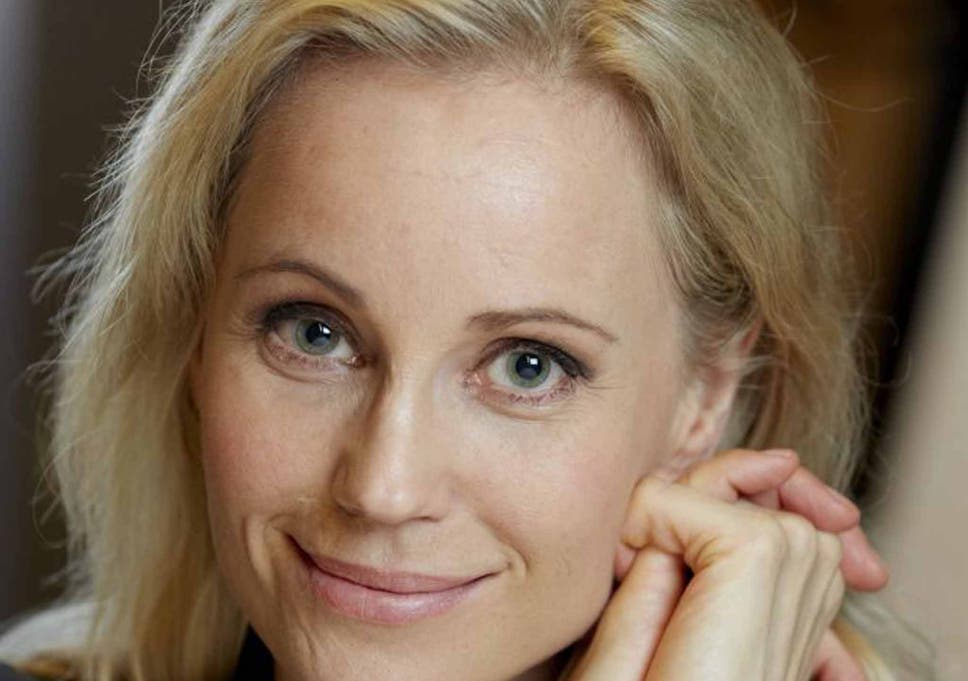
This is not the only example. Facial scars on an actor, particular a leading man or woman, has been a source of some fascination to me. For example, Sammo Hung and Sofia Helin (The Bridge) both have scars around their mouths.


There is something moving about such display of one's flaws, especially in contrast to the otherwise beautiful (or at least adorable, in Sammo's case) context. The emotional impact of such a face, at least on me, can be far stronger than perfection.

Nemuri Kyoshiro is the defining role for Tamura Masakazu. The strange mix of both aloofness and vulnerability more or less remained in many of his later roles. Even some of the more comic roles could not be entirely free of this slightly intimidating distance. That blemish overturned something fundamental, oh I don't know, maybe in my mind.

Tuesday, November 1, 2016

Sundance Sings the Blues

I have not watched NBC's "The Voice" for a few years but stumbled upon it again this season. My favorite singer of this season is immediately and undoubtedly Sundance Head.

He wears a cowboy hat and picked Blake Shelton as his coach. I don't know country music but I assume he's a country singer. It was a bit odd that I'd automatically prefer a country singer over everyone else, because the genre is never my cup of tea.

Out of curiosity I looked up Sundance's audition song, "I've been loving you too long." It turned out to be an R&B oldie by Otis Redding. Thanks to YouTube, I found out that Sundance Head has covered other blues songs, including At Last. He may look country but his heart is clearly in blues. No wonder... As a person so totally unschooled in music, I am drawn to blues by instinct. Is it me or is it just that blues is universal?

Monday, October 17, 2016

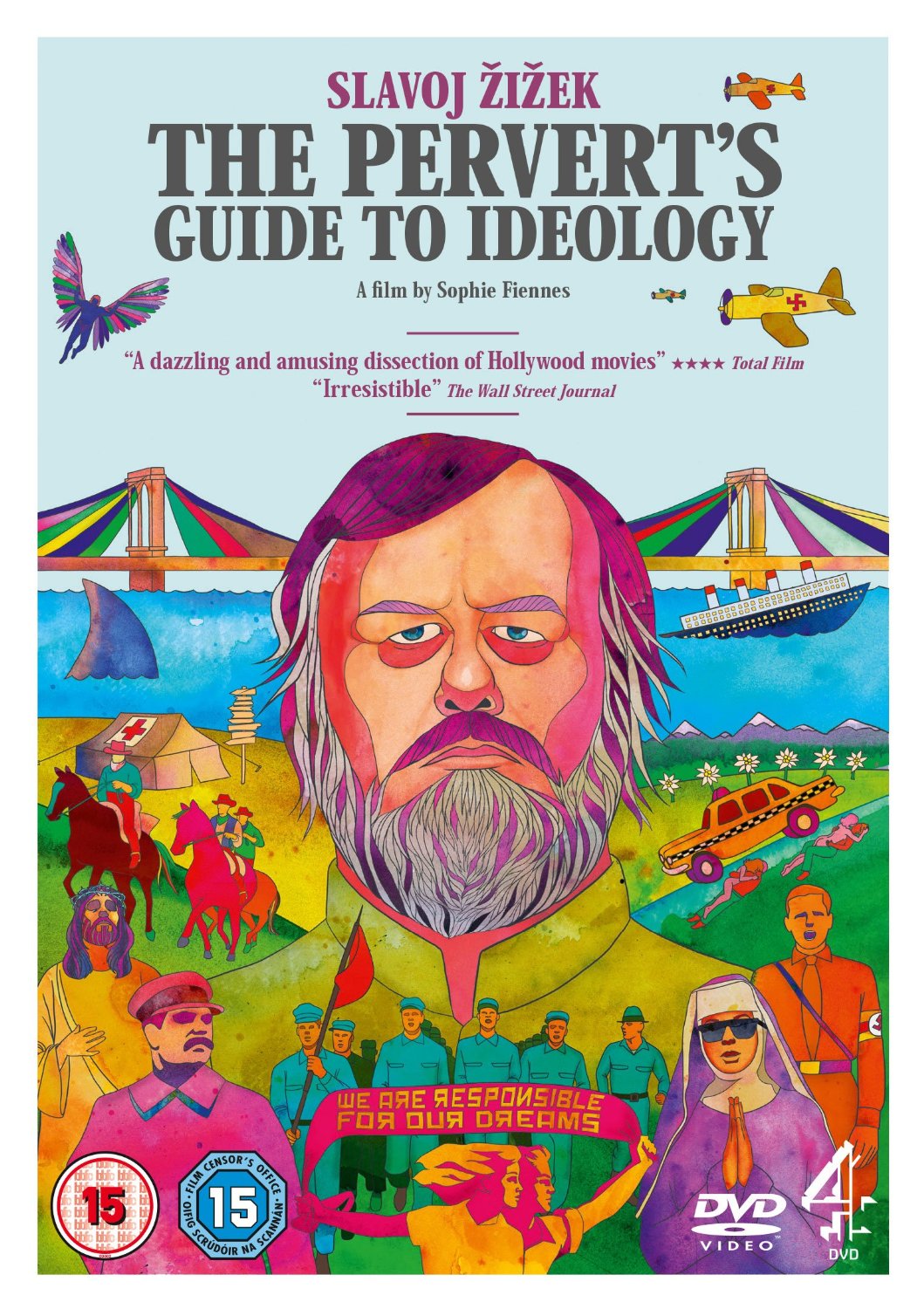
"Scandal" and Zizek's Ideology


Coincidentally --- or perhaps there is no such thing as a coincidence --- I was watching Zizek's psychoanalytical discussion about film and ideology while starting on Season 4 of Scandal.

What seemed like a conventional romantic trope to keep the two lead characters apart in Season 1 has become a bit of a joke in Season 4. Olivia Pope and President Fitzgerald Grant have overcome each apparent external obstacle between their union over the first 2 seasons and by now are resorting to transparent self sabotage.

The need to keep the lead characters apart until the climax (pun intended) of the story has long been explained to me. The audience's pleasure is derived from both the process of prohibition and the eventual release/payoff in comedy or the lack of in tragedy.

Beginning in Season 3 and continuing through at least Season 4, the obstacles to the "happy ending" between Olivia and Fitz are expressed in repeated outbursts with increasingly absurd logic. Take, for example, the scene after Olivia is rescued from her captors. She said, I cannot be with you because I am angry at you, and I'm angry at you because you started a war for me. He said, but you'd have been dead if I hadn't started a war, and what would I have then? Over and over, Olivia is posing her refusal in the most airtight loop that gives him no way out. All answers are wrong, and all options are null.

Her other even more absurd reason of refusal illustrates Zizek's explanation of ideology to a T: All these people, herself included, have cheated in Grant's election. A fake victory requires absolute commitment to make it real by his effort to be a spotlessly awesome leader. In other words, she is saying, "I did bad things to put you into the White House, and I feel guilty about it, so I am depriving myself --- and you particularly --- our union in order to satisfy this guilt."

So, if Olivia fundamentally does not want to be with Fitz, why does she --- or Shonda Rhimes --- continue to string the audience along? Perhaps more important, why do the audience continue to watch this obviously doomed romance? As Zizek points out, ideology is about having your cake and eat it. You satisfy both the id (pleasure) and the superego (guilt) by both indulging in your desires and feeding your guilt. Rhimes continues to insist that Olivia and Fitz must and must not be together. The fantasy of Vermont is perfect because it is forbidden. That is the only way to have your cake and eat it.

Wednesday, October 12, 2016

Mr. Robot Season 2: Interpretation (1)


Like many viewers, I was totally puzzled by Elliot's story line in Season 2. Nothing of apparent consequence or forward motion happened to Elliot. All the conflicts and drama occurred to the other characters: Darlene has killed someone and watched her boyfriend killed. Angela has infiltrated Evil Corp and nearly defeated Philip Price, before falling under White Rose's persuasion. Dom DiPiro almost gets killed, twice, and almost solves the case single-handedly. White Rose, Philip Price, Joanna Wellick, and even the CTO played by Brian Stokes Mitchell all have plenty of action that, in the end, makes sense. (White Rose's logic may be a bit opaque but it's definitely there.)

What did Elliot do this season? He got himself jailed (in a pretty minimum security place, it seems) for the minor hacking and dog-robbery he committed in Season 1 against his psychotherapist's boyfriend. His goal, of going to either jail or his mother's house, was the same: to stay away from computers and the Internet and, in turn, to prevent his alter ego, Mr. Robot, from doing further damage to society. For over half of the season, Elliot does little more than arguing with himself --- we should remember this point because it's important. Meanwhile, he is involved in a self-contained story loop, in which the jail warden, played with menacing sympathy by Craig Robinson, is running an online black market site much like Silk Road. During all this, Elliot has several hallucinatory episodes and/or dreams that seem to go nowhere and do not pay off by the end of the season. The forward move of his is to help Darlene and Angela hack into FBI.

And then, by the final episode, he is suddenly reunited with Tyrell Wellick, and it becomes clear that he and Wellick had long planned to execute Stage 2 of their grand conspiracy (ie, the revolution), which would destroy Evil Corp's paper financial records, and that this whole scheme is carried out with the support of and perhaps direction from White Rose, who may or may not represent the interest of a foreign government.

So what is the point of all the meandering of Elliot's story in the first 8 episodes? Why does Sam Esmail spend so much screen time doing nothing? Is this merely artsy-fartsy self-indulgence?

Upon second viewing of Season 2, I realized that my mistake lies in my conviction that Tyrell was killed by Elliot/Mr. Robot at the end of Season 1. But that was wrong, and all subsequent deductions were wrong, too. I should have realized that killing someone and disposing of his body did not require 3 whole days. When Tyrell showed up alive, the entire Elliot story line must be re-interpreted from the start.

(Continue after the break)

Wednesday, September 7, 2016

Scandal, Year of Yes


While watching the first few episodes of Scandal, I thought, "I know what this is." But I was mistaken. I had no idea whatsoever. I thought it was soap opera, maybe political soap opera, or paperback romance. It is these things, but then there's more, with a dark cloud lurking over every familiar trope. The difficulty to pin it down has been driving me crazy.

On first glance it looks like a particular version of a utopia/dystopia or alternate universe, in which everyone is scheming against everyone else, occasionally murdering their friends' friends or spouses, but nobody apparently gives a shit about race or sexual orientation. 

Refreshing. 

I thought Rhonda Rhimes was trying to create a color-blind political soap opera as a retort to Aaron Sorkin's The West Wing, which I had strongly disliked for being sanctimonious, self-important, and manipulative. Being a liberal does not make me like liberal cliches any better. Scandal's Washington DC is deliciously and indiscriminately vicious, petty, immoral, and ... horny. It's as if party affiliation and ideology matter as much as race, which means none at all.

Delightful.

For a while I thought Rhimes was intentionally striving for the color-blindness to make a point. Maybe she was tired of presenting stereotypes of black characters, even the noble and wise stereotypes. Maybe she was pushing back the pressure for black writers and filmmakers to represent "their people" rather than themselves as individuals. It took me a while to realize that I was wrong. She does not seem to be on a mission to either follow or subvert conventions, nor does she seem interested in representing or not representing any collective group of people. All her characters are extremely self-centered and self-contained.

If any group is represented in the show, be it women, black Americans, white Americans, gays, heterosexuals, Democrats or Republicans, I'm not sure any of them would want to be represented like this. They are all plenty screwed up in the head. Nobody looks good.

True equality I guess.

The subject of race was finally brought up for the first time in Season 2 of Scandal, and it was a bit of a shock. During an argument between Fitzgerald Grant (the president) and Olivia Pope (the mistress) over whether she should return to the White House professionally and his embrace romantically, she blurted out something like "I don't want to be your Sally Hemmings." Fitz screamed back that it was she who owned his obsession. I giggled at the scene nervously. 

While their tortuous and disturbing relationship was filled with power struggle for dominance, comparing it to slavery is almost hilariously callous and vaguely inappropriate. It could be considered as trivializing slavery, except Rhimes gets away with it. I don't know how. 

I have seen a theory that the relationship between Olivia and Fitz is an allegory of the black-white racial relationship over American History. I can understand where the theory came from, it cannot be more wrong. True, in this black-and-white romance, the white man occupies the modern throne of "the most powerful person in the world." However, Olivia is not a victim, and Fitz is not an abuser. Their relationship is not plagued with shame or hatred, including self-hatred. It's intended and presented as a pure and simple sexual relationship, and the intense physical chemistry between the two actors cements it.

In Season 4, Rhimes devised a plot in which Olivia Pope is kidnapped by foreign agents and sold in an international auction, which is blatantly reminiscent of the history of slavery. But all this is also in service of the romance, as Fitz started a war for her sake. The audacity to use slavery this way seems a bit, hmm, cavalier? I don't know how I feel about it. Are you even allowed to do this? Yet she does.

And, of course, the show is so campy and over the top and never takes itself too seriously.

Fascinated, I read Shonda Rhimes' memoir Year of Yes, in which she describes her effort of self-improvement of sorts in 2014. So Rhimes really does talk like she writes in Scandal --- with lots of exclamation points and CAPITAL LETTERS and repeated words for emphasis --- and she does seem to squeeze breathless drama and twists from relatively innocuous life events. The book is both fluffy (with some cheerleading life lessons and advice) and surprisingly earnest with plenty of jokes.


The book also confirms my impression that, while Rhimes is acutely aware of racism, she is not necessarily more weighed down by its multi-century, cumulative history than any given white person, nor does she seem to feel obligated to self-consciously represent all black people. Perhaps she feels the obligation as much as an average white writer feels the obligation to represent all of white Americans. She grew up in a comfortably middle-class family. Her mother has a Ph.D. in education. Her father used to be the chief information officer at Ohio State University and later at USC (years after Shonda had graduated from USC film school).

She did not write much about her parents in the book, except that they are loving and supportive and smart and madly in love with each other. So the twisty and destructive relationship she has created for her characters remains a mystery. Rhimes wrote briefly and superficially about her aversion to marriage but provided no particular insight. More curious perhaps is her treatment of the father figure in Scandal, played by Joe Morton, a powerful man who appears to be the source of all evil in the world. His daughter gets to be a princess, but a damned and imprisoned one, because of him. I was particularly keen on potential origin of this bleak view, but she said almost nothing about her father in the book.

So for now the mind of Shonda Rhimes remains a bit out of my reach, but that's just as well. 

Tuesday, July 5, 2016

The Famine Pact


I've been re-watching some episodes of the French TV series "Nicolas Le Floch," based on the historical detective novels written by Jean Francois Parot. In addition to being glorious swashbuckling whodunnit fun, the series place fictional characters within the historical context of eighteenth century French politics. Being almost completely ignorant of this part of history, I can barely keep up with the intricate conspiracies and court intrigue.

One of the books entitled "The Baker's Blood," which I have not read, has to do with the Famine Pact. Under the pressure of chronic food shortage, Louis XV tried to stock up on grains during relatively good years as reserves for bad years. The intention was reasonable. Upon hearing the explanation, Nicolas Le Floch reacted as any of us would: "There's nothing shameful in that." Yet, the policy backfired and caused grain price to go up during good years and skyrocket during famine. Bureaucrats who carried out the policy saw an opportunity to make obscene amount of money through speculation, while shifting the blame on the king. Rumors began to circulate about the royalty's attempt to starve and rob the people. Riots broke out. These rumors, while untrue, directly contributed to the French Revolution a few years later.

Being a diplomat and historian, Parot seems to be quite sympathetic to both kings, Louis XV and XVI. He describes them as trying but failing to reverse the course of doom. Without the benefit of hindsight, Louis XVI supported the American Revolution against the British Empire, only to boost his own subjects' confidence in creating their own republic. Could they have done anything differently to avoid the revolution? The answer seems to be no. They were doing the best they humanly could. One could argue --- and Parot does argue --- that by then the system was too corrupt to be saved by any one person, even le roi. But then it's clear that nonpolitical factors, such as population growth, immigration failure (unlike Spain and Britain), weather, and other random events have as much or more effects on history than human policies and wisdom.

What disturbs me in all this is how little we seem to understand history. We don't know why the American Revolution was a success, but the equally promising French Revolution deteriorated into a bloody mess within four years. It was the French idea to begin with! Hell, we still have no idea what caused World War 1, and that was only 100 years ago! Is history a series of random chaos that can only be observed but never predicted? Or are we merely waiting for a theory to make sense of our own past and future with just the right variables and math? What is the force of history? And are humans both self-deluded participants and powerless puppets in the process?

Perhaps most curious, why do people behave in the same way over and over? "The Queen says, let them eat cake." "The King wants to starve you all." "The federal government is going to break into your home and take away your guns and wives." "The President eats babies for breakfast." Time has stood still and the same rumors are whispered across hundreds of years. Nothing has changed. "The people," as they are called --- are they real individual persons or recycled copies of the same marionette, generation after generation?

The TV series run up to early 1780s, with a disillusioned Le Floch sailing to the New World at Marquis de Lafayette's beckoning. (One cannot hear the name "Lafayette" without conjuring up the irresistible Daveed Diggs in mind.) There is an eeriness in this. Before a disaster hits, before people begin chopping heads off, we are all going about our business as if everything is normal. We may smell the rottenness around us and hear grumblings of discontent, but the smell and noise have always been there and nothing's happened so far ... 


Sunday, January 24, 2016

Jessica Jones and the Nature of Guilt


Not unlike "Mr. Robot," "Jessica Jones" is an intensely psychological series. I have not read any of the original comics, so it's hard to attribute the source of this subtext. No matter, I'm especially fascinated by the issue of guilt in the TV series.

For most of the 13 episodes, Jessica resists the calls from people around her to kill her nemesis and the villain Kilgrave. Her explanation, which increasingly feels like an excuse, is that she wants to show the world that Kilgrave exists and thereby legally exonerate Hope, Kilgrave's young victim Jessica strongly identifies with and projects herself into. In effect, she is trying to get the world to agree with her that "It was not my fault." The "it" here of course refers to her past, when she lived with Kilgrave and murdered another woman at his bidding. It's not about Hope, but rather all about Jessica's judgment of herself.

The theme of guilt is permeated throughout the story line. It's pretty transparent that a villain like Kilgrave is the embodiment / projection of our guilt and shame for our id. He is created for our deniability and repression of a part of us.

Beyond the navel gazing, the series also suggest that guilt is a force that binds people together, although not always in a good way. Jessica feels like she is obligated to save Hope and other "weak" people from Kilgrave, because her guilt binds her to their fate. She feels responsible for Kilgrave's rage and destruction, and therefore she is responsible for the outcome.

Is this a reasonable assessment of the situation? I think the writers of the series are also questioning this chain of deduction: If Kilgrave is enraged by Jessica's disobedience and takes it out on bystanders, is Jessica responsible for either Kilgrave or the victims? Sounds familiar, doesn't it? The instigator of domestic abuse claims (and usually truly believes), "You have made me so mad, that I cannot help but beat you." Most of us would agree that this logic is faulty, but Jessica seems to differ. That she feels compelled or even forced to "save people" is a combination of her superpower and her guilt.

As such, one of the most intriguing characters in the series is Robyn, Jessica's neighbor who is always blaming other people for her own irritability. These two women are made for each other: One refuses to take responsibility for her own reaction/feeling, and the other gladly takes it on her own shoulders. Thus one can't help an sense of uneasiness in this orgy of saving and being saved, rescuing and being rescued.

Both Robyn and Kilgrave are able to command or manipulate Jessica into doing things for themselves. "This is on you," they tell Jessica, but that is not the point. The point is what follows, "Therefore, do what I tell you to do." While we do derive a sense of bonding and belonging through the fudged boundaries, the results are still all about each of us getting what we want. Kilgrave may enjoy the sense of power through Jessica's apparent obedience, but Jessica is getting relief from her guilt. You may be the superhero who have saved someone's life, but you are still alone.

Perhaps confined by the conventions and expectations of the American Superhero mythology (TM), the series do not fully explore the complications of such guilty-driven boundary crossing. Should Jessica save these people? What is she actually doing for the 13 hours of the series? Perhaps simply to escape the voice of guilt inside her head.

It so happened that, in the middle of watching Jessica Jones, I also re-watched the Hitchcock movie "Spellbound" starring Gregory Peck and Ingrid Bergman. It's a rather crude dissection of the guilt complex. A child wishes someone dead, that someone actually dies, and the child infers that his own wish has killed that person and therefore develops a deep-seated but often repressed guilt. Underlying the guilt is the omnipotent fantasy. In other words, attributing external occurrences to one's own will or power is both elating and depressing. This goes to the very heart of the American Superhero mythology, especially the darker superheroes. "With greater power comes greater responsibility," but the unspoken inference is "responsibility = guilt / blame." The flip side is that, one would rather be plagued with excessive and unrealistic guilt than to feel (realistically) small and weak and ordinary and, as such, not all that responsible.

The series seem to be fully aware of the god-complex (omnipotent fantasy) in the superhero mythology. The ironic dialogue between Jones and the nurse (played by Rosario Dawson), which could have been a psychologist's commentary on the series, shows an intentional deconstruction of the issue.

"I want everything to be my fault. Good or bad. Means I have some control."
"You're in total control. You are responsible for all this and I blame you."

Friday, December 25, 2015

More Psychology on Mr. Robot

There is a lot to mull over if I am to look at "Mr. Robot" from the psychological point of view. In my opinion Sam Esmail is far more deeply invested in psychology in the context of Internet and technology than any other issues on the surface, be it hacking or corporate greed.

It touched a nerve for me because I have been thinking about similar ideas for the past year or two. How do we adapt our social needs and instincts, honed over a hundred thousand years of talking incessantly to our relatives in tribes of a few hundred people into this diffuse community of faceless clicks around the world? This is more or less what I am doing right now, typing on a blog space, leaving some online footprint, while satisfying the ambivalence of both putting my thoughts "out there" for anyone to see and knowing that few, if anyone, will read them.

Of course being lost in anonymity is not a new phenomenon. That began when we moved from agricultural society to the industrial age. That was when we began to leave our village and everyone who knows us from birth. The Web merely took us further down the road. How are our natural instincts holding up in this world?

In Mr. Robot, Elliot Alderson tells us (his imaginary friend), "I hack everybody," from friends to foes or just people he is curious about or rubs him the wrong way. But he has not told anyone he likes or cares about that he has hacked them, except Krista, his psychologist. As I pointed out before, a psychotherapist hacks the patient's mind --- No, that's not accurate; rather, the therapist helps the patient hack his own mind, with his consent of course. So one could argue that the reason why Elliot has told her to her face that "I've hacked you" and then threw out some unpleasant facts about her online footprints is an expression of his hostility and aggression toward her, even though he also appears to want her help and her love (with inevitable transference of his relationship with his mother). This is entirely realistic and astute.

This reminds me of a discussion I heard at one of the meetings I covered when I was reporting on psychiatry a few years ago. The question was whether it is ethical for a psychiatrist to google his patient, especially when the psychiatrist suspects that the patient is lying. I remember one of the arguments was that knowing more facts about a patient can help the psychiatrist better diagnose and treat the underlying disorder. However, the presenter was generally against googling patients without their consent for both ethical and therapeutic reasons. It would probably damage the psychiatrist-patient rapport and do more harm than good.

It does bring up the question of how much one can know another person through their online persona, and then the question of how much one can know another person through face-to-face interactions. While we instinctively give more credibility to the latter type of relationship --- and I am no exception --- I do wonder about the limitations of face-to-face relationships as well. How many times have we heard or participated in conversations in which people talk past each over? Do people really hear each other when they speak? The futility of online debates has been well established, and I suspect the deterioration of democratic process and increasing political polarization have been at least partially caused by moving the civil discourse from town halls to the comment sections of Web sites. Human communication is ineffective enough even when we are looking into each other's eyes. Now we are just tossing our own thoughts out into the world and imagining being heard, all the while never hearing anyone else.

Sunday, December 20, 2015

Mr. Robot


I have been a little obsessed with this series lately. Binge-watched Season 1 twice, with some of the segments more than twice. Not being a computer person, what I have picked up is the psychoanalytical parts. I'm guessing the author/showrunner Sam Esmail has probably been analyzed himself. In interviews he admitted to having had OCD and anxiety disorder. Plus he grew up in New Jersey, close to New York City. It's not far-fetched that he is proficient in the psychoanalytical theories.

Putting aside the computer hacking stuff (which is generally regarded as pretty authentic, though not that I could tell) and "Fight Club" references (which Esmail flaunted rather than concealed), the first series can be interpreted as using hacking as a metaphor for psychoanalysis. Psychoanalysis (which is back in vogue within the psychotherapy community now after all the shortcuts have more or less failed or faded) is essentially hacking one's own mind. While most of us do not have out-and-out dissociative identity disorder like the main character in the series, we all repress and suppress some things in our mind, as Freud pointed out over a century ago. The unconscious is a huge part of the human mind but inaccessible to our conscious thoughts. Psychoanalysis tries to "hack" at least some of the hidden mind, but behavioral therapy tries to fix us without this. Brilliant.

Separately, Esmail himself has admitted that he was in part inspired by the Arab Spring movement. It took me an unnaturally long time to realize that my visceral reaction to this part of the story --- young people trying to "change the world" --- is connected with my own experience with the 1989 Tiananmen Square incident. It was a traumatic event to my generation, even though I never directly participated. I have tried not to think about it and all the complicated feelings it stirs up. See how this works? We all have things we want to hide from our own mind. The Chinese government has been able to scrub that event from most Chinese people's memory, more easily than "1984," thanks to computers, the Internet, and the Great Fire Wall. What "1984" has gotten wrong is our own complicity in the forgetting. The power forcibly erases it from the digital world of knowledge, while people voluntarily erase it from their mind to forget their feeling of powerlessness.

The Ending of Le Samourai (1967), Explained

A quick online search after watching Jean-Pierre Melville's Le Samourai confirmed my suspicion: The plot is very rarely understood by E...