Search This Blog

Showing posts with label history. Show all posts

Saturday, June 14, 2025

How My View of History was Upended

Sometimes it takes little more than a spark to change the way I look at history. My worldview was overturned by "A Game of Thrones" and, to a lesser extent, its sequels. GRRM convinced me that history is more random than deterministic, even if there are simple underlying patterns. It drove me to think about history as evolution. (Come to think of it, evolution IS history. Why should human history be fundamentally different from natural history?) 

Tony Gilroy overturned what was left of my preconceived notions about history with a casual comment about his inspirations for the series "Andor." He admitted to lifting liberally from vignettes of modern imperial histories that ranged from British to Russian to American and modeling his good guys on Lenin or Trotsky, Algerian or Latin American guerilla. 

I had not even realized that my brain had not made a clean break from the dichotomous worldview of communism vs capitalism, authoritarianism vs democracy. It is a worldview that both sides happily inject into their citizens' brain with propaganda of different flavors. Of course it was not only Gilroy's comment, as I had been accumulating observations for years and years on the commonalities of human nature in supposedly divergent, even "opposite" social systems. 

His comment sparked the realization: There is no difference. They are all the same. There is no subjective difference between Tea Party's fantasy of overthrowing a tyrannical Obama and the Mao's loyal minions before he came to power. There is not subjective difference between Thomas Jefferson and Joseph Stalin. There is no subjective difference between rightwingers and leftwingers who believe themselves to be the oppressed. It doesn't matter whether you are on the right side or wrong side of history. The "sides" of history are painted on by propagandists of the future. People in the middle of history, ie, the present, all believe themselves to be right. Those who feel themselves oppressed try to fight for more power, and those who feel themselves with power try to keep it and grab more. Nobody is fighting for what is "right" because self-interest is always right from one's own point of view. Even those who fight for other people are really fighting for something inside themselves. The only difference is the environment, the circumstance, the location of your butt. 

There is a funny saying among Chinese netizens that is probably already outdated by now: The butt determins the brain. It means where you sit determines what you think is right or wrong. For example, people born into a higher social class and those into a lower social class can never agree on what is good and what is bad. The fundamental determinant lies in status, ie, power. Morality is incidental. In other words, the real difference between the evil empire and the righteous rebels is where your butt is. 

Thursday, June 20, 2024

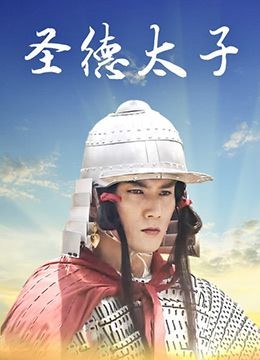
圣德太子:池端俊策的借古喻今


池端大叔的中世纪三部曲中的第一部,“圣德太子”(2001),剧情尤其缓慢,下集看到一半的地方我还在想 where is this going?然而,在最后一场戏中,圣德太子对(剧中的,非历史的)死敌苏我马子说,“我们害死了伊真。” 以及“为了赎罪,只要我活着一天,大和国就不能再打仗。” 这时再迟钝的观众也应该看得出作者的暗示和寓意——然而,根据我的经验,只有更迟钝没有最迟钝,所以也难说。

日本历史剧一般很少提及外国对本国历史进程的影响,除了黑船事件,而是习惯在几个争权的大佬之间打转。然而这三部曲中有极大篇幅强调从隋唐经由朝鲜半岛(尤其是是百济与新罗两国)传入的佛教和政治理念对于倭国/大和国的重要影响与变革的诱因,这本来就是相当罕见的写法。

“圣德太子”把虚构人物,新罗移民伊真,作为男主角的 BFF (剧本特意强调不是男主的跟班 sidekick)来刻画绝非偶然,明显是借古人之口表达作者自己的立场和寓意:入侵占领朝鲜半岛是日本历史上反复出现的目标,朝鲜人民是反复的受害者。朝鲜给日本带来了这些外来文化,得到的回报是贪婪的抢劫,侵略,殖民。例如丰臣秀吉发动的朝鲜战争,19世纪末的甲午战争,以及对朝鲜半岛的长期殖民。动机在剧中也通过苏我马子之口直说了:在内部权力斗争中胜利的贵族们需要得到赏赐与土地,然而本国的土地都赏完了怎么办?只好去朝鲜半岛抢分给群臣。苏我马子比谁都仰慕朝鲜文化,还精通百济语,侵略是一种实用主义的必要而非歧视或仇恨。所以,“好人”圣德太子与“恶人”苏我马子并非不共戴天黑白相反,而是一体两面,代表日本历史中的精神分裂,有时是追求“以和为贵”,有时则发动嗜血战争。绪形拳饰演的苏我马子从头到尾都暗示着微妙复杂的内心纠结,而把太子演得伟光正的本木雅宏在最后一幕崩溃地接受了自己的 complicity. 两个人物融合在一起承担共同的罪恶。

当然历史剧从来都不(完全)是忠实地重现历史,不论如何强调考据真实性,剧本总是人写的,真要完全还原历史观众也不爱看。但是,池端俊策把借古喻今提升到了新高度,也或者是莎士比亚历史剧的旧高度,反正就是以自己的意图为优先,以历史为背景——只不过他对于历史的态度比莎士比亚稍微更严肃一点,而自己的意图稍微更隐秘一点,倒也不多,一点点而已。历史上的圣德太子固然写下了“以和为贵”的宪法第一条,但朝廷多次想要出兵入侵新罗也是事实,只不过限于客观条件而未能成功。这些都是次要的,是素材,服务于作者的反战主题。

本剧也保持了池端剧本里一贯的特点,常有看似随意而含义深长的台词,值得细品:例如圣德太子两次说,阳光普照大地,平等地洒在每个生物之上;例如苏我马子说,最近总是想吃肉,怎么吃也不觉得饱足,甚至越吃越饿。在两部续集中也常有这种奥妙的细节。

传说中的圣德太子戴着佛一样的光环,一不小心就会写成假人。剧中保留了一些异能细节,通过有点神神叨叨的手法表现出来,但其作用并非神化主角,而是在跟苏我马子的对比中探讨佛与正义的理论 vs 现实。圣德太子面临着所有道德原则在现实中碰上的墙壁:如果佛教的原则是非杀,你头戴着佛像去杀了物部守屋(政敌)怎么算?作者把理论纯洁性的讨论推向不可避免的困境(对比迪士尼那种为了保存主角的道德纯洁性而把剧情扭成麻花的写法),并通过苏我马子的实用主义表达出来:如果佛不能马上救我/他自己,佛不就是没有法力的吗?没有法力的佛为什么要信他呢?不能给我带来利益的佛,为什么要信他呢?如果我的欲望跟佛理相悖,那就暂时把佛像收起来,等到一致的时候再拿出来不就好了?当圣德太子把刀指向他痛恨的苏我马子,杀人的冲动涌上心头的时候,作者也没有回避文艺作品中被回避一万次的质问:如果好人杀了坏人,他们之间的差别在哪里?(这不是 moral relativism,而是说这个问题值得细看与追问,而不是按照标签站队。)历史题材的文艺作品习惯于马后炮地把胜利者编派为正义者,从而制造出正义必胜的“历史规律”,偶尔会有池端这样的偏要刨根问底。

池端俊策作为还记得战争/战后的一代知识分子中为数不多的存留者,也许是最后一个反战主义的倔老头了,孤独地游离于对战争并无感性认识的 cynical 的新新人类之外,继续写着不再时髦的反战主题历史剧。但理想主义不等于脱离现实的空想:如果把三部曲里每一部拿出来单独看,全都遵循大众文艺作品的规则:男主角/好人/反战者/革新派最终战胜了死敌/坏人/好战者/反动派,正义与和平获得了胜利。然而把三部连起来看,拼出来的是一张悲观的图画。圣德太子活着时维持了和平与改革的盛世,但他死后朝廷又陷入激烈的斗争,留下的子嗣也遭到灭门。每一部的主角谁不是想要改革现状创造更美好的世界?然而同样的故事在历史中反复重演,还可以一代一代地写下去没完没了。对内也好对外也罢,战争与苦难谁也消灭不了,哪怕你是佛祖下凡也没用。

Monday, April 22, 2024

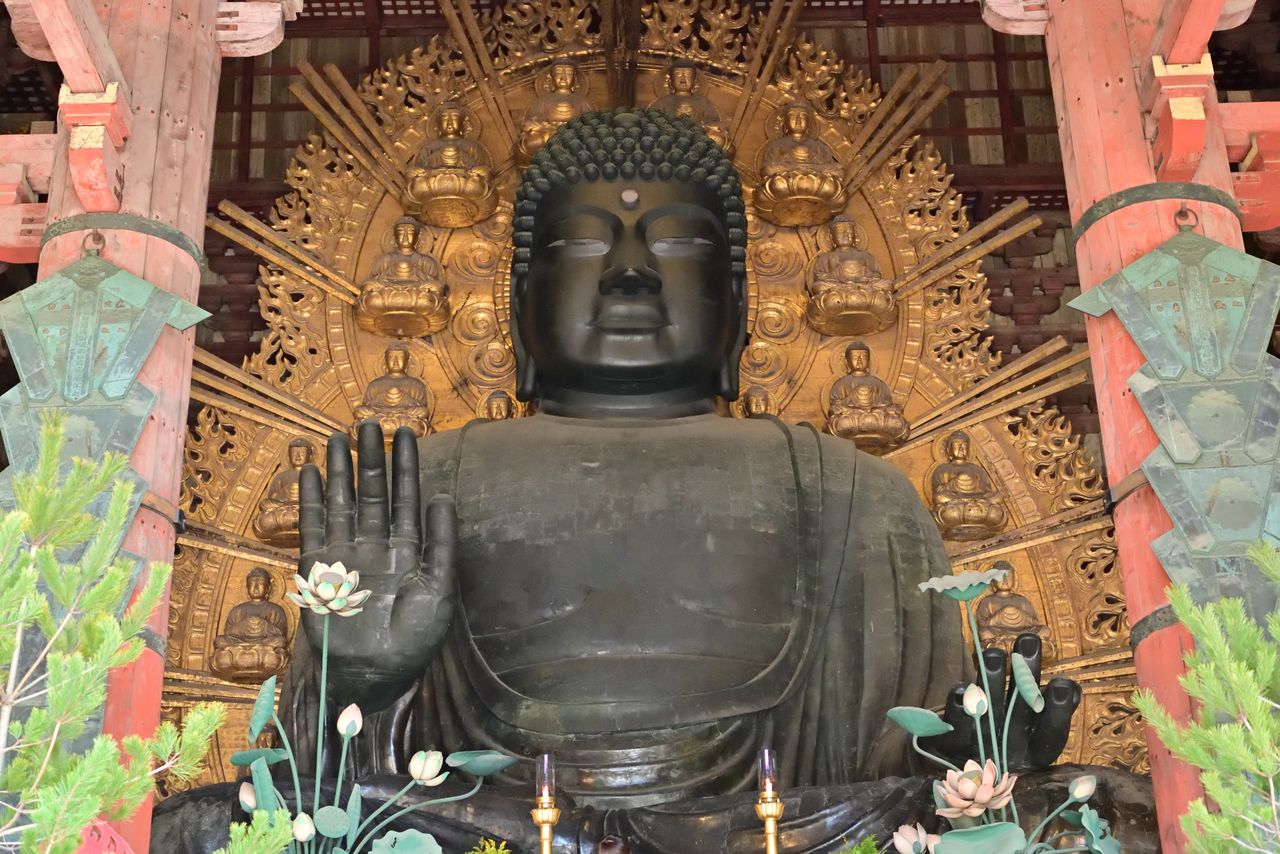
大佛开眼 (2010)


奈良东大寺卢舍那佛

毫无疑问,《大佛开眼》这部上下集共3小时的剧,是池端俊策对于《太平记》中腐烂的木神像的进一步阐述,这次借助八世纪中期的政治动荡来探讨人在历史中的奇怪行为与动机。

公元734年,在大唐留学多年的遣唐使吉备真备和僧人玄昉回到故国时,面对的是一个政局动荡,天灾人祸,民不聊生的局面。玄昉提议的救国方案是:模仿大唐造一座旷世大佛,就可以保佑人民安居乐业;而真备提供了现代 skeptic 的视角:如果把造大佛的巨量资源用在赈灾和 infrastructure 上面,能救活多少条人命啊。

随着时间的推移和形势的继续恶化,越来越多的人 ... 支持造大佛,从手无实权的圣武天皇,到手握实权的大臣藤原仲麻吕。当僧人行基刚出现时,似乎印证了真备的立场,修桥筑路,实实在在地造福百姓,百姓也对他爱戴追随,齐心协力改善自己的生活处境,为什么要把他们拉去造大佛呢?(令我意外的是,行基并非虚构的理想人物,而是确有其人其事。)然而最终连行基也支持造大佛了,因为 ... 人民需要信仰,需要心灵的安慰。

我还记得第一次去欧洲旅行,被金碧辉煌的宫殿与教堂深深震撼;第二次去欧洲就有点儿矛盾的心情:如果没造这些宫殿(王权)和教堂(神权),省下来的资源能多养活多少人?能多支持多少人不必种地做饭而是去搞工程和科技造福大众?但是如果古代没人建造这些建筑,我现在也就没地方仰望和赞叹了,让最多人民安居乐业的时代没留下痕迹,怎样让后人膜拜?后来读了一些书籍探讨宗教在文明历史中的作用,似乎得出结论,如果没有宗教对大规模人群的凝聚力,也许庞大的国家,高度分工合作,甚至一天到晚不停工作的动力,就从来不会存在。

这个结论是否正确倒也不一定,但是信仰的作用的确不假。一位身高五尺面目模糊的陌生人跑来命令你为他日夜劳作还吃不饱饭,你肯定会叫他滚蛋,但是如果他站在雄伟庄严的宫殿门前,或者高耸入云的教堂里,振臂高呼,而你被匪夷所思的壁画或金墙震撼得不知所措,跟着四周群众一起伏倒在地三呼万岁,绝不会生出抢它丫的,或者王侯将相宁有种乎,此类念头,再说还有天堂的承诺和神明的保佑呢,值!

剧中对于建造大佛过程的展现——省下战争戏的钱来拍摄大佛坯子,也很值——让我产生一个奇怪的假设:或许这种看似毫无实际回报的劳动,相对于真金白银的利己劳动(例如种田养鸡),是对于人类的驯化训练,训练个人接受甚至享受螺丝钉的角色,你不需要从鸡蛋开始养鸡直到宰杀和烹饪都一手包办,你日复一日地服从命令重复劳动,融化在集体的事业中,相信你跟成千上万的人一起搬砖造出来的大佛或 Cathedral 或皇宫,最后 somehow 会给你个人带来生命的意义和满足感,哪怕你在工程结束之前就死了,哪怕你永远也看不到自己劳动的真实结果。(参见剧集 Andor 第一季结尾,男主角永远也不会知道,他在监狱里参与生产的零件,将被放进 Death Star。)逐渐地人类就这样形成了越来越庞大而复杂的社会结构,你再也不需要从头到尾手制一件产品在眼前成型,all you need to do is believe。

剧中的真备虽然给观众提供一个现代视角,同时他也是身处其中的参与者。作者一边质疑建造大佛的代价,一边承认信仰对群众的精神凝聚力,并且暗示无人能够超脱现实与形势的席卷挟裹。大佛建成了,震撼人心,普天同庆,然而大佛并不能保佑人民风调雨顺无灾无难,也不能防止政治内斗导致战争爆发。一直洁身自好的真备,最后也不得不起兵讨伐藤原仲麻吕,且向大佛诚心祈祷战胜,并且在一条小船上茫然驶向未知的远方。

神像也许只是木块雕刻而成,一些年后腐烂成面目全非的木片儿,但是人们虔诚的膜拜的感情都是真的,而且他们为信仰而劳动制造出来的成果也是真的,看得见摸得着,就象这镀金铜制的大佛。池端俊策的高明之处在于他并不给观众标准答案,就算是貌似反派人物的藤原仲麻吕和玄昉也表达了真实而普遍的人性,没什么可鄙视的,谁还不是一样。上集开头,大臣问刚返国的真备,大唐制度是否非常先进,我们是不是应该照抄就好了?真备答道,大唐制度好不好先等等再说,我们应该先观察一下现状到底是啥。这似乎也是池端写剧本的原则:睁眼观察历史和人性的真实面目,至于批判什么赞美什么倒没那么重要。

我又联想到 Jared Diamond 在 "Collapse" 这本书里描述的,复活节岛上的社会之崩溃。岛民也曾过上好日子,食物丰盛,劳力剩余,部落首领们为了加强自己的权威和号召力,命令属下人民采伐树木,修建庙宇,为自己雕刻越来越大的石像。一些年后,树被砍光,农业崩溃,大家不是饿死就是坐船逃难,岛上只剩下面向大海的石像,既不能吃也不能带走。

----

后注:恰巧看到油管上的古埃及专家说了一句话: We absolutely have the technology to recreate the pyramids. It's a social choice that we don't build pyramids any more. 

也许人类不是全无进步的。Eric Cline 喜欢开玩笑说,一些年后考古学家挖出我们的时代的遗迹,结论大概是我们都崇拜绿色的长发人鱼图腾 (Starbucks)。

Saturday, April 13, 2024

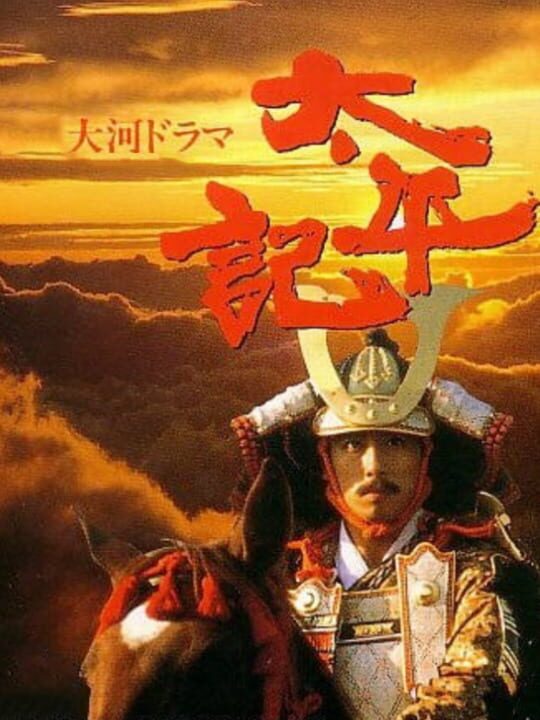
太平记 (大河剧1991)


这部池端俊策主笔(虽然有几集是仲仓重郎写的)的大河剧的中心问题在于:第一集童年足利高氏在佛龛里找到的朽烂的神像象征了什么?

显然,这不是一个批判或质疑宗教的故事,虽然主角足利尊氏偶尔描绘佛像。

从一个相对简单的问题入手:此剧美化了足利尊氏吗?虽然我对日本历史的知识都是从维基上学来的,但也能看出,肯定美化了啊!足利尊氏的名声就是大反贼,一生反来反去,在名义上的主公(们)之间跳来跳去,换山头比换袜子还迅速。然而剧中不厌其烦地细细描述他每一次的重大背叛都是形势所迫逼不得已,让人难免有点怀疑其真实性。

对比三谷幸喜所作的大河剧《镰仓殿的十三人》(2022),其中主角北条义时也是从纯朴的少年形象出场,同样是喊着 “开创新时代” 的口号,后面变成一个阴险狠辣的霸主,就比《太平记》要更加 cynical ,对各人动机的揣测比较不留情面。一般来说我对于历史大人物的态度是比较接近三谷的,也就是 “别跟我说什么心地善良的黑手党,心地善良的人当不了黑手党” 的原则。然而太平记给我留下的印象完全翻转了我一贯的态度,即使明知终生胸怀创造太平盛世的理想的男主角跟现实中的足利尊氏相距甚远(那简直是一定的),也拦不住我被池端大叔的剧本和真田广之以及剧组各位演员的表演深深感动。 It doesn't have to be realistic to convey a certain truth. 这也算是意外的收获吧。

仅看尊氏的生平记录,习惯了二极管两党制的现代人多半会被搅晕。从幕府下第一臣子,到尊王倒幕的关键人物;从后醍醐天皇面前的大红人,到把后醍醐天皇流放孤岛的朝敌;搞出了南北朝分裂之后还从北朝倒向南朝又跟南朝翻脸互殴 ... 让我不得不重温前阵子琢磨了半天的思路: ideology 的虚幻性。别以为14世纪的室町幕府时代没有 ideology,当时的各武士栋梁们可没少辩论大义呢!到底追随哪位领袖才算是大义?是忠于天皇还是幕府?跟天皇打仗算不算下克上?因为日本历史上缺乏乌央乌央的大批御用文人和史官们替当权者拼命洗地,用头头是道天花乱坠的说法蒙倒众人,但又捉襟见肘地想要模仿左邻的儒家理论为己所用,反而帮助我们认识到一切 “忠义” 体系的荒谬性和虚伪性。

池端大叔提出的问题看似老生常谈:是英雄造时势还是时势造英雄?他用令人信服的叙事给出了答案:任何一方的领袖都可能被周围的人群和浪潮挟裹,即使自以为正在带领同志们开拓新政建立新时代,其实不知不觉已经不知道自己在干什么(虽然绝大多数领袖不会象剧中主角那样具有自省能力,而是终生以为自己掌控了方向)。也有例外,如执拗坚定地反时代潮流的后醍醐天皇,屡战屡败而屡败屡战坚决不肯认输,第一次读他的维基条目已经被惊到了——当时镰仓幕府已经建立百年,天皇的地位越来越弱,但他绝不放弃做中式皇帝的梦想!但是大多数领袖,如尊氏和弟弟直义,经常很难分清他们的选择是来自个人的强烈意志还是周遭的推波助澜。当时制度下,战争极度依赖各武家出兵结盟,每家都在打自己的小算盘,多角 alliance 极不稳定,说不定谁就带兵倒戈了。如果你诟病尊氏叛变得快,那是因为你没去注意佐佐木道誉代表的大多数武家。这样复杂而多变的忠诚 (or the lack of) 定义一直持续到关原之战,甚至在幕末亦成疑问。

虽然日本历史上的这种武力割据导致的状态跟其它国家有很大差异,但是如果我们放弃以国家为边界的历史观,观察区域性的演变或结构复杂的帝国,充满背叛和不稳定的多角关系普遍且真实,常见的二分对立才是陈腔滥调。对我来说,最近几个月恶补大河剧与相关历史,更加证实了历史的混乱性和偶然性,掺入了道德的历史规律(“得道多助失道寡助”)基本上可以丢弃不理了,而且领袖的个人意志的作用也远远比我们想象得要低。

放弃了道德体系和个人英雄主义的历史观之后,池端大叔就有充分的自由和空间表达他的终极关注: humanism. 在他的画布上就完全不需要好人vs坏人的角色,进步vs落后的设定,每一个重要角色都浸透了人性,值得理解与同情,只要观众能放下自己对于定义或坐标的执念,都可以被打动甚至叹息流泪,我们对于正确vs错误的执念也就自动融化消失了。非常重要的是,他也完全不需要流行的武士道忠君义理来激发观众的情绪(虽然这段历史里处处有陷阱)。不管是北条高时身上透出的绝望感,还是足利直义最后的执拗,都是以独立的个人呈现出来,邀请观众去共情人物的独特处境和动机,说不定能稍微增加一点慈悲的能力。No shortcuts,每一个都是扎实地写出来,完全没有陈腔滥调或迎合大众(这一点三谷幸喜在《真田丸》里就没做到,多半是因为真田幸村代表的 “忠义” 符号太深入文化太难颠覆了)。

这不是说作者没有自己的立场和好恶。可以说不论大小没有丑化任何一个角色,但是明显他对于某些人物寄托了更多自己的情感与投射。其中之最显然是楠木正成,我以为藤夜叉也是作者的化身(可惜对于17岁的宫泽理惠来说超纲了, not her fault)。这两个角色是教科书式的怎样写正面人物,怎样倾注真情而避免陷于滥情或煽情。楠木正成在明治之后被用作忠君保皇大英雄来宣传,如果一不小心就会落入窠臼甚至令人作呕,但此剧中弱化了他的“忠义”,而重点描述一种朴素的反战态度,细想简直是打了官方说法一记耳光的感觉。在这部 historic fiction 里,是否忠于史实让位于作者想要表达的情感与理念:楠木说跟着妹妹的猿乐团周游四方表演为生的日子才是人生里最幸福的时刻,对儿子说不要战死沙场而是回家播种谷物驱散乌鸦,什么时候才能让百姓都过上这样和平安稳的生活呢?没有人知道。

对于主角、配角、乃至反派人物,池端比三谷温柔一百倍,但是,我不认为这样的刻画是一些评论中所说的洗白或者美化!剧中的尊氏也许跟真实的尊氏差别巨大,但是通过这个人物的挣扎和矛盾来表达作者对于理想的探讨和辩论完全没问题:以太平盛世为目(口)标(号)的战争能不能给人民带来太平盛世?That's a serious question. 结合最近我在考虑的一个问题:人类历史的进步(更多的人过上好日子)是一个自然现象/偶然结果,还是有方向有目标的努力导致?还是,甚至, the road to hell is paved with good intentions? 

所以,这就是我对于开头的问题的答案:木刻神像腐烂成小木片所象征的意义,就是理想。

池端俊策也许比三谷幸喜更温柔悲悯,更多人文主义,更少 cynicism,但是他并不更乐观。

----

象征不限于一种解读,腐烂的小木片让我联想到那段著名的对白, What is power? It's a shadow on the wall. 池端在剧集里并没有详细地阐述,但那些站队倒来倒去的诸位武家家主,是因为什么原因而选择跟随这边还是那边?我们知道很多家族的 loyalty 是建立在地域上的远近,彼此联姻的历史,个人层面的交情,当时的形势,以及,当然,利益所在。这方面的复杂性,在《真田丸》里也是一条主线,而每一次关原之战被重拍都会拉出小早川秀秋鞭尸一通,我们都知道日本历史上的叛徒实在数不胜数。值得细看的是,为什么武家选择站队与追随,而跳出来自扮天下人的诸侯很少呢?后醍醐天皇有个人魅力来说服楠木正成与新田贞义为他去打仗送死(虽然他的政策削减武家权力),足利尊氏也是一呼百应号召力无比,弟弟直义在占尽上风的情况下都不敢直接废除他的征夷大将军名号。为什么呢?他们不是肉身凡人吗?却被其它人当成木制神像来膜拜和跟随。这个问题牵涉到为什么日本历史一千多年,天皇制度长立不倒;也让我联想到很多年前我问别人, Dick Cheney 权倾朝野,为什么自己不去当总统?得到的答案是 he lacked electability. 所以这 elusive electability 是什么东西?佛龛里腐烂的小木片。

Wednesday, March 15, 2023

破门前后:中日对照

欧洲人进入日本可以追溯到十六世纪后期,西班牙传教士在民间传教,与当地政治秩序产生一定摩擦。德川幕府建立后(1603),逐渐加强对外国人的限制,开放长崎和平户两个港口允许外国船只停靠和贸易。其中荷兰商人被允许的权利最大,也许因为荷兰船只一心经商,对传教不太热衷(西医药进入日本时被称为“兰学”)。

1633年幕府开始实施“锁国令”,原因或许政治经济都有。1637年爆发岛原之乱,起因是农民不堪压榨而反抗官府,但同时基督教也起到凝聚力和号召力的作用。

对比1840年代开始的太平天国运动,也是与基督教相关的反政府组织,虽然相隔两百年,二者近似之处无法否认。基督教在民间广为流传,给不满现状的下层人民提供了一个理论基础和传播途径。

天草四郎之后,德川幕府极度严密地执行锁国政策,以防重蹈覆辙,倒也相当有效,保持了两百年的稳定社会,并通过削藩集中政治权力。直到1853年美国军舰“黑船”驶入江户湾,在大炮的威胁下,幕府被迫向西方国家开放港口和通商活动。这一转变给日本政治带来前所未有的危机,国民对洋人的不满情绪日渐高涨,与洋人的暴力冲突也屡屡发生,当然一边讨厌洋人一边把矛头指向当政的幕府。倒幕派的萨摩藩与长洲藩发出“尊王攘夷”的口号,借着拥戴天皇的理由(天皇不掌实权已经一千年了)颠覆幕府统治。

这段历史与义和团(1899-1901)也颇有相似之处。鸦片战争和八国联军几次战争之后,在中国境内经商与传教的洋人增加,经常与普通民众接触,民间少不了产生摩擦和冲突无法避免。洋人抗议并要求当地政府保护自己,结果加剧了民间对政府的不满,这里有政治的原因,也有民族的动机。

倒幕运动于1868年成功推翻了集权稳定250年的德川幕府,明治天皇建立新政府。不过新政并没有“攘夷”,而是更彻底地全面开国,加强工业与军事的进口贸易;同时积极向西方考察学习,以迅猛的速度进行政治改革,引进君主立宪的制度。事情的发展证明德川幕府的锁国令是正确的——从家族政权的角度来看,因为开国就会导致自己的灭亡。

相比之下,清朝的闭关锁国政策在鸦片战争之后就破裂了,之后半个多世纪都夹在洋人与国内反对势力之间拼命维持。清朝皇室也并非没有试图进口武器与技术,建立北洋舰队,雇佣西洋船长,搞洋务运动,等等;但政治改革是绝对无法接受的——当然德川幕府也未曾接受政治改革。所以,辛亥革命与倒幕运动有一定的平行之处,虽然时间上晚了半个世纪,但彻底颠覆了皇权,也有其更进步的意义。

两国的平行甚至延续到开国与制度改革之后,政治权力在短期内被军阀掌握。虽然有很多呼声和努力想要推进民主制度,下放权力,但是架不住封建时代遗留的权力结构和资源分配。日本经历了短暂的大正时代的进步与繁荣,但迅速地被法西斯势力控制;而中国在苏联的幕后操纵下陷入内战状态。

所以,排除时间上的差别,中日的国门开放过程其实是颇为相似的,差别主要在于两国在战争中的胜负结果。清朝政府打了很多战争,对外战争几乎全部失败,严重动摇了军事实力,但正因为如此,辛亥革命才不需要旷日持久的战争就迅速胜利。日本则是一路凯歌,从1895年日俄战争开始逐步扩张殖民打算吞下整个亚洲,在50年内从底层迅速走向顶峰再跌落到二战战败。(Pacific Overtures 提出的理论是,日本的殖民主义风潮是跟着黑船学来,依葫芦画瓢,通过武力扩张就能把自己变成世界强国,这好像也有点道理。)

在列强敲开国门之前,日本与中国的社会都是看似集权稳定,但冲突的暗流汹涌。日本是各藩对幕府的不满逐渐积累,中国是满汉之争。清朝皇权掌握在满洲贵族手中,与人口占绝对多数的汉人一直存在冲突和压力。虽然清朝的很多军事和政治力量部分掌握在一些汉人将军和官员手中,例如曾国藩,李鸿章,但革命党也经常用满汉之分来支持自己的反清事业。(清朝皇权被灭之后,满洲人不得不退回东北原址,接受日本的扶植而建立满洲国,也并不能阻止本族湮灭在时代浪潮中的命运。)这些原本只是暗流的内部矛盾,然而外来压力让它们浮出水面,最终干掉了旧秩序。如果没有外界压力,中日两国想必会沿着当时的轨道继续一些年,直到另外什么事情发生。

Monday, May 1, 2017

The Tide of Time

On the way home from Macbeth on Saturday afternoon, the Metro was flooded with people leaving the People's Climate March. There were middle-aged and young people and couples with children, holding cardboard signs supporting environmental policies and protection against climate change, etc., etc.

All signs suggest that it is too late and the earth is on an irreversible course of climate change that will bring warmer temperature, rising sea levels, and extreme weather. Whether these changes spell doom for agriculture and the human society as a whole, there is no reliable economic model to predict. Obviously, this is no reason to stop the effort to curb carbon emission and other types of pollution, but we're kidding ourselves if we believe that we can still turn the tide back to the world of yesterday, even 50 to 70 years ago.

Ironically, millions upon millions of people are still treating climate change as a pure political issue or a conspiracy created by liberals. This stance will continue until their crops fail in scorching droughts and their homes get swallowed in floods and hurricanes.

My mind made a turn and connected climate change with the three witches with prophetic power. It is curious how Macbeth selectively hears and believes the parts of their prophecies he likes and discards the parts that troubles him. We all do this, and we can't help ourselves. If we could put aside all the killings he commits and orders, Macbeth is just another Oedipus Rex. While the orthodoxy considers Macbeth's fate as a result of his own character flaws (greed, ambition, cruelty, megalomania) with a dash of justice, I wonder if it's a lost child of the ancient Greek's mythology, which attributes human fortune to the fickleness of the gods. We only seem to be a creature of cause and effect and we only seem to control our lives via our choices and actions.


Like the pessimistic projection of climate change based on already-collected data, the hypothesis that free will does not objectively exist is also based on some hard-to-dispute scientific evidence, starting with Special Relativity and including the vastness of the unconscious. This is not to say that free will, as a subjective phenomenon, does not operate in the human mind, much like the functions of perception or emotion or cognition. Nevertheless, we probably do not cause or control our realistic lives nearly as consciously and as freely as we would like to believe.

When we think about history, the conventional habit is to trace the cause and effect of significant events to powerful kings and queens and presidents, and their personalities and relationships and competence. The Wars of Roses went on for decades because, see, Henry V died too young, leaving an infant son who was unable to control the factions of his court. The Cuban missile crisis was resolved before we met annihilation because JFK was a smart guy, or maybe he had a really smart brother to help him, or Khruschev was more reasonable than Americans know. We attribute historical events and trends to human motives and reasons. Maybe GW Bush wanted to show his father he was a good son, or maybe his friends wanted to make a few more billions of dollars in profit. Whatever.

But, imagine if you were an alien observing humans like we humans observe ants or plants. You see patterns, some of which are cyclic and some are linear or spiral. Would you give a damn about the motive of each significant event? If you see the species as a whole go to war with each other every 5 to 10 years, or continually, would you give a damn what the human motive is behind each war? If you see the human society obsessively strips its natural environment with increasing efficiency, do you really need to hear their rationalization?

Can we help ourselves? Macbeth can't.

Saturday, January 7, 2017

1913 or 1938?

I have been chatting with my Chinese American friends for weeks about the geopolitical and global economic outlooks in the next few years. Whichever way I look at it, the barrel of dynamite sitting between China and US is going to blow up in some shape or form. Both sides need it to blow up, because they have run out of alternatives. They just can't help themselves. Martin Wolf of the Financial Times recently compared today to the eve of WWI. The similarities are striking.

Mr. S refuses to heed my paranoia, but I continue to plot my doomsday scenarios. Not that I want the worst to happen, but it really does seem the most logical outcome given the current conditions. All the other options are rapidly receding into the fog.

I have to admit that, beneath the anxiety and dread there is a sliver of thrill. I was born in 1973, barely escaping the horrors of the Cultural Revolution. I never thought that, in my lifetime, I would witness such historical events as Hemingway or Christopher Isherwood or my parents did. From moment to moment you don't even know whether you will survive the next day! Is there anything more life affirming?!

The somewhat comforting elements of peace are two: 1) China does not have nearly enough long-range nuclear warheads to attack across the Pacific Ocean. 2) At the moment Russia has very little reason to get into any conflicts with US (Why would he? Putin's going to run the show of American national politics.)

So I'm sitting here on the brink, dangling my legs over the abyss, and shivering with a morbid curiosity. It is like the moment immediately after the boy king Joffrey unexpectedly had Ilyn Payne chop off Ned Stark's head, and I'm watching in the crowd through the eyes of Arya Stark or Uncle Yoren, with only a vague anticipation of the storm of swords to descend. There's also a faint whisper that I should write it down --- what it's like to live in January 2017 --- and take a snapshot of the sharp smell of snow halfway between the clouds and the earth.

I suppose we'll find out what is going to happen to the world, once George R. R. Martin finishes his damned book The Winds of Winter.

Thursday, December 29, 2016

The Odyssey

Throughout my formative years, my father would tell and retell his journey out of the countryside in the spring of 1945, his hometown, at the age of 20 years, crossing the line between Japanese occupation and Chinese Nationalist control, to arrive in Chungking, the wartime capital of the Chinese government, and pass the college exam to open a new life for himself.

Mother did something similar at 55, when she officially emigrated to Long Beach, California. A new country. No job. A new language. No social or professional network. But she did not recount this experience nearly as much as Dad did, for a variety of reasons. Regardless, it was no small feat. 

Lately I think about these events often. Their meaning is not entirely clear, but that's OK. There are probably many ways to interpret them, some of which are contradictory, including the two instincts at odds: to migrate and to settle. What are we but contradictory creatures? It's not human to be without contradictions.  

Isn't it funny that The Odyssey is a story both about adventures in strange land and about going home? We're driven to go, go, go, if for no other reason than evolution.

All this calls into question the idea of free will, which, I think, is a problem plagued with ambiguous and muddle definition. A key problem with free will is its being mixed with the problem of conscious thoughts. If we define free will as conscious, reasoned, language-driven choices, then I am almost certain free will is an illusion.

(Consciousness has unfortunately been elevated to an absurd degree by people who consider themselves "scientific" in recent years. This is at least in part motivated by the urge to perpetuate our narcissistic needs to feel oh so special. We have to hold on to our specially favored position in the universe, if not by the rumor of 23 grams of soul, then by the quantum-fueled mumble ... I mean consciousness. But I digress.)

But, what about the unconscious will that might be free in its own way? What about the unconscious drives that push us out into the unknown world, forward and backward, faraway and here? Could it in fact be free nevertheless? Or not? One thing is for sure though, that the will is neither logical nor consistent, and full of contradictions in itself. 

Tuesday, July 5, 2016

The Famine Pact


I've been re-watching some episodes of the French TV series "Nicolas Le Floch," based on the historical detective novels written by Jean Francois Parot. In addition to being glorious swashbuckling whodunnit fun, the series place fictional characters within the historical context of eighteenth century French politics. Being almost completely ignorant of this part of history, I can barely keep up with the intricate conspiracies and court intrigue.

One of the books entitled "The Baker's Blood," which I have not read, has to do with the Famine Pact. Under the pressure of chronic food shortage, Louis XV tried to stock up on grains during relatively good years as reserves for bad years. The intention was reasonable. Upon hearing the explanation, Nicolas Le Floch reacted as any of us would: "There's nothing shameful in that." Yet, the policy backfired and caused grain price to go up during good years and skyrocket during famine. Bureaucrats who carried out the policy saw an opportunity to make obscene amount of money through speculation, while shifting the blame on the king. Rumors began to circulate about the royalty's attempt to starve and rob the people. Riots broke out. These rumors, while untrue, directly contributed to the French Revolution a few years later.

Being a diplomat and historian, Parot seems to be quite sympathetic to both kings, Louis XV and XVI. He describes them as trying but failing to reverse the course of doom. Without the benefit of hindsight, Louis XVI supported the American Revolution against the British Empire, only to boost his own subjects' confidence in creating their own republic. Could they have done anything differently to avoid the revolution? The answer seems to be no. They were doing the best they humanly could. One could argue --- and Parot does argue --- that by then the system was too corrupt to be saved by any one person, even le roi. But then it's clear that nonpolitical factors, such as population growth, immigration failure (unlike Spain and Britain), weather, and other random events have as much or more effects on history than human policies and wisdom.

What disturbs me in all this is how little we seem to understand history. We don't know why the American Revolution was a success, but the equally promising French Revolution deteriorated into a bloody mess within four years. It was the French idea to begin with! Hell, we still have no idea what caused World War 1, and that was only 100 years ago! Is history a series of random chaos that can only be observed but never predicted? Or are we merely waiting for a theory to make sense of our own past and future with just the right variables and math? What is the force of history? And are humans both self-deluded participants and powerless puppets in the process?

Perhaps most curious, why do people behave in the same way over and over? "The Queen says, let them eat cake." "The King wants to starve you all." "The federal government is going to break into your home and take away your guns and wives." "The President eats babies for breakfast." Time has stood still and the same rumors are whispered across hundreds of years. Nothing has changed. "The people," as they are called --- are they real individual persons or recycled copies of the same marionette, generation after generation?

The TV series run up to early 1780s, with a disillusioned Le Floch sailing to the New World at Marquis de Lafayette's beckoning. (One cannot hear the name "Lafayette" without conjuring up the irresistible Daveed Diggs in mind.) There is an eeriness in this. Before a disaster hits, before people begin chopping heads off, we are all going about our business as if everything is normal. We may smell the rottenness around us and hear grumblings of discontent, but the smell and noise have always been there and nothing's happened so far ... 


Monday, May 2, 2016

War as Human Sacrifice (3): The Perpetuity of Violence

In the beginning of AGOT, the world is apparently in peace and prosperity. But even in this moment of peace, Ned's mind is filled with remembrance of war, Robert Baratheon's rebellion against the Targaryen dynasty only 14 years ago. Approximately a century ago was the Blackfyre Rebellion, a civil war that turned neighbors against neighbors and tore families apart. And soon enough Westeros will be embroiled in the War of Five Kings. Men are killed, women are raped, children lose homes, and grains are burned at the cusp of a long winter. 

By the time we get to ADWD, the War of the Five Kings is over, but as the scope of the story pulls up like a camera, more battlefields and conflicts enter our view. Two mirror-image battles are waging with millions of lives promised to be lost: The battle of Winterfell between the Boltons and Stannis-led Wildling army and the battle of Meereen on land and sea. Plus the Iron Islanders are taking cities and castles along the west coast while Mace Tyrell's armies are sitting on a barrel of explosives in a standoff with the now-armed church. Oh, and let's not forget (even though the TV series have) the Golden Company and Prince Aegon who have taken Storm's End, the last we heard. 

This is a question that applies to the real world much more than fiction: Is human history one of perpetual wars, with brief respites of temporary but unstable peace? Or are we more inclined to live in peace and periods of war are the anomaly? Given that we are living in a stretch of time that has not seen a world war for 70 years, it seems like we are moving in the direction of peace. American people are even luckier than others, as the United States has not seen armed conflicts on its own soil for 150 years. However, if we pull up the camera to cover a larger scope, the picture changes. Even now we are looking at a state of interminable military involvement. Since 1945, US has been directly involved in the Korean War in the 1950s, the Vietnam War in the 60s to early 70s, the first Gulf War in the early 90s, the second Gulf War in the early 2000s. The frequency is approximately the same as that in Westeros history, if not higher. We cannot go through even one lifetime without bloodshed, it seems. 

In ASOIAF, even when one area (eg, Dorne or Highgarden) is teetering on a vicarious peace, war is raging somewhere else in the Westeros. While we can live in the illusion of peace in our daily lives, we are nevertheless involved in armed conflicts one way or another. For instance, we are all complicit as our tax dollars go into this drone and that bomb. No US president has ever not given orders to kill someone, and therefore our votes are also implicated. 

The optimistic Steven Pinker believes that the better angels of our nature are winning in the long run, evidenced in the diminishing proportion of violent deaths over time. I am not in the position to judge whether this hopeful trend holds in the next centuries or whether the recent era is just another blip of peace in our violent history. Regardless, I think one can hardly deny that our nature is not a blank piece of paper and that violence is an integral part of it. 

I'm very reluctant to label our violent tendencies as the "worse devils" of our nature. Few would admit that they like violence or enjoy killing, but there must be something deeply irresistible that leads us to warring with each other. It's almost like wars are a home for our spirit. We try to stay away from it and avoid any mention of it, and may even succeed for some years or some distance, but sooner or later we cannot help but return to it. Why? Chris Hedges says, War is a force that gives us meaning. His point is that nothing can bind people's (especially men's) spirit together and fend off the existential loneliness like war can. Sigmund Freud credits the Death Drive, which is as strong as the drive to survive. Whatever it is, I'm not sure it's something that can be easily erased from the depth of humanity, or that it should be. 

Sunday, April 10, 2016

War as Human Sacrifice (1): Early GRRM and mythology

In a recent conversation with a friend about A Song of Ice and Fire / Game of Thrones, the idea of war as a ritual of human sacrifice was raised. As soon as I heard this idea, my brain itched. I have seen or heard of it before, but where?

Seven Times Never Kill Men

This novella is one of the few works in which George R.R. Martin has mentioned the god of war Bakkalon. Unlike "Soldier" of the Seven Gods, Bakkalon takes on the striking image of a pale child. An odd image, unless you connect it with the theme of war as a form of human sacrifice, particularly of the young. Some how, war --- or violent conflict since the dawn of humanity --- always revolves around the young.

The human warriors in the novella, known as the Steel Angels (sounds like the name of a biker gang), worship Bakkalon with fervor. They have invaded an alien planet by slaughtering the natives, a peaceful species of furry animals called Jaenshi.

The Jaenshi probably look like Ewoks of Return of the Jedi, because George Lucas was apparently inspired by this story when he wrote the screenplay and even gave the original illustration to his character designer as a model for Chewbacca. Jaenshi children are cut open and hung on the walls of Steel Angels' stronghold.

Published in 1975, the parallel to the Vietnam war is unmistakable. Unlike the Viet Cong, however, the Jaenshi seem utterly incapable of picking up weapons to defend their homeland. Instead they huddle around and worship their own god, who seems equally indifferent to their death and suffering. Only a handful reluctantly follow a human leader who tries to organize an armed resistance.

Meanwhile, the Jaenshi god begins to appear in the dreams of the prophet of Steel Angels. He sends out a platoon of Steel Angels to seize the god's statue and bring it back to their camp. The feeble rebellion was swiftly crushed, unlike the bloodless, romantic battle in Return of the Jedi. The violent aggressors win. Or do they? A year later, we are told, Steel Angels have begun to sacrifice their own children on the wall ...

The symbolism is a bit more explicit in this story than it is in ASOIAF, but in ASOIAF the idea is subtly pervasive. Children are fed to the god of war. Even the (apparently?) winning side cannot escape this bloody human sacrifice. The children of Tywin Lannister and Cersei, Roose Bolton's son, and Walder Frey's hundred offspring, they are hardly luckier than the Stark children. And there are the commonfolk orphans, associated with Brotherhood Without Banners, who are attacked by the Brave Companions in AFFC.

In Seven Times, GRRM does not make clear to which god the human children were sacrificed, Bakkalon or the Jaenshi god. In parallel, who's to say for what the American young men fought in Vietnam? It might be the indifferent universe (for getting drafted, for example), or the military industrial complex, or the anti-communist, freedom-and-democracy idealism. To which god were they offered? That is a central question that continues to haunt the Vietnam generation, GRRM included.

Mahabharata

I finally scratched the itch in my brain and remembered where I had heard of this war-as-sacrifice idea before. The battlefield of Kurukshetra, on which millions of warriors across ancient India came to fight and die, has been interpreted by many literary critics and historians as an alter of human sacrifice for the gods.

In a society like ancient India and Sparta (and possibly the Persian empire), the warrior class is destined to die on the battlefield. It is the duty they are born into, assigned by society. The ultimate and perfect warrior in the epic, Bhishma, explains that Kshatriyas must attain his honor and glory through killing and being killed on the battlefield. The poem repeatedly asserts that anyone who dies on Kurukshetra goes directly to heaven.

The super-massacre on Kurukshetra described in the poem is both viscerally exciting and highly ritualized. It is both realistic and symbolic, particularly with the mythical meaning of war and death intertwined in the story. The conflict is not only the culmination of a family battle over the throne. In the multi-layered epic, it is also a war between the gods in heaven and the asuras underground, which is very likely a representation of historical conflicts between the invading Aryans and native tribes in India. Philosophically, the war symbolizes dharma and adharma (not the same as the Christian good versus evil), as explained in Bhagavad Gita.

The war, described as daily battles with arbitrary rules of conduct for both sides (not unlike the Trojan War in Homer's poem), seems highly ritualized. Aren't killings just killings? Yet modern warfare between nation-states is different in execution from violent conflicts in primitive societies (see Jared Diamond's The World Until Tomorrow). Even though modern wars are as much about resources and territories as ever, the way they are conducted is relatively confined. Indiscriminate and random killings are no longer accepted by civilized societies --- No, they only send young men to shoot and stab each other in a confined area, very much like Kurukshetra.

With the disappearance of mandatory draft (or conscription) and increasing use of remote weapons (drones, missiles), war is becoming ever more abstract to us. Except, somewhere in the world, blood of the young is still spilled by the bucket and we are usually not very clear why. The practical goals and intent of wars are ever more difficult to discern. The meaning and goals of violent conflicts, such as those purportedly for religion and ideology, are becoming increasingly psychological rather than material. I wonder how an alien observer studying humans would make sense of our warfare. Would they interpret it as a ritual in which we compulsively engage, a destruction we instinctively inflict on ourselves?

But I digress. The battlefield as an alter on which the blood of young men is sacrificed to gods is not an uncommon concept in the realm of Hinduism-Buddhism. Again I am astonished by how the ancient Hindus were able to get straight to the heart of the matter.

Tuesday, February 23, 2016

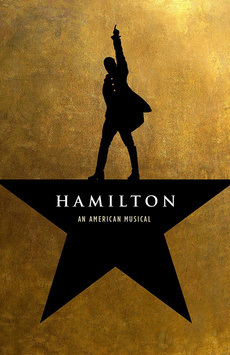
Hamilton the Musical


When a friend of mine told me that she could not get tickets to Hamilton this summer --- or in fact for the rest of 2016, I was flabbergasted. Last summer, after it opened on Broadway in July, I bought 2 tickets in August for a Saturday (!) matinee show in September. How could the wait become a whole ye... Damn you online scalpers!

I have tried to explain to a few people just what is so successful about Hamilton that has caused such a breathless sensation. It's hard. I don't think Lin Manuel Miranda, the writer of the musical who adapted it from a biography written by Ron Chernow, can fully explain it. Everything clicks in various surprising and mind-tickling ways. So many things could have gone wrong in this rather daring re-telling of American Revolution from the point of view of Alexander Hamilton. It could have been too cynical or too earnest, too reverential or too disrespectful, too serious or too silly, too boring or too absurd ... Somehow by some miracle of not only Miranda's skills but also his personality, it has circumvented every gaping pitfall and kept the tone to an improbably perfection that pleases everyone. Unless you are a raging white supremacist who carry the Klan membership card in your pocket, everyone from a rabid liberal to a recalcitrant conservatives is thrilled and charmed by this portrait of a young United States. It's so universally flattering, except to maybe a British royalist, that you don't even feel the flattery.

Of all the things that have been vehemently praised by pretty much every talking head associated or unassociated with musical theater, one extraordinary thing is the fact that it has a cast of almost entirely minorities. The key actors are primarily black, some Hispanic (including Miranda himself who is Puerto Rican), and one Asian (Phillipa Soo). Of course it was a conscious decision to give many underrated and underappreciated actors a place to shine. Miranda has said in several interviews that he wanted to represent the faces of America then --- European immigrants fighting for independence --- with the faces of America now, as recent immigrants have predominantly darker skin. But, I can't help the feeling that the casting was initially dictated by his writing voice.

LM Miranda can juggle multiple music styles, but his specialty has always been rap, as shown in his previous musical In the Heights. He admitted in one interview that he started thinking about writing the show as he gobbled down Chernow's book for the first time. The voice in his head was the voice most familiar to him: rap. In 2009, he wrote one rap number summarizing Hamilton's life and performed it at a White House event. It was well received. From the beginning, the basic voice of this musical had to be rap.

The next logical conclusion must have been that he would have to cast several black actors to perform his rap lyrics. I don't know if the image of a cast of white Broadway actors rapping as Hamilton, Jefferson, Madison, and Aaron Burr crossed his mind. It did mine and gave me a shudder. It would have been so wrong in so many ways, not least the suggestion of cultural appropriation and reminder of repeated insults to minorities from the birth of this nation. No, his lines would have to be sung/spoken by black actors (and himself) who know what they are doing. As such, a minority-dominated cast is not only preferred but practically inevitable. Indeed, he had to convince a professional rapper friend, Daveed Diggs, to suspend his tour to join the cast. Diggs turned out to be an absolute highlight of the show.

Would this pose an issue as Hamilton goes on a National tour to Chicago and Los Angeles? Can they find a predominantly black and Hispanic cast who can handle the demanding lyrics and rhythm? We'll have to wait and see.

Tuesday, December 22, 2015

And Seven Times Never Kill Man


After someone made the connection between Chewbacca (and subsequent the Ewoks) and the George RR Martin's novella "And Seven Times Never Kill Man," I went back to re-read the story. It became clear that both Georges were metaphorically commenting on the Vietnam War in their depiction of a jungle war, in which the technologically more dominant and more powerful side is defeated by a weaker tribe.  


Needless to say, GRRM was vastly, vastly more interesting. Lucas catered to what people want to believe, derived from wishful thinking; and Martin went by his astute observation of history. 

What is mind tickling, however, is how Martin's vision based on one particular war panned out in many future wars, in which the military victories of the mighty empire over small insignificant tribes set off an insidious slow incineration from within the empire ... until they too begin to sacrifice their children to the pale god of war Bakkalon. 

Martin's predictive power is spectacular. 

Saturday, November 21, 2015

The World Until Yesterday: Notes #2

As a Chinese person growing up in the 1970s and 1980s, I straddled the traditional extended family model and the modern nuclear family model. Because of increased social mobility, both my parents have lived far away from their own families, so that we had a family size of 4 throughout most of my life. Nevertheless I had brief intervals of living at my maternal grandparents' house. So I can easily understand and identify with the family structure in primitive tribes described in the book.

Of course, my experience with extended family did not include some elements in small-scale tribes. For example, in hunter-gatherer societies, parents and children live together in close proximity. Children see their parents have sex all the time and imitate it in sexual games among themselves. This was treated with no particular alarm by adults. 

However, other family characteristics are very familiar: Aunts and uncles share childcare frequently (I played with my cousins and ate at my aunt's house countless times); grandparents take over much of the work; the specific role and boundaries of biological parents are blurry. This stirs up a lot of memories. 

When I was in the nuclear family with my parents and brother, I was in fact home alone most of the time. Both parents went to work, and my brother went to school. I often ran off to my cousins house and played there until my parents came home from work. This was the norm until I started school at 6 and a half years. But my memory of being in my grandparent's house is much stronger and more vivid. In their Shanghai house with narrow, steep, creaky wooden stairs, people came and went all day long, most of whom I knew not. My grandfather's father had three wives, resulting in a huge number of relatives with tenuous and ambiguous relationships. They randomly dropped in for a social visit and exchanged gossips and gifts, and then stayed for a meal. It was said that grandmother could never turn anyone out before lunch. I loitered with my cousins and uncles of the same age in the background, playing games of our own. Children were well fed but otherwise ignored. I never got a fraction of the attention in Shanghai as I did at home as the youngest child. Most of the time it was chaotic and confusing and had nothing to do with me. Yet I often recall the sense of peace and safety in my grandparents' house, with constant chatter (in the Ningbo dialect) and the smell of food. 

Diamond writes that anthropologists have documented their surprise at how far advanced tribal children are in social maturity, compared with children in Western countries. He attributes this maturity with their contacts with adults of various ages and generations all the time, while Western children have limited contacts with adults other than their parents and are often segregated by age in daycare and school. 

I wonder if I would have become a more social person if I had grown up in my grandparents' household. 

The World Until Yesterday: Notes #1


I'm reading this book very slowly, which does not mean it's any less fascinating than A Song of Ice and Fire or Mahabharata. What rubs me the right way about Jared Diamond's style is perhaps exactly what I consider my own hopeless deficiency --- He presents more facts than opinions. There is a distinct lack of posturing for his own self-image and position. The confidence in his facts and the modesty in his claims immediately elevate him above the likes of Steven Pinker and Malcolm Gladwell in my mind.

The first part of the book on violent conflicts (from small clashes to war) in primitive, small-scale societies immediately blew my mind and opened a new perspective on the shape of the world. Maybe I'll make some notes on this at a later time.

What compelled me to begin taking notes though is the second part about family structure and child-rearing tradition in primitive societies. There is an astounding range of child-bearing and rearing practices, from giving small children complete autonomy (eg, letting them play with knife and hurt themselves or by fire and get burned in hunter-gatherer tribes) to strict discipline and physical punishment (eg, in herding societies).

The variations are partially but not entirely determined by how they make a living. For example, hunter-gatherers are the most egalitarian type of society, because of the lack of personal possessions --- there is hardly anything to possess, and you can't carry much with you in endless trekking. They regard children as fully equivalent to adults, only weaker and smaller, and therefore deserve to make their own decisions (like playing with fire). In a hunter-gatherer band, a child who misbehaves is unlikely to hurt anyone but himself, and therefore is not a cause of too much anxiety. However, a careless or mischievous child can lose the family's precious animals in a herding clan, which therefore must be prevented harshly.

Another fascinating observation is that infants are surrounded by allo-parents (eg, aunts and uncles, grandparents, older siblings) nearly all the time in primitive societies. As soon as an infant cries, regardless of reason, he is usually touched or picked up within 10 seconds by his mother or an allo-parent or someone in the tribe. This compares with the practice in 20th century Germany (where Diamond lived in the 1960s) where mothers responded, on average, 1 to 10 minutes after their infants started crying, because of the cultural belief that children must be taught self-reliance and independence as early as possible. As a result, a primitive-society infant cries only half as much/long as an infant in a modern Western society.

I don't know how many books have been sold and how much money has been spent in Europe and North America on this very subject of whether babies should be picked up when they cry and how long parents should wait before doing it. Even a person with no children, like me, knows this is one of the most contentious subjects among parents and experts. Yet, shockingly, Diamond does not seem to feel compelled to take a side. He even admits that he and his wife were agonized by their children's crying when they tried to follow the advice of not picking them up too quickly. But he did not denounce the German approach as wrong, nor did he brandish research proving the long-term emotional damage this has caused in millions of disappointed children. He merely points out that immediate response to a crying child reduces, rather than increases his crying overall, according to some anthropologists' observational data.


Monday, July 20, 2015

Universal Exceptionalism

As recently as ten years ago, the single-origin and multiregional theories of modern human evolution were neck and neck, with perhaps more supporters for the latter theory, which postulates that very old (approximately 2.5 million years ago) archaic humans spread throughout the world, and humans living in different regions evolved separately into their current state. The fact that there is so much similarity among humans of different regions may be due to interbreeding throughout the history.

It was not until the rapid democratization of genomic analysis tools that the evidence firmly settles the argument in favor of the recent single-origin theory. This theory says that a single tribe/family was the only ancestors of all modern humans living today. Small groups of the tribe left East Africa and spread all over the world with astonishing speed and efficiency to become Homo sapiens. The exodus occurred as recently as 60,000 years ago, probably after a climate-related bottleneck (eg, the Ice Age) that cut their size down to a small number of blood relatives.

As these early humans migrate to northern Africa, the Middle East, Central Asia, Europe, northern Asia, and the Americas; and to Indian Ocean, southern India, and then the South Pacific, they replaced many other human species who had left Africa much earlier and inhabited these regions. It sounds incredible, doesn't it? The earlier human species took hundreds of thousands of years just to carve out a place for themselves in the world. They coexisted in relative balance but geographically separate from each other. And here came a few new cousins. Within 50,000 years, all other humanoid species were wiped out. Gone. Extinct. Homo sapiens alone dominate the world. The phenomenon is so extraordinary and out of proportion with previous history, no wonder it did not gain popularity until recently. It seemed more sensible if humans evolved on the time scale of a million years or so, as the fossils of other primates and humanoids suggest.

But the genomic evidence cannot be helped. Homo sapiens exploded onto the world with an exponential speed. Their routes of migration are illustrated on the National Geographic site The Human Journey.

Last weekend, my friend Helen made a profound observation about this subject: How did we not see this? Why couldn't we see that humans all over the world are absurdly alike, until the truth is forced on us? Looking back, the common traits are unmistakable. We all think abstractly and take to our symbols. We all have language. We organize society in nearly the same way. Despite cultural and historical differences, we instinctively understand each other like no other species. In "The World Until Yesterday," Jared Diamond described how remote islanders who had lived all their lives in primitive tribes could adapt to life in the 21st century within a just few years. And yet, we are naturally drawn to the theory that we separately evolved in multiple regions. Many Chinese academics still believe that the Chinese descended from Homo erectus pekinensis, whose fossils are dated to 500,000 years ago. Sorry to burst their bubbles, but the poor Homo erecus pekinensis were likely victims replaced by the ancestors of modern Chinese.

Why haven't humans preserved the history of leaving their original tribe behind or separating from their brothers and sisters and cousins? Without this tribal memory, when we encounter our long-lost cousins from another part of the world, all we want to do is to make war with them, rather than recognizing our shared lineage and hug each other. One possible explanation is that any history transmitted purely orally (before the invention of writing and means of recording writing) is fragile and prone to loss. But I think there may be something deeply embedded in human nature that drives us to believe in our own uniqueness. Funny how we are exactly the same in our narcissism and exceptionalism, which further supports the single origin theory. It is like what GK Chesterton pointed out, the two sides are in complete agreement, and therefore they go to war with each other.

Also ironic as hell is how we feel so lonely in this world that we set up massive telescopes and send out spacecrafts trying to find intelligent beings like us on other planets, even though we in fact lived alongside our cousins once upon a time and probably killed them all off. Perhaps all of these phenomena are manifestation of the same underlying trait --- we want to believe that we/I/our people are unique; we are perhaps the most aggressive and ruthless branch in archaic human species; when we encounter someone like us, we want to kill them or at least outcompete them rather than making friends; and last but not least, we are now the only human species left. We may not be inclined to the truth, but our bias may confer some kind of advantage. That is why truth is often hard to accept, even when it's right under our nose. 

Monday, March 23, 2015

King John

I'm up to Act 4 now.

Oh man it is such an intense play packed with twists and turns. Characters take turns throwing flaming insults at each other. Oh the madness, rage, and screaming. Why isn't it being revived more often? Why had I never heard of it before?

At the center of the plot is King John who is stuck in an impossible situation. His brother, Richard the Lionheart had passed his throne to John, but their older brother's son Arthur, still a teenager, had a better claim. Although John seized the crown with force, France was trying to invade and install Arthur. When John captured Arthur in battle, he was stuck between rock and a hard place. Keep Arthur around, France would invade in the name of rescuing the rightful king. Get rid of Arthur, which was what he did, would drive barons already annoyed by his fiscal policies into open rebellion. To add to his siege was the Pope, in a dispute with John not unlike the one between the Vatican and Henry VIII three hundred years later. 

Yes, John was a kinslayer, but what else could he do? He was damned if he did and damned if he didn't. I thought about it and thought about it --- Short of conceding the crown to his nephew, he had no way out of the dilemma. I suppose it is a far more common situation in human history than we are willing to admit to ourselves --- The choices you are given are no choice at all. You are fucked no matter what you do.

Monday, March 2, 2015

Nazi and the Gita (Mahabharata Notes #12)

Well, it looks like synchronicity, or coincidence, or my premonition (just kidding), as one of my random thoughts connecting Hitler and Bhagavad Git turned out to be true. Apparently some Nazis did love the Gita. Apparently, ancient Indian mythology and philosophy were a big deal among German intellectuals in the 19th century and subsequently garnered some fans in Nazi leadership. Apparently, it is no accident that Nazis chose the swastika as their symbol and identified themselves as Aryans, which seems to stretch one's imagination if we were to compare the appearances of Indians, however light-skinned they are, with the ideal looks touted by white supremacists. One has to wonder if they asked real Indians whether such re-appropriation of their religion and philosophy was acceptable. Somehow I doubt it.

Perhaps one should not be too surprised. Didn't we all read Herman Hesse's fictional biography of Buddha? Didn't we hear that Schopenhauer was a fan as well? So Hinduism was no doubt pretty fashionable in Germany back then. Here is a fairly substantive article about one of the prominent Gita fans: Heinrich Himmler. He identified the military expansion and aggression of the Third Reich with the martial values and beliefs of kshatriyas (the warrior caste) in Hinduism. According to Himmler, Hitler is Krishna reincarnate (perhaps figuratively) to bring dharma, ie, Nazism, to the world. Funny how mercy and family and the revolving wheel of life and death, and all the other stuff in Hinduism and Buddhism never made it into Nazism, for whom death is just death. You can't blame me for not seeing the connection before.

Nevertheless one does have to wonder whether Herr Himmler actually read Mahabharata. If he had, he might think twice about comparing themselves to kshatriyas, the ancient warrior caste. It does seem to me that he had no idea what happened to kshatriyas in Kurukshetra and what Krishna was sent into the world for. In fact, Krishna was no leader or savior of kshatriyas at all; rather, his true purpose was to wipe out all the kshatriya kings and soldiers in this deadly conflict and leave a world "unburdened" by kshatriyas at the start of the Kali Yuga. If we were to follow this train of logic, hmm, what did happen to Nazi armies in the Kurukshetra of our time? I am not a superstitious person, so I will not say all this is some weird, time-warping phenomenon. But the irony is killing me.

Anyway, what is unexpected in this odd pairing is not that Nazis found inspiration from the Gita (a possibility that even I "foresaw"), but rather that they looked to the Gita at all. I always assumed that they pursued their mission with absolute conviction of their own righteousness and needed no confirmation from anyone, least of all some foreign religious text. Only those with doubts need the Gita to inspire them and spur them into action, no? Might Himmler have doubts about what he was doing, like Arjuna, and feel as if he needed some moral and philosophical support? Taking this thought one step further, we may have to contemplate the possibility that Himmler and other Nazis were indeed human, too.

Saturday, January 3, 2015

Mahabharata and Cause and Effect (1)

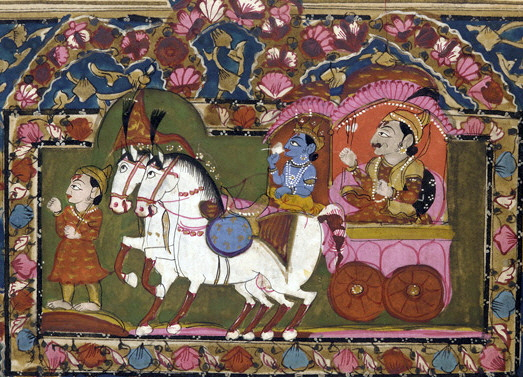
Krishna and Arjuna at Kurukshetra via Wikipedia

I am not so ambitious as to want to discuss Mahabharata or Indian philosophy or something like that. Coming in contact with (although by no means actually knowing) ... this, eh, massive thing ... is another reminder how humans try to understand their existence and their relationships with each other for thousands of years.

Some of it got me thinking about cause and effect. I don't know enough about Hinduism to know what they actually think about this --- and signs suggest that different schools have their own interpretations. It seems to me that it is at least suggested that cause and effect is an illusion, or maybe it doesn't matter. In Mahabharata it often goes like this: Someone feels slighted or insulted and says a curse or makes a vow, something like "So-and-so has wronged me and I wish to eventually cut off his head." He or she may not be able to carry out this curse (otherwise they'd do it rather than just use words), but a series of events occur and the enemy is eventually slain, likely on the final battlefield of Kurukshetra. Or it could go like this: Someone strongly desires something and has to have it (eg, a son and heir to the throne). After much praying to one or several gods, the wish is granted, but things turn out to be not so peachy after all. The hero Bhisma wants to protect the legacy of his father's dynasty and does everything he can to achieve that, only to bring about the destruction of Hastinapura through intra-familial war.

Before the battle at Kurukshetra commences, the main hero Arjuna pauses in the face of a future of massive deaths of his relatives and friends, many at his own hands. His friend and guidance counselor Lord Krishna says, Don't worry about it. Just do your duty as a warrior. Don't think about outcomes. (There is of course a lot more philosophical digression in the famous Bhagavad Gita, but I have not got that far.) One could argue that Krishna is trying to justify war and killing, but it's not that simple. It seems relevant to everything we set out to do.

The fact is that some, much, perhaps most of our actions are intended for a future outcome. We do this and that in the hope of bringing about a future outcome or consequence. We work today to get paid next week or next month, with the faith that we will get paid eventually. We learned to believe in the future through agriculture at least --- planting seeds today and hoping for a harvest a few months down the road. Our mind makes a connection between events separated by a stretch of time, ie, cause and effect.

Some things are reliably connected, despite the separation of time. And then there are things for which the connections are not as clear or definite. Arjuna says, Look, there is my grandsire Bhisma on the other side. He has loved me and raised me, and I will cause his death. Krishna replies, Why grieve for his death? Everyone who's been born dies. It's the inevitable fate. So Bhisma is going to die regardless of whether Arjuna causes it or not. 

OK, I know this argument can be easily abused for murder, etc., but still, it is a worthwhile mental exercise and relevant to things we do every day. Hey, even eating meat may be a cause of killing and slaughters, and sitting in an air-conditioned room or driving a car may be a cause of more killing. If we really want to dig into it, this won't be a pretty picture. 

I don't know what one can do with this thought. It is NOT a manifesto to become vegetarian or renounce automobiles, that's for sure. Maybe nothing. Maybe it doesn't make anyone feel better or change anything. But still. Something to think about. 

Thursday, January 1, 2015

Moral Enforcement in Chinese Culture

最近朋友发给我一些杂文作家刀尔登的文集。很好看,尤其是对于我这种不太了解中国经典书籍的人来说,程度不深不浅,正好。其中留下印象最深的一句是说起孟子和多数的X子论点是,治国怎么治呢?把人民都变成好人了,国家就万事大吉了。 换言之就是改善民风,或“提高人民素质”。

一想果然如此,这或许是我见过的对中国文化最精辟的总结。The Chinese culture is in fact individualistic, but it is not the American kind of individualism. It's all about the perfection of individual morality.

实际上从汉朝至今这套政治理论是中国文化的主流,跟庞大而复杂但很实效的官僚结构并存。Throughout Chinese history, the ruling class (including the intellectual-bureaucrats) can't leave the ruled masses alone with their thoughts. The pursuit of refinement of morality has never ceased. The dream that utopia is a place where some pure-minded people live has never been completely abandoned and runs deep in the Chinese culture.

Of course, Chinese people are not and have never been better than anyone else (whatever "better" means). Nevertheless the political machine has its insidious effect. Chinese people are perhaps more preoccupied with individual morality than most other cultures --- When it's impossible to be the perfect person myself, I can always demand it of my neighbors.

人性之稳定和现实的力量令人叹为观止,中国人并未达到统治者努力推广的完美程度。或许这才是李约瑟难题的答案:为什么中国没发展出近代科学呢?因为大家都忙着去道德完善人民群众的思想了。

连老子也不能脱离当时的风潮,他的理论也是通过控制个人的性格和行为而达到政治的理想境界。或许在人口有限的当时这并不是完全无理的推测,把集体群众看作个体的机械总和。但是后来人口涨到面目全非,但政治理论仍然念念不忘提高人民个体的思想素质,也是挺奇怪的。人民真的会因为洗脑政策和自我完善而变得方便控制吗?毛似乎已经证伪了这个理论,但是被证伪的理论仍不停地被拿出来回收利用。

If the Chinese culture can be summarized into one sentence, it would be "You there -- Don't think bad thoughts."

The Ending of Le Samourai (1967), Explained

A quick online search after watching Jean-Pierre Melville's Le Samourai confirmed my suspicion: The plot is very rarely understood by E...