Search This Blog

Sunday, July 2, 2023

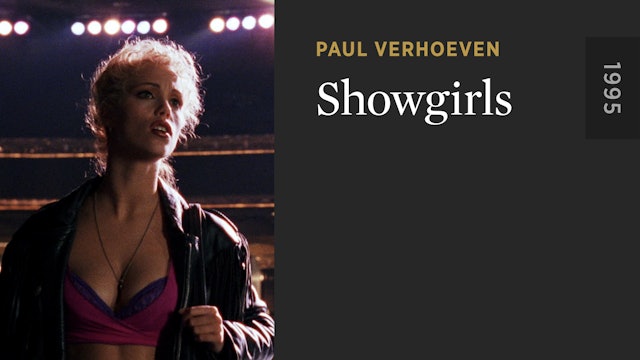
Showgirls (1995)


I got to this notorious Verhoeven movie after seeing at least 6 other movies of his. So, by this time, I am familiar enough with his internal logic and worldview and no longer have that vague disturbing feeling. While I do not disagree with a lot of the discourse on the movie's themes of misogyny, commodification of the female body, and female rage, I do feel like observers are consistently hampered by their inability to imagine that a male author/creator can project his own self into female characters. The universality of this blind spot is absolutely baffling, as I dare say every female storyteller has tried to write from a male point of view. Is it so hard to imagine that male storytellers would identify with female characters sometimes? George RR Martin mentioned that of course all those female characters came out of his own mind just like the male ones, including Cersei. He had to identify with them to write their POV chapters.

What I mean is, social and gender critiques aside (all valid), Nomi represents a pretty big part of Verhoeven himself.

(If the character were male, this identification would be apparent to everyone immediately.)

Many have observed, and Verhoeven himself also acknowledged, that the character's introduction is more than a little strange. From the start, Nomi is presented as brusque, irritable, and combative. In other words, the audience does not recognize her as a white American woman of a lower class. Her behaviors would be far more understandable and acceptable if they had come from a white Dutch man.

Most of the movie demonstrating Nomi's ambitious but conflicted pursuit of success in Las Vegas is an obvious analogy of Verhoeven's own ambitious and conflicted pursuit of success in Hollywood. Nomi's repeated and earnest insistence that she is not a prostitute is cited by critics as one of the laughable choices of the movie --- and indeed I agree, as she clearly seduced the Kyle McLaughlin character in order to get the understudy role --- I interpret this as Verhoeven's self-mockery of his career in America. Sure, he slipped satire into Total Recall, Robocop, and Basic Instinct, but these movies nevertheless were primarily crowd-pleasing blockbusters that sucked the American audience's collective dick. So I can imagine he felt a little bit conflicted about how much he was prostituting his talent and sensibility for fame and fortune. (I read somewhere that he claimed that he moved to Hollywood because his wife pushed him into it. Regardless of the credibility of his claim [throwing his wife under the bus?], it's an indication of his ambivalence.)

In the past 30 years, I have been to Las Vegas twice, once for a professional conference and the other for a figure skating event. The vulgarity and gaudiness and excess of Vegas are accurately reflected in Showgirls' own style. Besides the vulgarity and naked (no pun intended) greed, I am surprised by a sense of hostility permeating ordinary interactions, even though it is 90% service economy. I repeatedly got ripped off by taxi drivers. Restaurant staff were unfriendly. Unlike rural America, the general indifference and antagonism are not related to race or immigration or the usual political trigger points. People just seem tired and hardened, with no empathy to spare. The only nice and honest taxi driver I met, a middle-aged woman, told me that she was a Los Angeles transplant and contemplating moving back to LA.

In that sense, the Molly character in the movie is almost unrealistically tender and generous. Perhaps it is just Verhoeven's commentary about the general condition of African Americans; I don't know. That element aside, Verhoeven's unapologetic cynicism about human nature (see "Flesh and Blood", 1985) fits perfectly for the setting and makes his observation of Las Vegas and, by proxy, Hollywood totally spot on, especially the bosses, from the strip club owner to the show director to the businessmen, are all as ugly as the decorations of Vegas hotels.

Another complaint in the barrage of critical and pop-culture hatred toward Showgirls at the time was that none of the nudity and sex scenes are titillating or gratifying at all. Again I agree, except that it's not necessarily a bad thing. Everyone knows, and Verhoeven admitted himself, that sex is a central concern in his work, and he wants to examine it whenever he can. And yet, nothing in Showgirls is sexually appealing. Quite the opposite. All the sex and nude scenes are about dominance, and I do mean ALL. There is no warmth or tender feeling in any of them. If we have to dig deeper for feelings, perhaps the intense rivalry between Nomi and Gina Gershon's character contains a hint of mutual attraction, but I don't think it was successfully conveyed.

What is truly impressive and not cynical, however, is the dance choreography. Yes, the nudity could be a little distracting, but once we ignore that part (one gets numb quickly), it becomes clear that the dance scenes were well choreographed, filmed, and edited. Elizabeth Berkley performed her dance sequences with a crazed intensity that no doubt was required by Verhoeven. They were not only set pieces but also character- and plot-driven. In a way, it is a pretty good movie musical, if we ignore the Hollywood tradition of movie musicals as wholesome "family" entertainment. 

The movie is a little too long (excess is another Verhoeven trait). About two-thirds way through, I was getting somewhat bored. But the revenge scene near the end, although short, woke me up from the slump. The straight, blond ponytail hairstyle, used ONLY in this scene, suggests an entirely different movie that is more committed to rage, which might be more interesting. It reminds me of an early Verhoeven movie, The Fourth Man (1983). 


Wednesday, June 14, 2023

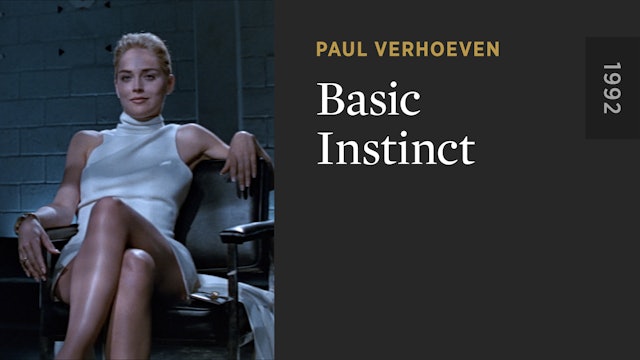
Another Interpretation of Basic Instinct (1992)


It is odd that I never watched "Basic Instinct", despite all the exposure to its references and spoofs over the years, until I got back onto Criterion channel. Perhaps it is my deep fear or disturbance of "scary women". After watching it I can confirm that the main character Catherine, played by Sharon Stone, is indeed one of the scariest women on screen for perhaps three quarters of the movie. Near the end she switches to the manipulation mode and becomes much less scary. The last good scene is Catherine telling her lover, Nick, played by Michael Douglas, to get lost, now that she has finished her book. (Plot-wise, it is rather inconsistent, as Catherine continues to keep other murderers in her life. Why not Nick too?) 

I can understand why some critics felt that Catherine is a male character dressed up as a woman, as cited by Karina Longworth in her fascinating You Must Remember This podcast. However, I have the feeling of watching a strange international mashup on screen: a love affair between a Dutch woman and an American man. Disclaimer: I know zero Dutch person in real life. The closest I have gotten to the Dutch culture is limited to superficially meeting a couple of Flemish persons, who would be the first to point out their difference from the Dutch. Nevertheless, Dutch women have a reputation of being one of the most powerful and aggressive groups of women in the world --- Well, who am I kidding, the reputation of Dutch women is that they are the most like men. 

On the other hand, Michael Douglas derived his popularity from embodying the quintessential American white men of the Reagan era. So the power dynamic between a European woman and an American man is so potent that, now, 30 years after the fact but on my first viewing, I see this movie as an allegory of the cultural dialog between Europe and United States, or perhaps simply the Netherlands and US, as presented by Paul Verhoeven. 

Verhoeven made several hits in Hollywood in the 80s and 90s that are more or less considered satires of the American culture. Robocop is a more explicit satire about the power of corporations and privatization of everything (which proves to be prescient). Starship Troopers is a more subtle spoof of the military and patriotism propaganda. Basic Instinct transparently makes fun of the Puritanical attitude toward sex that is particular to the American culture. (This satire also proves to be prescient for the direction of Hollywood movies in the next 30 years.)

Of course, American audience automatically identifies with Douglas' character, as he is the point-of-view character, and laments his diminished power/dominance in this relationship, and their disorientation has to be soothed by the absurd but more American relationship between Nick and his psychologist Beth, played by Jean Tripplehorn. However, a closer look at Nick suggests that he does not fit the trope of heroic cop that floods American movies and TV. His history of killing not only drug dealers but innocent bystanders is repeatedly brought up and never justified. It is curious and revealing that neither the American audience nor critics ever found that to be a defining trait of the character. Again history confirms the acuity of this observation about the American culture, which echoes the excessive violence in Robocop. Nick is a violent man who is in this job for the privilege of killing people (and getting away with it, as the dialog reminds us), and he does eventually shoots dead his ex-lover (perhaps representing the moviegoing American public), while his victim's last words were "I love you" (I guess she represents American white women?). Thus, he belongs in Catherine's menagerie of blood-thirsty killers. 

The simultaneous aggression and submission of this character make it a study in the American masculinity, which can be observed generally in the concurrence of excessive violence and sexual prudishness in American movies. The hilarious "happily ever after" ending may seem stupid but is necessary to protect the audience from facing the uncomfortable death of the American Man. Nevertheless, Nick's obliviousness in that scene carries the allegory to the end.

Tuesday, June 6, 2023

A Wizard of the Earthsea


One night twenty years ago, I went to see Ursula Le Guin at Folger Library, where she accepted the PEN/Malamud award. It was a bit of a trek from Gaithersburg, Maryland, but I had fallen in love with her novel "The Lathe of Heaven" and her Taoist philosophy. She was a white-haired diminutive woman. At the award, she read one of her short stories about an all-female expedition that reached the South Pole and decided to keep it secret. At that time I did not understand the ending, but now I do. Even in my ignorance, by the end of the reading, tears were streaming down my face. 

Some years ago I picked up the Earth Sea trilogy but could not get past the first chapter. Yet another Arthurian fantasy about wizards and magic centered around a boy who will grow into a great man. A tiresome trope of "the chosen one", I thought. A week ago it was again recommended to me as an example of an unusual exploration of power and its use. So I started again. My first impression was entirely wrong. It both is and is not the Arthurian fairy tale. 

There is indeed a lot of worldbuilding and magic and other traditional fantasy elements, but it also subverts many of the common tropes of the genre. The novel starts with a heroic achievement by Ged as a boy, setting up an expectation that he is destined to be a great hero through a series of conquests and elevation of his talent and skills. But no. The novel is a journey of self-discovery and self-reflection. It's a psychological adventure disguised as fantasy adventure.  

Le Guin had an unparalleled talent in writing severe hardships and quiet stoicism. She is really one of the toughest writers I have read. The ordeals she routinely put her characters through are punishing and merciless. So it is all the more extraordinary that none of it is at all cynical or nihilistic. One closes her books with warmth, humility, and affirmation of life. 

The novel was written in 1967. For over half a century, the fantasy genre, the YA genre, and the YA fantasy genre all exploded in popularity. Yet still the torrent of stale tropes continues to flow, and very few works are nearly as subversive, almost revolutionary, as Le Guin's. 


Tuesday, May 23, 2023

Thoughts on Artificial Intelligence (2)

Ursula Le Guin said, "Science fiction is not predictive; it's descriptive." I'm sure AI will rob many people of their jobs and change society in some ways, but my interest is of course less about the machine itself and more about the humanity reflected in the metallic shell. 

Machines have learned to beat humans in chess and go a few years ago, but it is a chat program that caused widespread panic/excitement, because it is now "talking" to average humans. It is not a surprise that we instinctively feel that a machine that talks to us is somehow more human than a machine that beat us at board games, because that is just the means with which each person interacts with other humans: language. 

Well, no, not exactly, we do not interact with other humans solely through language. However, since its emergence some 150,000 years ago, human communication increasingly depends on language, this abstract symbol that only evokes but is not the real thing. Money is not provide nutrition if swallowed. A drawing of flowers does not emit fragrance. The words "I love you" does not keep one warm at night. 

Nevertheless, the daily human experience, not limited to communication, is more and more lived through symbols. Just ask people how often they take telephone calls and see how many have completely switched to text messages. 

Now more than ever, it is clear that machines will never be like human, even if their imitation becomes impeccable. Why? Because machines do not have bodies. They do not crave chocolate; their intestines are not colonized by billions of bacteria; their eyes do not well up with tears; their skin does not sweat; they do not feel their bodies change; and they are not the prisoner of their bodies' eventual demise. Instead, they crunch numbers and convert them into the numbers that we understand. I am not against calling machines "alive" or "conscious", but human they can never be. 

On the other hand, humans are sliding down the slope into an existence that is ever closer to machines, as we rely more and more on symbols to talk to each other and even ourselves. The body, the sensations, and the tingling on the skin, are slowly sinking into oblivion. 

Sunday, May 14, 2023

Thoughts on Artificial Intelligence (1)


Even if I am not all that interested in ChatGPT or AI in general, one cannot go around today without hearing about it. Can AI eventually replace humans? I think the answer is a foregone conclusion. Yes, of course. So far, the text sputtered out from ChatGPT is indistinguishable from a mediocre human writer: long-winded, dull, unreliable, a mixture of truth and rumors and occasional lies. 

The heart of the matter is not whether AI is in fact human-like, possessing the goodies that we have assigned to ourselves: consciousness, intelligence, self-awareness, etc. The real question is: Can we tell the difference? That's the essence of the Turing Test, and the answer is clearly, NO. A human cannot look at blocks of text on the screen and know whether it has been written by another human or a machine. 

So the uncomfortable question is: Are human no more than a machine? More than a possible future in which humans are obliterated by machines, the fear and discomfort is in the here and now: We are not special and maybe not as smart as we think. 

Sure, we can pat ourselves on the back for the fact that these human imitations were "created" or "invented" by humans, followed by the realization that we are not so complex or sublime or mythical that we cannot be easily imitated with some codes and billions and trillions of human-generated words as training material. In other words, real humans are pretty boring and predictable. We're also a bunch of narcissists who molded some clay creatures in our own image, and now in these images we see the plainness of ourselves. Oops. 

Wednesday, April 12, 2023

Triangle of Sadness


It is a bizarre coincidence that, in the same year (2022), there was a movie that disguises itself as being sympathetic to abusive power and another movie that disguises itself as making fun of the rich and privileged, while the real sentiment of the filmmakers was the opposite. Perhaps artistic expression always contains an element of pretention or coverup? 

Ruben Ostlund's movie is explicitly divided into three parts. It must be noted that the young couple of models, played by Charlbi Dean Kriek and Harris Dickinson, were in all three parts, even if they do not appear to be the center of the story in the second and third parts. The second part, which many critics either embrace or condemn, is the foundation of this appearance that the movie is making fun of the rich, upper-class people in the world. I completely agree with the criticism of this absurd farce, in which a bunch of forgettable caricatures of rich people puked and pooped on a luxury yacht. It is rather curious, however, how bad the middle part of the movie is. It's not funny (worth at most a few awkward chuckles) and totally meaningless. None of the characters carries a trace of truth that reminds the audience of the rich and powerful people in the real world. However, before we completely dismiss it, let's take a look at the first and last parts. 

The first part of the movie gives us scenes from a rather unflattering and truly hilarious (here the awkwardness works) relationship between the two models. They argue. They fight. Is it about money? They deny it. Then they seem to admit it. Then they deny it some more. As they dance around the issue of money, we get the vague sense that the conflict has more to do about gender roles than economics. Kriek's character declares that her goal is to find a rich man to marry and Dickinson's character is just a temporary fling during her search. So it is indeed about money, specifically, the traditional gender roles in which men give women money. 

The third part is a desert island--"Survivor" type of setup. To sum it up simply, a previous servant on the yacht, a Filipino cleaning lady played by Dolly De Leon, leaps into the position of power because of her superior survivor skills, while the sources of status on the yacht (wealth, rank, brawn) have lost their meaning on the island. She gradually starts to boss everyone around and exerts her dominance by taking the pretty boy into her bedroom. So his gender role is now the same as that suggested (but not realized) for Kriek in the first part --- selling one's body for material gains (in this case, food). 

The ending is particularly revealing of Ostlund's own intent. 

<SPOILERS BELOW!>

Without going into specifics, let me just say that the message is transparently that power corrupts equally people who did not have it, be it a woman, or a dark-skinned woman, or a dark-skinned older woman without beauty, or a dark-skinned older un-beautiful woman who works downstairs as a servant. As a topic for debate in abstract theory, there is nothing wrong with bringing it up. On the other hand, for Ruben Ostlund to lecture us about the danger of women in power, is a little like a king telling the starving peasants on the verge of revolution to sit down and shut up because, well, you will be corrupted by power once you have mine, so you'd better let me keep it. 

Sure, he has the right to feel this way, and I have the right to feel slightly queasy. 

In the final scene, we see Dickinson's character running in the jungle. According to Ostlund's own explanation, it suggests that he is on his way to rescue his girlfriend (the young and pretty one, not the recent old woman boss/lover, because he no longer needs her). So here we are back to agonizing over the gender role. What use is a man? Women can fish and cook and start fires and feed themselves. The answer, it seems, is that he can save his girlfriend. There may be some violence involved, but Ostlund does not want to go beyond a mere hint. 

So, in the end, Triangle of Sadness is really about gender roles and power, and how both concerns relate to each other. This is not a surprise. He presented the same question, what use is a man?, in his previous movie "Force Majeure". If a man is not able/willing to save his wife and children from death (at the risk of losing his own life), is he worthless? What is his place/role/identity in this world? 

As an American woman living in 2023, it is very difficult for me to sympathize with Ruben Ostlund, a Swedish man, on this discussion about whether women with equal power will behave as badly as men do, or whether women in fact already have more power than men, and what that does to men's place in the world. I must say that I have detected, in some fictional representations here and there, a discontent among Scandinavian men, who have lived in a more progressive, more gender-equal environment for much longer than I have. I do not know whether Swedish or Finnish women have surpassed their fellow countrymen in power and begun to oppress them --- although economic data suggest no. But you know the saying, when you are used to privilege, equality feels like oppression. Their feeling of being oppressed is palpable, and I acknowledge that. 

What is truly amusing to me, however, is how Triangle of Sadness hides a somewhat reactionary heart underneath an anti-rich veneer by throwing shit around, while Tar pretends to ridicule the "Metoo" movement while tucking its anti-imperialist message in dream scenes. I enjoyed the discovery, but I'm not sure how I feel about so much dodging around. 

Wednesday, March 15, 2023

破门前后:中日对照

欧洲人进入日本可以追溯到十六世纪后期,西班牙传教士在民间传教,与当地政治秩序产生一定摩擦。德川幕府建立后(1603),逐渐加强对外国人的限制,开放长崎和平户两个港口允许外国船只停靠和贸易。其中荷兰商人被允许的权利最大,也许因为荷兰船只一心经商,对传教不太热衷(西医药进入日本时被称为“兰学”)。

1633年幕府开始实施“锁国令”,原因或许政治经济都有。1637年爆发岛原之乱,起因是农民不堪压榨而反抗官府,但同时基督教也起到凝聚力和号召力的作用。

对比1840年代开始的太平天国运动,也是与基督教相关的反政府组织,虽然相隔两百年,二者近似之处无法否认。基督教在民间广为流传,给不满现状的下层人民提供了一个理论基础和传播途径。

天草四郎之后,德川幕府极度严密地执行锁国政策,以防重蹈覆辙,倒也相当有效,保持了两百年的稳定社会,并通过削藩集中政治权力。直到1853年美国军舰“黑船”驶入江户湾,在大炮的威胁下,幕府被迫向西方国家开放港口和通商活动。这一转变给日本政治带来前所未有的危机,国民对洋人的不满情绪日渐高涨,与洋人的暴力冲突也屡屡发生,当然一边讨厌洋人一边把矛头指向当政的幕府。倒幕派的萨摩藩与长洲藩发出“尊王攘夷”的口号,借着拥戴天皇的理由(天皇不掌实权已经一千年了)颠覆幕府统治。

这段历史与义和团(1899-1901)也颇有相似之处。鸦片战争和八国联军几次战争之后,在中国境内经商与传教的洋人增加,经常与普通民众接触,民间少不了产生摩擦和冲突无法避免。洋人抗议并要求当地政府保护自己,结果加剧了民间对政府的不满,这里有政治的原因,也有民族的动机。

倒幕运动于1868年成功推翻了集权稳定250年的德川幕府,明治天皇建立新政府。不过新政并没有“攘夷”,而是更彻底地全面开国,加强工业与军事的进口贸易;同时积极向西方考察学习,以迅猛的速度进行政治改革,引进君主立宪的制度。事情的发展证明德川幕府的锁国令是正确的——从家族政权的角度来看,因为开国就会导致自己的灭亡。

相比之下,清朝的闭关锁国政策在鸦片战争之后就破裂了,之后半个多世纪都夹在洋人与国内反对势力之间拼命维持。清朝皇室也并非没有试图进口武器与技术,建立北洋舰队,雇佣西洋船长,搞洋务运动,等等;但政治改革是绝对无法接受的——当然德川幕府也未曾接受政治改革。所以,辛亥革命与倒幕运动有一定的平行之处,虽然时间上晚了半个世纪,但彻底颠覆了皇权,也有其更进步的意义。

两国的平行甚至延续到开国与制度改革之后,政治权力在短期内被军阀掌握。虽然有很多呼声和努力想要推进民主制度,下放权力,但是架不住封建时代遗留的权力结构和资源分配。日本经历了短暂的大正时代的进步与繁荣,但迅速地被法西斯势力控制;而中国在苏联的幕后操纵下陷入内战状态。

所以,排除时间上的差别,中日的国门开放过程其实是颇为相似的,差别主要在于两国在战争中的胜负结果。清朝政府打了很多战争,对外战争几乎全部失败,严重动摇了军事实力,但正因为如此,辛亥革命才不需要旷日持久的战争就迅速胜利。日本则是一路凯歌,从1895年日俄战争开始逐步扩张殖民打算吞下整个亚洲,在50年内从底层迅速走向顶峰再跌落到二战战败。(Pacific Overtures 提出的理论是,日本的殖民主义风潮是跟着黑船学来,依葫芦画瓢,通过武力扩张就能把自己变成世界强国,这好像也有点道理。)

在列强敲开国门之前,日本与中国的社会都是看似集权稳定,但冲突的暗流汹涌。日本是各藩对幕府的不满逐渐积累,中国是满汉之争。清朝皇权掌握在满洲贵族手中,与人口占绝对多数的汉人一直存在冲突和压力。虽然清朝的很多军事和政治力量部分掌握在一些汉人将军和官员手中,例如曾国藩,李鸿章,但革命党也经常用满汉之分来支持自己的反清事业。(清朝皇权被灭之后,满洲人不得不退回东北原址,接受日本的扶植而建立满洲国,也并不能阻止本族湮灭在时代浪潮中的命运。)这些原本只是暗流的内部矛盾,然而外来压力让它们浮出水面,最终干掉了旧秩序。如果没有外界压力,中日两国想必会沿着当时的轨道继续一些年,直到另外什么事情发生。

The Ending of Le Samourai (1967), Explained

A quick online search after watching Jean-Pierre Melville's Le Samourai confirmed my suspicion: The plot is very rarely understood by E...