Search This Blog

Sunday, December 22, 2013

Gypsy


Again this is not a Sondheim "joint" (to borrow a term from Spike Lee), as he did not write either the book or the music. It was the second Broadway project he got involved in, after "West Side Story," at the urging of Hammerstein. (Interesting that he got started as a lyricist rather than a composer, but that's another discussion.)

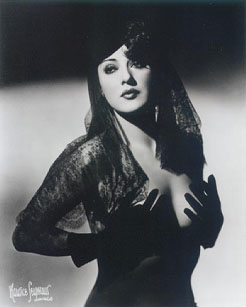
Perhaps the most extraordinary thing about the musical is that it was based on largely real events --- it was adapted from Gypsy Rose Lee's autobiography. Gypsy was a stripper (in burlesque dance) who became an international celebrity and befriended other celebrities such as Picasso, Miro, Chagall, etc. Apparently, her real life is even messier than the plot of the musical. I have suspected it for a while now: Life does not imitate art. Life is weirder and wilder than art.

Gypsy Rose Lee's story may also confirm another suspicion of mine: Today's American society (and perhaps other places as well) is a lot more morally puritanical than certain previous era. It may not be a bad thing. It may be associated with rising status of women more than anything else. I'm the last person to oppose feminism, but it doesn't change the fact that rising feminism could, in certain context, curb a loose and open sexual attitude (think Prohibition). I do not agree with those (mostly men) who claim that women are "naturally" or "biologically" more monogamous than men. Rather, women are more invested in monogamy than men are in most of history.

Gypsy hit the height of her (striptease) career in the 1930s. Gypsy the musical was written and produced in 1950s. In 2010s, such a show would never get on stage. Whether it's progress or regression, I'm in no position to say.

The real Gypsy

Sunday, December 15, 2013

Man in a Case

Supposedly this relatively short show (clocking in at slightly over an hour) is an experimental multimedia performance involving onstage narration, a bit of acting, a bit of music and dancing, some video screen juxtaposition, and sound and light effects. It seems to me, however, essentially telling stories with some gestures and props.

The stories it tells are two from Chekhov: Man in a Case and About Love. The first is about a Greek teacher at a small town school who is terrified. He follows rules and obeys authority with shuddering deference. He never puts half a toes out of line. At night he huddles in bed with fear of the world and people. For a brief moment he was on the brink of falling in love with a vibrant laughing young woman, but in the end the shock of relationship is too much to bear.

The second story tells about a university-educated farmer stuck in his boring monotonous life. He falls in love with a married woman in town and becomes a friend of the family. They are both too timid to admit their attractions until the moment she moves away with her husband and children. And they never see each other again.

The legendary Mikhail Baryshnikov plays the lead roles in both. At 63 he looks lean and sharp and entirely at ease as an actor. Although he does not dance in the show --- minus a minute or two of improvised jazzy twists in the middle to satisfy the audience who have come specifically to see him --- he moves with grace and precision. The show reaches its climax with a "dance" on the floor between the two unconsumated lovers that is projected onto a screen. It was breathtaking.

If I had seen it or read the stories even ten years ago, I would not have been moved as much as I am now. Perhaps ten years from now I will be moved even more. They are about self-inflicted failures and paralysis. "Look at you pathetic lot," Chekhov seems to say with a malicious smirk, "Look how you've ruined your own hope and happiness. Your lives are so boring and full of regret, and you have no one to blame but your own laziness, cowardice, and inaction."

Coming out of the theater I almost want to jump on a plane and fly to ... wherever, to plunge into adventures, to sleep with strangers, to feel more acutely alive. Of course it is not so simple. Thrashing around aimlessly for drama or a moment's adrenaline release is marginally more alive, perhaps, than the mundane middle-aged life locked in habits and routines and outdated rules. How do we be alive? How do we live? Ah the answer is not easy. 

The qualities that paralyze Belikov, the man in a case, and the couple in the second story are so pervasive that I see them in people all around me, even in myself, lots in myself. I feel shaken and stirred. It makes me want to change and embrace life with more urgency, exactly how to do that I don't know.

Tuesday, December 10, 2013

Sondheim documentary

Just heard about HBO's documentary "Six by Sondheim" to be aired soon. I have to remember to get the DVD when it comes out.

It is kind of funny that Sondheim did not start a serious cohabitative relationship until he was 60 years old, even though Bobby made up his mind to be alive at 35 and Sondheim himself was in his 30s when he wrote it.

To be alive at the same time as Stephen Sondheim is like to live in the same era as Shakespeare. It's not a stretch to feel so damned fortunate. He is undeniably the best of his time. The one and only. Hands down and all agree. Sort of like Michael Jordan.

Saturday, December 7, 2013

A Funny Thing Happened on the Way to the Forum

This is the first time I have seen a musical at the Shakespeare Theatre Company. It's really pretty awesome. The audience, me included, laughed all the way through the show.

The play is very typical farce. I'd love to learn how playwrights structure a farce so that different strands of subplot always end in a big blowout in the climax. According to the playbill, A Funny Thing ... was almost dead after it premiered in Washington, before going on Broadway, because they couldn't come up with a satisfying ending. Yet somehow they wrung an ending out of it just in time. Yet again real life can be more dramatic than drama.

This was done very early in Sondheim's career, right after he wrote the lyrics to "West Side Story." The work here is clearly more funny and less bittersweet than his later products. Crowd pleasing.

Thursday, December 5, 2013

RAAAAIIIIIIIIID!

终于把这套电视剧给邮购到手。网站上还警告说,这是 region 2 的原版芬兰碟,在 region 1 的美国影碟机放不出。我塞进电脑里一下就放出来了,还有好好的英文字幕!!!听着那熟悉而神奇的原声音乐,啊,浑身舒畅,汗毛倒立,真是太爽了!

第一集里有个配角在那里呱啦呱啦地讲电话,我听着就象瑞典话不象芬兰话,下一句他就自报姓名 Lundqvist,果然是瑞典人!这就是看了太多北欧影视的下场!(回头想想,大概芬兰人看瑞典人就是话痨吧。)

Sunday, November 24, 2013

When Will Health Care Ever Cost Less?

The answer is, when you reduce the amount and degree of care provided. It's an answer nobody wants to hear but it's true.

On this year's Veteran's Day, a talk show on NPR mentioned the treatment of war-caused PTSD in veterans. A caller asked why PTSD is so common among veterans of modern wars but was not nearly as common back in WWII or before. The experts and/or insiders of course corrected them that back then the same post-combat neuroses was not diagnosed as PTSD but rather was called other names, such as shell shock. Most of the sufferers were not treated, because the medical community didn't know how. So many of them treated themselves with alcohol and psychoactive drugs, and died premature deaths.

Fifteen years ago when I was in school, managed care and preventive care was all the rage. The argument was that if you give people health care before they get very sick, they would live longer and healthier lives, and the cost of health care for a population would go down or at least not continue to go up. The reality of the next decade and half has proved them wrong.

The logical flaw in the managed care premise is obvious: If people live longer and healthier, they would only get sick later, but they would get sick and eventually die anyway. Why would they need less health care in totality?

One might argue that if a person lives longer and healthier and delays the inevitable aging and illness leading to death, he could work longer and produce more in his life. I would argue, however, that the longer he works, the more disposable income he has to spend on treating his illness and delaying his death. How would that reduce the cost of health care?

Spend some time with old people and it will become abundantly clear. The demand for health care is a bottomless pit, because the thirst for life and fear of death is boundless. It is usually limited only by what medical science and technology can offer at the time. Before an elixir is invented to extend people's lifespan to 70 years, people did not spend money on it and died at 69. After the elixir is invented people spend their money to buy another year of life. The same can be said for any other treatment. Before there was penicillin, where would people with infection spend their money on? Before there was methotrexate and paclitaxel, where would people with cancer spend their money on? Not on health care. Once the treatments become available, how can you not spend money on them?

Very occasionally, spending money on one treatment can save you money on alternative treatments. For example, spending on Prozac has saved a lot of cost on psychotherapy. But such cases of saving are uncommon. Most of time, medical advances are like urban sprawl --- build it and people will come. As long as you have a few more years of life or less pain to sell, people will buy it, if they can afford it.

Built on good intentions, the third-party payers of health care only make the cost balloon. Socially it is a sensible philosophy to want to give most people access to most life prolongation technologies. Psychologically, it removes the financial measurement out of individual person's calculation. How much are you willing to pay to prolong your life for another month? If you have a billion dollars, you may be willing to pay a few hundred million. If you have a hundred dollars, you may be willing to pay fifty, saving the rest for a last meal. If you have none and need your parents or children to cough up their life savings, you might spend nothing and choose to give up the last month of your life.

However, once this contemplation is taken out of individual's consideration and put in the hands of an insurance company or the national payer, I bet everyone feels the urge to want to spend "as much as possible" to prolong one's life. It's no longer your own money you spend on the care you need and want. Everyone wants the longest life money can buy.

If I were to devise a system that can truly stem the escalating cost of health care, I would use the collective money pool (as all medical insurance, be it public or private) to take care a set of treatments that have a finite amount of cost. Beyond that, you or your guardians decide how much you want to spend to prolong your life. If you get pneumonia, the system pays for your antibiotic treatment. If your pneumonia turns into sepsis and spending a hundred thousand dollars may save your life, you or your family will have to decide if you can and want to spend the money on that. Such a system assumes that life has a price. Above that price, the system will not pay for life.

This proposal sounds horrible, I know. Life has a price. Shudder. It also highlights the gross inequality between people --- If you have more money, you can afford to live longer. If you don't, you get the basic but less care and therefore shorter life, most likely. However, in another sense, the system is quite equal. It assumes that, to the system, a rich man's life is worth the same as a poor man's. The system spends the same amount on each person. And, because this system does not endlessly escalate, it is able to sustain itself and ensures the largest number of people get at least basic care. The rest is left to the random draw of luck, be it your wealth or your genes, and your own choice.

Friday, November 22, 2013

Fatal Attraction

A person, often but not always a woman, has a romantic liaison with someone, but then changes her mind or loses interest. The jilted lover is so obsessed and/or angry at the end of the affair that he stalks her and kills her. The plot is used often in murder thrillers. Underneath the obvious condemnation of the perpetrator is a faint suggestion of blame that the victim somehow brought it on herself. If she had not slept with the wrong man, if she had kept her eyes open and nose clean, if she had read him correctly ... she would not have provoked his murderous obsession.

Such things obvious do happen, including some high-profile cases, but I wonder how often they really occur. Of all the people I have met and known in my life, no one behaved obsessively and possessively toward their partner, nor were they trapped in a relationship with an obsessive and possessive partner. What's it like to believe, with conviction, that your life will be destroyed if she leaves you? It must be a frightening feeling. It's not realistic of course, but it's a possibility in rare circumstances. Does it happen to only a rare person, or could potentially happen to most people if the "right person came along"? 

The Ending of Le Samourai (1967), Explained

A quick online search after watching Jean-Pierre Melville's Le Samourai confirmed my suspicion: The plot is very rarely understood by E...