Search This Blog

Wednesday, July 13, 2022

The Prodigal Son (1981)


I only recently came upon the anecdote that, according to Sammo Hung's own recollection, when he, Jackie Chan, and their "little brother" Yuen Biao came out of a Bruce Lee movie in theater, he was the only one who was thoroughly won over by Lee's style. "It's brutal," he said, "This will take over the world." The other two guys were not as impressed. Sammo and Jackie went on to build their own stunt teams and glorious careers that revolutionized kung fu movie choreography. True to their youthful inclinations, Jackie's style remained joyful and humorous and very rarely bloody (except when he starred in a Sammo Hung movie), while Sammo became the most vicious choreographer of on-screen fighting since Bruce Lee. 

Years before I heard about Lee's influence on Sammo, it was evident that Sammo's approach to choreography is more brutal and terrifying than anyone else's in Hong Kong cinema, even though he originated from the same Peking opera tradition of stage fighting and acrobatics as Jackie and Yuen Woo-Ping. He got into a lot of street fights since boyhood, which might be another reason he identified with Lee. He might not be as vocal about the real-world applications of kung fu as Lee was, but in "The Prodigal Son," one of his early masterpieces, he inserted some very practical advice of his own: When your opponent is down, follow through and kick him on the ground. If he is injured, keep hitting his injury so that it hurts more. Use any weapon at your disposal, like headbutts and aiming for his groin. 

Ostensibly the movie is an introduction to the Wing Chun style of martial arts, yet it is full of Sammo's signature hilarity and tragedy and absurdity. The Cantonese opera scenes recall the original profession of Sammo and his good friend and costar Lam Ching-Ying (not sure why he shaved his brows for the role, but it was certainly a distinctive look). One has to suspect that the bantering and jabbing on screen between these two guys was a carbon copy of their real-life relationship. The familiar yet discordant flashes of tragedy in the movie lack Chang Cheh's fatalism and instead suggest an undertone of unexpected melancholy. The trend of irreverent sifu-student stories of the late 1970s and early 80s is reflected here, except Sammo brought out a charming authenticity in the relationships between Yuen Biao and Lam, Lam and Sammo himself, and even Biao and his servant boy.

Also rather unusual for the time is the murky morality in the movie. The main bad guy, played by the Renaissance man Frankie Chan, is not that bad after all. He is a mirror image of Biao's character, both precious prodigal sons being over protected by their wealthy or powerful parents. They have grown up in a false sense of their own excellence, only to be taught a lesson by the brutal world. Thus, despite the practical lesson of fight to kill, Biao chooses not to kill Frankie in the end, unlike most movies in the genre at that time.

While full of highlights, the final showdown is not my favorite fight in the movie. The first exchange between Lam and Frankie gives me a cold sweat. It's not just the speed and intricacy of both actors' movement but also the sense of impact when their hands and bodies connect that suggests the possibility of an instant kill. 

Sammo went on to direct more vicious fight scenes in movies that are entirely different from Bruce Lee's but nevertheless evoke a similar sense of lethality. 

The Story of a New Name (2)


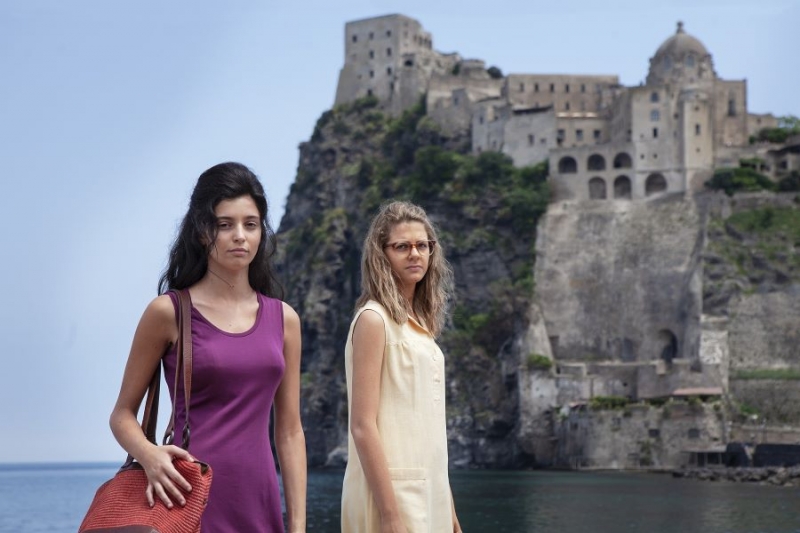
From around Chapter 40 to Chapter 75, the author constructed a self-contained story that took place on the beach of Ischia, where Lila, Lenu, Nino, and, initially, Pinuccia and Bruno Saccovo spent a massive amount of time together. This takes up approximately one third of the book and is constructed like a novella within a novel. The location is limited almost entirely to the beach, away from the neighborhood with a large cast of characters who are always minding each other's business, and only 3 to 5 young people with raging hormones are hanging out at any given time. The confined setting intensifies the relationships and conflicts among them. More important, this story has its own arc of beginning, development, climax, and resolution. But don't worry, the larger novel also has its own arc, and an even more explosive climax comes after the story in the middle. 

It puzzled me for days why this segment has to take up so much space. Lila and Nino fell in love slowly. The girls spent the early days listening to Nino's endless political babbling. There were many ups and downs, hesitant touches, and half-hearted denials. The month on the beach seemed so monotonous, so interminable, as if time had stopped and the summer would never end. Only by Chapter 85 (after the end of the vacation) did I realize how massive Lila's choice to leave her husband for Nino was and why it had to take so long: In an insulated working class neighborhood in 1960s Naples, no one, absolutely no one, had even thought of divorce. A more likely scenario would have been murder (ie, divorce, the Italian style).

Even so, every reader knows, from the last chapter of the previous book, that Lila's marriage to Stefano could not last. It ended before it even started. Lila confessed to Lenu that she had felt numb and on the verge of (spiritual) death in her marriage. But she was only 17 and the most vigorously alive person in the neighborhood. If Lila were to submit to the social norms of the neighborhood, she would have to become another Gigliola or Pinuccia and kill her indomitable spirit. Well, that's not going to happen. So the marriage is doomed. Nevertheless, how to get there without making her look anachronistic or unrealistic could have been a real problem. A young woman of her time and background needed an enormous amount of drive to overcome not only her environment but her own conscience. Thus comes a catalyst to give her a reason to do what she had to do, sooner or later. The love affair with Nino became the impetus for Lila to finally leave Stefano, but the process has to be meticulously and convincingly laid out, at least for Italian readers.

It seems a little reductive to call Nino "a catalyst," but that is more or less the function of this character throughout the quartet --- not that the passions and suffering felt by all three characters were any less palpable or sincere.

For many years, the idea of people using people was taboo to me. It seems so despicable that I was afraid of even thinking about it. However, psychotherapy changed that and helped me see how people never stop using each other, often unconsciously and sometimes constructively. Relationship is not a zero-sum game. A person may not lose anything by being used, and both the user and the used may come out with more than they have had. People who love each other especially use each other all the time and both sides can derive pleasure from it.

A closer look reveals more patterns of characters using each other. When Lila first hired Lenu to accompany her on the beach vacation with a health-related purpose, Lenu agreed on the condition that they go to Ischia instead of another beach town, so that she could be close to Nino, because she knew he would be in the nearby city Forio. Here Lenu used Lila. Then Lila used Lenu's friendship with Nino to become close to Nino, which triggered everything that followed. While Lenu felt used and angry, she was spurred by her disappointment in Nino and Lila to pursue higher education at the free university in Pisa. Before this turn of events, Lenu had always been ambivalent about her future: to stay or to go away, to become just like her mother or to forever escape the same fate. After that, she no longer had any doubt. Unconsciously, Lila's escape brought about Lenu's escape. At the moment it seemed like a loss, but pain pushed both girls beyond what they had thought they were capable of.

Monday, July 4, 2022

The Story of a New Name (1)


The first 30 chapters or so of the second book in the Naples quartet describe Lila's early stage of being the wife of Stefano Carracci, the neighborhood grocer and the son of Don Achille, the fabled neighborhood ogre of the girls' childhood.

After Lila's wedding, her clashes Stefano went to a mini-climax, when she "erased" herself in the enlarged wedding picture that was to be hung on the wall of the new shoe store that sold the Cerullo shoes but carried the Solara name. Although she failed to prevent the Solara brothers using her image or Stefano selling it to them, she covered her own face in the picture with strips of black paper, leaving only an eye and a hand and, of course, the shoes she wore. At the end of this self-erasure disguised as store decoration, the author spells out its meaning in the girls' discussion about her married name, Raffaella Cerullo Carracci:

"A custom. Everything according to the rules then. But Lila, as usual, hadn't stopped there ... She told me that she had begun to see in that formula an indirect object of place to which, as if Cerullo Carracci somehow indicated Cerullo goes toward Carracci, falls into it, is sucked up by it, is dissolved in it."

"She had been increasingly oppressed by an unbearable sensation, a force pushing down harder and harder, crushing her. That impression had been getting stronger, had prevailed. Raffaella Cerullo, overpowered, had lost her shape and dissolved inside the outlines of Stefano, becoming a subsidiary emanation of him: Signora Carracci." 

This summation comes at the end of a series of incidents in Lila's marriage to illustrate her point.  Before the wedding, she wanted to invite no one from the Solara family, but Stefano invited Silvio Solara, the patriarch, to speak at the wedding. She had to acquiesce and begged him not to invite the Solara brothers. Not only did Marcello and Michele brothers show up at the wedding, but Marcello had on his feet Lila's creation -- the pair of men's shoes that she designed, she and Rino made together, and then gave to Stefano. The betrayal of the men who loved her occurred on her wedding. When she refused to have sex with Stefano on their wedding night, he beat her and raped her. After they returned from the honeymoon, more compromises were made by Stefano, so that the Solara brothers opened a store in the fashionable district in Naples to sell the Cerullo shoes. The Solaras wanted Lila's wedding photo in the store as a model for the shoes. Lila refused, Stefano held out for a while, and then Stefano gave the photo to them anyway. She fought with her own body for months trying not to become pregnant and dreamed of going back to school, but she did become pregnant before the store opened. 

This is what the author means by Lila's sense of erasure, including the meaning of a woman taking up a new name upon marriage. When the wife cannot make any decision for herself --- her body, her work (shoe design), even her image no longer belong to her, and her husband can sell her off despite her objections, she does not exist any more as a human being, a free person, a person with her own identity. 

The "re-created" wedding photo in the shoe store was Lila's way of asserting her final bit of self presence, to announce her existence, to insist that she had not been fully devoured by the men in her life. Subsequently, she had a miscarriage, and the photo spontaneously burst into flames.

This was to be come a theme in Lila's life. She would tirelessly work and create something wonderful, and the men around her would try to buy it and own it and profit from it. Most of them wanted to own her body, except Michele Solara, who wanted to own her intelligence and creativity. Michele is the perfect capitalist that any worker today should appreciate; he's practically the Steve Jobs of Napoli. Isn't he a great boss? Lila did not think so through the end.

Being as yet unmarried, Lenu did not explicitly understand Lila in her role of Signora Carracci, but she was inspired to see the crumpled and twisted bodies of married women in the neighborhood for the first time --- worn down by not only the crushing poverty and uncompensated domestic labor but also the loss of their autonomy and agency, their choices, and their will to live.

Thursday, June 30, 2022

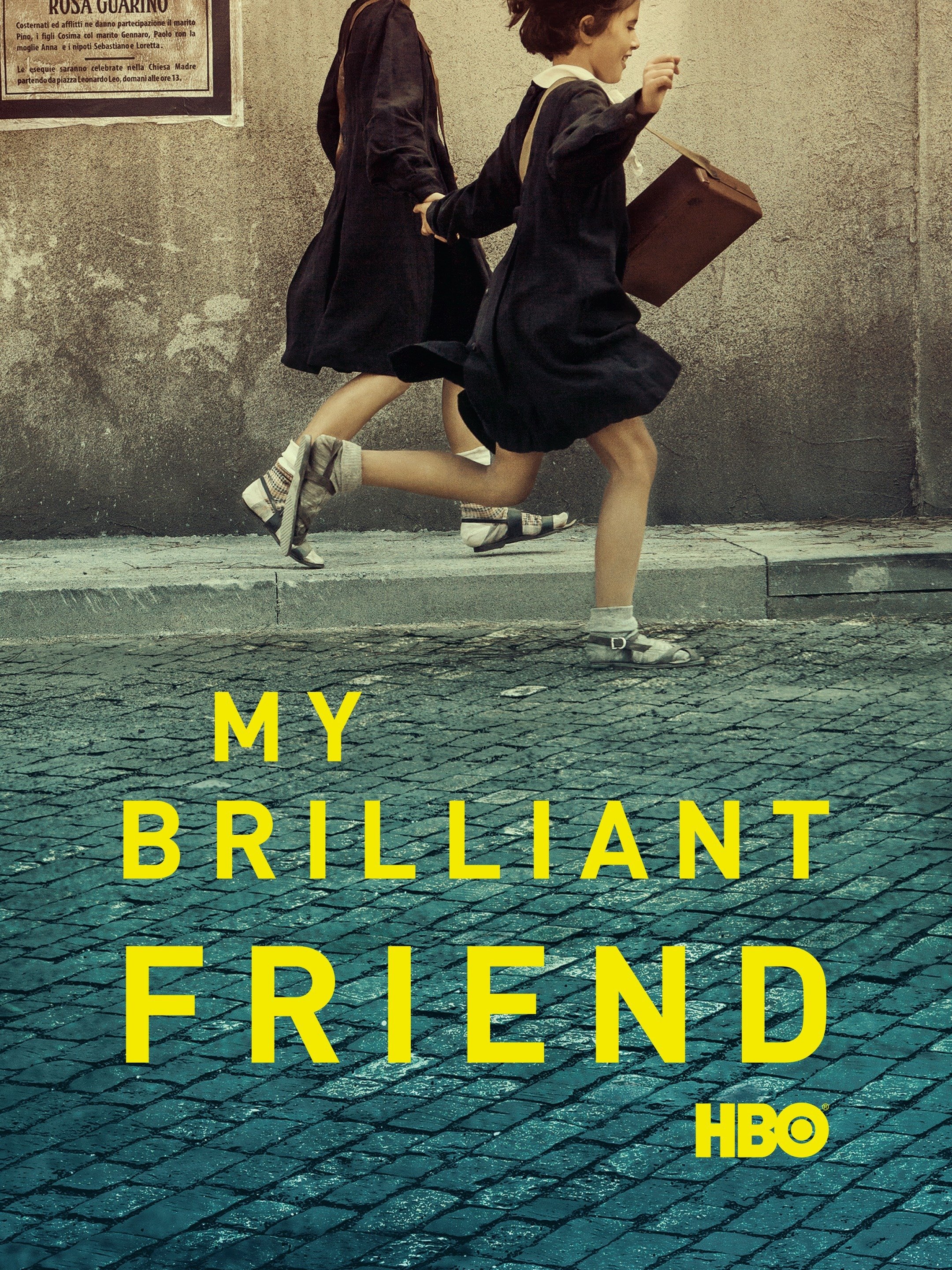
My Brilliant Friend


After re-reading the Southern Reach trilogy, I decided to re-read the Naples quartet. In fact, I had not read the first book, My Brilliant Friend, at all. I was introduced to the quartet through the first season of the TV adaptation. Even before the first season, based on the first book, ended, I could not wait any longer and began to read the second novel, The Story of a New Name, just to find out what would happen to all the vivid characters that held my attention with a death grip. In the following few weeks, I inhaled the rest of the quartet.

So now I have gone back to read the first book. Many readers have complained about it --- too many characters, too many families, the names are hard to remember, the relationships are hard to entangle. I have the advantage of having been acquainted with most of them through the TV series, which have been released through Season 3 by now, and knowing what have happened to the characters. I can spend all my energy on parsing the relationships among the characters and the subtext of the events and the milieu.

One theme that is constantly brought up in all (I do mean ALL) reviews is the rivalry and jealousy between Lenu and Lila, the pair of central characters who grow up in the poor neighborhood in Naples from the 1950s through the next few decades. When I rushed through the novels from the second entry, I accepted this interpretation. However, a closer look at the text from the beginning has modified my opinion.

Observing the meticulous, extremely candid, and sometimes brutal dissection of Lenu's feelings and motivations from childhood, I am certain that this character is highly realistic and, assuming this is a portrait of a real person, her psychological profile is of a child with an ill-defined sense of self. She was shaped and molded by feedback from other people, including good grades at school, praises from her teachers, social expectations for a girl, comparison with other girls in the neighborhood (for example, the question of when one should have a boyfriend), opinions of boys and parents. She sought and was nourished by other people's good opinions. First and foremost, however, it is Lila who inspired and helped her to construct a clear sense of self, through not only their friendship and emotional intimacy, but also Lila's shadowing of and feedback on Lenu's academic pursuits. From the elementary school up to at least middle school, Lenu was often drifting into her family's and community's attitude: It's meaningless for a girl to get an education. The motivations that kept Lenu going were Maestra Oliviero's encouragement and intervention and Lila's competition. It is Lila's talent and competition that spurred Lenu to work harder academically. Through competition and comparison with Lila, Lenu felt more grounded and real as a person and strove from increasing self-realization. Even after Lila was forced to drop out of school by her father, her voracious reading and learning gave Lenu the motivation to keep going in middle school, until Lenu formed a solid enough self-identity as a good student (through academic success and professors' praises) that she could motivate herself to keep going and no longer needed Lila's drive. Even so, we should do well to remember that the title of the book, the brilliant friend, refers to Lenu, in a quote from Lila, who was urging her to pursue higher education, "You're my brilliant friend, you have to be the best of all, boys and girls." 

I'm not a psychologist, but it is a fairly common psychological phenomenon that some people have difficulty forming their own self-identify and rely on other people's reflections and feedback to define the edges of their own sense of person. This is why comparing oneself with others, or "keeping up with the Joneses" is so common. Humans are born with a soft brain, and the question of "who am I" takes a long time in development to answer, sometimes never solidify. 

I am also convinced that the development of self-identity is a major theme in the quartet, as it is also symbolically and, perhaps more precisely figuratively, described in Lila's dissolution. Throughout the quartet, Lila is always the stronger character. She knew what she loved and hated and wanted. She had conviction even as a girl and drove much of the decisions and actions in relationship with others (Lenu and boys in the neighborhood). Nevertheless, she described again and again a sense of disintegration, when the boundaries between herself and other people around her or the environment dissolving into nothing, leading to the disappearance of her being. In the end she does disappear. Therein lies the mirror image and the irony of the two friends: one starts diffuse and solidifies with the other's help, while the other starts hard and unshakable and later dissolves into thin air. It is built into Lila's character early on that she is more tightly bound to the community, the neighborhood, and the people there than Lenu is. This may not be her predestined path. If she was able to escape the neighborhood early on, like Lenu did, she may have developed a taste for the wider world. Or maybe not. We will never find out. 

Reading the novel made me realize how much the TV series sanitized the everyday, casual, pervasive violence in the domestic life. The audience collectively gasped when they were shown Lila being tossed out the window by her father over education and Lila showing up with a black eye after marrying the nice guy Stefano, but they never saw the many scenes described in the book, Lila being beaten and slapped by her father and brother pretty much throughout her adolescence, especially when she refused to accept Marcello Solara's romantic pursuit. For her, violence against her and other women like her is just another normal day in the neighborhood. 

Monday, May 30, 2022

Acceptance: The Distance Between Stars and Hearts


By the end of the Southern Reach trilogy, I was sobbing as hard as I have ever done from reading any book. The series began with the extreme isolation and desolation of the biologist (which, as we learn later, was not entirely a spontaneous and voluntary mental state), and ends with the heart-breaking letter from the director of SR to Saul Evans, the lighthouse keeper, who were friends when the director was a ten-year-old girl. Even in the strange new world of Area X, under the probing alien eyes on every organism and every cell, when all hope is lost, there is still love. 

I was going to sort out the "secrets" of Area X in the text, such as the long-dead alien race and their planet in ruins, or time-space portal(s) opened by a splinter that pricked Saul's finger, or the long-fought battle between Central and Area X. But not now. 

A much-quoted review in LA Review of Books by David Thompson argued that Area X is a hyperobject (a concept put forth by Timothy Morton), which is supposed to mean events or systems that are too vast and complex to be understood by humans, something like that, I'm paraphrasing. Like black holes or global warming or the Internet. An alien machinery that transforms a patch of land on earth, for example. To which I would add: the human unconscious. 

Even from the start of Annihilation, I thought that the journey into the tower is an allegory for plunging into the darkness of the human mind. The breathing walls and the living, glowing words on them just felt inevitably inward rather than alien. The flashbacks of the biologist's life before entering Area X, however sparse and reserved, are highly specific and permeate a melancholy. In Authority, Control's mental world is similarly detached from his parents, especially his unreachable mother. The probing and manipulation by Lowry, representing Central (a mirror image of Area X), might have been Control's journey into the tower. The tower does not provide us with any psychological insights per se, but the reader nevertheless gets to feel their longings and regrets and emptiness. 

In Acceptance, we are treated with several human connections that somewhat reverse the first two books, including the relationships between the director and Grace, between the girl Gloria and Saul, and Saul's love affair with Charlie, even though everyone still carries their own scars and pain. Even inside Area X, there is still hopeless warmth among the characters on their journeys. 

I thought about the source of the melancholy throughout the trilogy and recognized it between the subject and object of observation. One of the motifs in the novels is the sense that the creator of Area X, which supposedly is not the alien species but their machine or portal, is constantly monitoring and observing every organism on earth within and perhaps even outside Area X. The same practice occurs in the biologist who watches organisms in nature, such as a tidal pool or just a puddle in a parking lot. Or perhaps the same can be said about Lowry, who ruthlessly manipulates and controls and experiments on SR employees' minds. And yet we get the feeling that no two organisms truly understand each other. We can watch a starfish do its thing, but we will never feel what a starfish feels, and vice versa. We cannot even see the entirety of the internal world of another human, and this includes parents and their children. The distance between two hearts or minds is as vast as that of two stars. 

And what about the distance between the conscious thoughts, armed with abstract thinking and language, and the dark tides of the unconscious? They are a few centimeters or even millimeters apart, but they might as well be two species living under one roof. Between the cortex and amygdala or hypothalamus --- take any part of the limbic system --- there is so little understanding and sharing, that the cortex makes up stories, constantly, to pretend that it knows what is happening underneath. It doesn't, not really.

While I will never know whether the human unconscious was intended to be one of the many allegories of Area X, Jeff VanderMeer did say that he let his unconscious guide his writing of this series. So it's by definition true that the novels are indeed about the unconscious. In the adventure into Area X, VanderMeer's unconscious has given us alienation, vulnerability, regrets, longing, despair, and mysteries, endless mysteries. In the end, however, it also gives us unforgotten love. 

Sunday, May 29, 2022

Hamlet Goes Business (1987)


I have never liked Hamlet. There must be some fundamental difference between men and women that makes men all shaken to the core by the thought of his father being murdered by his mother (yes I said that), who did so in collaboration with and then marrying a younger man, thereby destroying the fantasy of his own private omnipotent, infallible god. In order to exorcize this fear about his mother, he has to render his lover weak and powerless and, finally, dead.

It came as a shock and a delight that I was not alone in this sentiment. In Aki Kaurismaki's distinctive adaptation, Hamlet is portrayed as a psychopathic little shit. I won't spoil the ending, which is a real kicker.

Besides the beautiful and repressive black-and-white cinematography, the Aki-brand absurdities did not disappoint. The rubber duck joke is sure to stick in my mind forever. The duel between Hamlet and Lauri (Laertes) is incredible. The Finnish Polonius would never be as chatty as the English one, but his cigar more than makes up for the lack of words. His "neither a borrower nor a lender be" speech is revised to a more poignant truth --- Don't rush to repay your debt, because the lender may keel over first. And then there's the chicken. Also the first line "Ham! Let me." (What is it in Finnish though?)

True to the film noir tradition, Kaurismaki infused the movie with a sense of existential melancholy, in which the ending shots of a factory devoid of people goes perfectly with his critique of capitalism and Hamlet's last line in the play ("The rest is silence").

A few years ago I had a dream, in which I was watching a stage adaptation of Hamlet and realized that the most famous soliloquy was deleted. I joked with a friend of mine that such a production would have been the most appalling and impressive one. Guess what? Kaurismaki did just that. 

It might not be the best Hamlet adaptation, but it's certainly my favorite. 

Friday, May 20, 2022

Fist of Fury (1972)


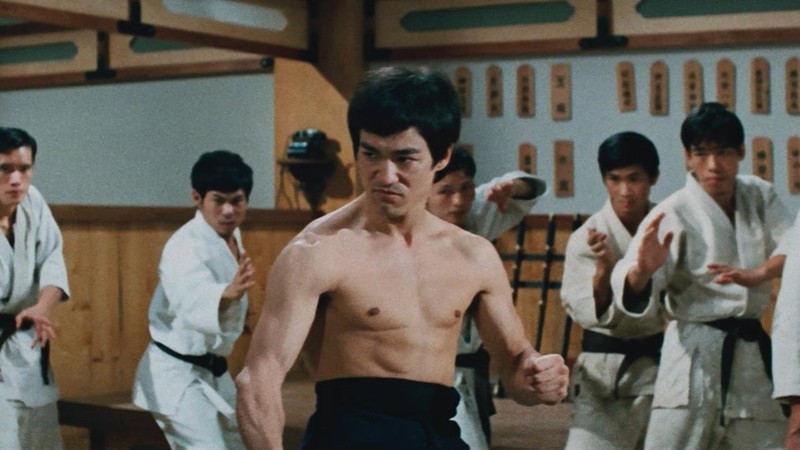
I'm making my way backwards on Bruce Lee's movies. "Fist of Fury" is the penultimate, before I can find and watch "The Big Boss". (Yes, I've re-watched "Way of the Dragon", but there's not much to write about.)

In some ways this movie reminds me of "Vengeance!" (1970), written by Ni Kuang and Chang Cheh, directed by Chang Cheh, and starred David Chiang. In that movie, the actual event that triggers the title is shown briefly in the beginning of the movie, with the rest of the runtime devoted to a lengthy journey of David Chiang taking out his targets one by one, ending in a final massive brawl. 


Although "Vengeance" was produced by Shaw Brothers while "Fist of Fury" by Golden Harvest, the latter initially contracted with Ni Kuang again to write the script. Apparently that version was abandoned, and the current script was written by Lo Wei, who also directed the movie and played Inspector Lo, a not-insubstantial role. I have no idea whether Lo was influenced by Chang's movie or not, but it does seem to take the concept one step further, in that we do not see the occurrence of the death, for which revenge must be taken, in any of the scenes. The opening scene was Lee's Chen Jen, Sifu Hok's student, coming home after being abroad for an unknown period and finding Sifu dead. In a sense this is a typical mystery: first there is a corpse, then the main character detects and uncovers the truth, and finally he punishes the murderer(s). 

When he is not involved in one-on-one or one-on-many fight scenes, Lee's character vacillates between two seemingly incongruent personalities: In some scenes, he acts like a beast, filled with primal rage, mumbling a few words (more like grunts), and beating someone to death with his bare hands. In other scenes, he meticulously plans and carries out his revenge with elaborate disguises and tricks, including cutting the enemy organization's telephone wire and infiltrating it by pretending to be a repairman. He was more cunning and resourceful than James Bond.

There were also a couple of awkward love scenes with the adorable Nora Miao, showing a definite lack of chemistry between Lee and Miao. Nevertheless, Lee walks around throughout the movie with, well, fury, on a spectrum from barely suppressed to full blown madness. 

I have to admit that in his four complete movies, Bruce Lee played an interesting range of characters. The rage in Fist of Fury is perhaps most suited to his style of fighting, in other words, the instant lethality. Again I felt a tingle of terror in these fight scenes, and I worry about the safety of the stuntmen and costars*. His eyes bulge, his face contorts, his muscles flex, and his throat releases the hallmark screams that sound barely human. Then bodies start flying in the air all around him. Here he seems to embody a raw, animalistic aggression unmatched in the other movies. There is intensity, and then there is the Bruce Lee level of intensity.

The sketchiness of the script and the awkwardness of the non-fight scenes feel all the more bizarre when mixed with a nihilistic undertone. Death seems inevitable, not unlike "Vengeance". According to movie lore, Lo Wei wanted to have a happy ending, sort of, in which Chen lives, but Lee insisted that he must die. The ending is an obvious homage (or plagiarism, depending on your point of view) to "Butch Cassidy and the Sundance Kid", which had come out only 3 years before.

----

*One of his opponents in the movie, Robert Baker, was a student at Lee's martial arts school in California. Among the stuntmen that got beaten up were Jackie Chan, Yuen Wah, Yuen Kwai (Corey Yuen), and Lam Ching-Ying, when they were not doubling for Lee's more acrobatic moves.

The Ending of Le Samourai (1967), Explained

A quick online search after watching Jean-Pierre Melville's Le Samourai confirmed my suspicion: The plot is very rarely understood by E...