Books, movies, food, and random thoughts in English and Chinese. Sometimes I confuse myself.
Search This Blog
Tuesday, April 19, 2022
A Journey up the Abyss: The Southern Reach Trilogy
Thursday, April 14, 2022
More Paz
I opened "Selected Poems" to a random page. It is "Is there no way out?" ---
The time is past already for hoping for time's
arrival, the time of yesterday, today and tomorrow,
yesterday is today, tomorrow is today, today all
is today, suddenly it came forth from itself
and is watching me,
it doesn't come from the past, it is not going anywhere, today is here, it is not death ---
no one dies of death, everyone dies of life ...
The words slammed into my face and blindsided me. I tasted them in my mouth and let them slowly slide down my throat. They dissolve into a pink haze and spread into my limbs and evaporate in a shiver.
I am reminded of this ---
Tomorrow, and tomorrow, and tomorrow,
creeps in this petty pace from day to day,
to the last recorded syllable of recorded time;
and all our yesterdays have lighted fools
the way to dusty death ...
Monday, March 14, 2022
王维和Paz
最近由于巧合而同时在看 Octavio Paz 的诗集和一本关于唐诗的书《蒋勋说唐诗》。Paz 的诗集随手一翻开就看见一句:
We are surrounded
I have gone back to where I began
Did I win or lose? ...
Wang Wei to the Prefect Chang
from his cabin on the lake
But I don't want
an intellectual hermitage
in San Angel or Coyacan
-- Return
然后读了书里讲王维的一章,包括了他的其他五言诗,我有点明白为什么这些年里其他的诗词我都忘记了,只记得“大漠孤烟直,长河落日圆”。王维的直白五言,对于经常会把字儿的顺序记混的人来说真是太贴心了。
王维的诗经常上下文是 throwaway 的唠嗑,突然来一神句,如同兜头淋一桶冰水,提神醒脑。而 Paz 的诗形式不拘,有些很长,充满了大脑认为太抽象而身体知道准确的描写。例如随便一句讲 Mexico City 的,"Noon, pounding fist of light."
抄一段早期作品:
Sky black
Yellow earth
The rooster tears the night apart
The water wakes and asks for you
A white horse goes by
--- Duration
注意到这首诗有个副标题:"Thunder and wind: duration. -- I Ching".
王维和Paz的共同点,意象很有冲击力,好像从远处飞来一本书,啪地打在我鼻梁上。看到王维的另一句:“行到水穷处,坐看云起时”,泪水刷地涌了上来。在过去的两年里,这件事我已经做了很多很多次。
Saturday, March 12, 2022
The Night Raid (Mahabharata Notes #18)
Leafing through my blog posts over the past years brought the realization that I have written a lot about war. That's hardly surprising as the country has been embroiled in wars in Iraq and Afghanistan for 20 years and just barely ended the last remnant of the intractable mess that caused enormous amounts of death, suffering, cost, loss, and humiliation. Now that the horror of war is again being broadcast live on everyone's Twitter feed, I feel like we barely had a break of peace. Maybe that's the normal reality of humanity anyway? But still.
Inevitably my mind returns to Mahabharata. I cannot believe I wrote 17 (!) posts in 2015 to sort out my thoughts and feelings about the enormous epic. So this one is #18.
On the last night of Kurukshetra, Ashwatthama led what was left of the Kauravas army to raid the camps of the Pandavas and killed most of the named characters in their sleep. I'm pretty sure this "special operation", to borrow a phrase in the news, was against the rules of war as both sides initially agreed. But by that time I don't think anyone on either side cared much about following rules any more. Too many of their sons, brothers, fathers, grandfathers, and cousins had died, and too many rules had been broken. Right before the night raid, Bhima had broken Duryodhana's thighs in their mace duel (yeah another duel), an action also against the combat rules.
Unlike many commentators and revisionists, I do not doubt the main authors of Mahabharata took sides when they created the most recent, coherent, and stable version of the epic. I think they did intend to cast the Pandavas and Krishna as the good side and the Kauravas as the bad side. Nevertheless, the complexity and mirror images throughout Mahabharata are nothing short of astounding. Duryodhana certainly committed plenty of atrocities with complete disregard for dharma, but Krishna employed many tricks that were hardly fair. Before the end, Arjuna shot Karna while the latter was defenseless, and even the figure of dharma himself, Yudhishthira, lied in order to kill Drona.
It is a little surprising that wars two to three thousand years ago in India were fought with some sort of mutually agreed rules, not unlike the Geneva Convention today and various treaties that try to dissuade countries from using chemical weapons, cluster bombs, etc. Nevertheless, rules break down as more blood is shed and death looms larger, or when someone just does not care and takes advantage at any cost, which inevitably starts a spiral toward total breakdown of any semblance of order and honor.
Even if the authors might have taken sides on the grounds of morality and theology, they were completely ruthless in terms of consequences. The outcome of the war is almost a complete mirror image. Although there is a winning side, the Pandavas, very few of their clan and relatives survived, leaving only one child to barely carry on their bloodline. One could argue that nobody won. That is certainly the position of the weeping widows and families from both sides, wandering the post-war Kurukshetra and searching for the corpses of their husbands and fathers and brothers. And Gandhari, the mother of the Kaurava brothers, was able to exact revenge on the almighty Krishna and his entire clan, so that violence and slaughter come for them some years after the war. Is Stri Parva (the Book of the Women) an anti-war segment in an epic about war? It is certainly on par with modern anti-war literature.
There is so much in Mahabharata that continues to hold true now. As long as humans wage wars, Mahabharata remains relevant.
Friday, March 4, 2022
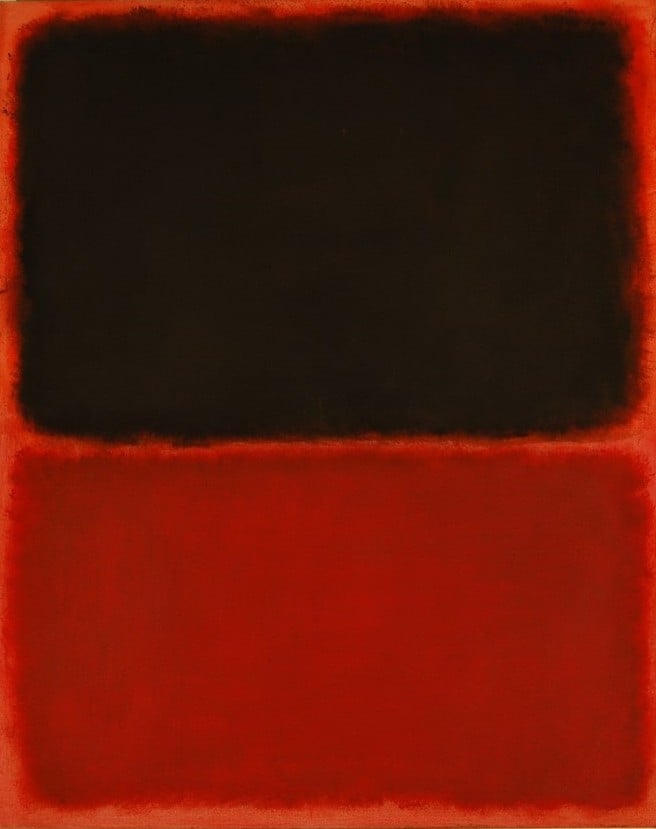
Paz and Rothko
When I was a hormone-raging teenager (yes, that happened to me too), I happened upon a Chinese translation of Octavio Paz's prose poem The Blue Bouquet. Its indelible impression on me never faded. Yet it took me decades to seek it out again, as I recently began to read other poems by Paz.
Perhaps my excuse is that I have been afraid of poetry all my life. Reading poetry for me is like going to an art museum, especially a modern art museum. I walk by most exhibits and nod with a smile on my face, and promptly forget about them as I turn to the next piece. Only occasionally would a piece strikes me dead on the spot.
I borrowed a collection of Paz's poems from the library, but it's very slow going. They seem dense to me. In my mind I slowly piece together his words into a series of images, which may or may not produce any meaning. Yet often enough an image punches me in the face. For example,
I walk without moving forward
We never arrive
Never reach where we are
Not the past
the present is untouchable
-- Return
I don't know what it means. I only know how it makes me feel. And how it makes me feel is almost the same as how certain abstract artworks make me feel, primarily Mark Rothko.
It's kind of meaningless to see a Rothko in any medium other than seeing the real thing, because the real impact is in the details.
Rothko's abstract paintings (not his earlier works) get into a part of my mind that lies underneath language and conscious thoughts, straight into the amygdala, where dark tides of neurotransmitters roil in the electric storms.
I do believe that people can transmit feelings between them without words when they are in close physical proximity. My Yoga teacher likes to call anything that tingles in the body as "vibrations", so I might as well use the same term. Even though humans do not have telepathy, we catch each other's vibrations when we are in the same room and paying attention. Such transmissions are usually impossible remotely with words but can be done with reduced efficiency with images, which is why moving pictures evoke emotions faster than written words.
What exactly is remotely transmitted into my head from some of Paz's words and Rothko's images, I don't know, but it's not nothing.
Sunday, January 30, 2022
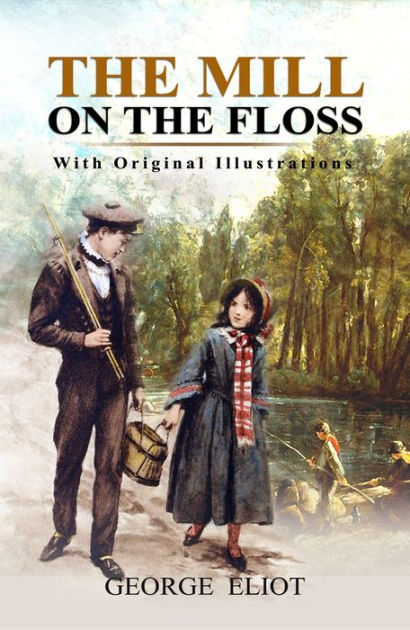
The Mill on the Floss: The Ending (spoiler!)
Although I read this novel over a year ago, its ending still pops into my mind occasionally. It is not even a great ending, but it is extraordinary and has what some may call "staying power."
By all account The Mill on the Floss is George Eliot's most autobiographical novel. It follows Maggie Tulliver's life from childhood. She is a head-strong child in a family of four. Her father, owner of the titular mill, has an explosive temper that caused his and the family's downfall. Although Maggie and her father have a special bond, Eliot unflinchingly lays out the patriarch's faults, which struck me as unusually analytical for an autobiographical work. Maggie's character is unmistakably based on Eliot's own, minus the education and depth of thought.
The theme of female rage is again circling around the public consciousness in recent years. Whether it is yet another fashionable trend that will be intentionally forgotten remains to be seen. I only know that I felt it when I read how Maggie's free soul is confined by her provincial life, including every normal person around her and all the circumstances of her life. It is fucking suffocating and chillingly realistic. A female central character does not need to actualize herself by fighting in wars or slaying dragons; her enemies and obstacles are sitting at the dinner table with her every day, and she has to fight for the most mundane things like going to school or dating anyone she likes. But that's a topic for another time.
The ending, yes. Throughout her life, one of the main and direct oppressors is Maggie's older brother Tom. While they loved each other as children, their father's bankruptcy threw them into a harsher life, in which Tom became obsessed with his standing in society, and Maggie's impulsiveness and disobedience continually grated on his nerves, until a morally ambiguous incident caused their complete estrangement. (The incident itself is something wholly unique. I have never seen this kind of a story before or since in literature. The fact that it is not well known or well analyzed by literary criticism --- even feminist criticism --- is interesting.)
This family estrangement is also autobiographical. Eliot's own choice of life-partner, George Lewes, was a married (but separated) man, and their partnership caused a scandal in society. Her brother, a country landowner just like Tom Tulliver, was greatly offended and never forgave her. They never saw each other for the rest of their lives. When she wrote The Mill on the Floss, Eliot was probably able to foresee this outcome, and I could feel her sadness and need to process and analyze their irreconciliation.
Hence we come to the ending. When the river Floss flooded the town, Maggie rowed a boat to her family house, now occupied by Tom. They reunited in the perilous water and drowned. Afterward they were found holding each other in death, something they could not do in life.
Obviously, the ending is Eliot's own way of making peace with her relationship with her brother. Reconciliation is impossible in life, but she hopes for it after. What struck me is not how much a woman has to struggle and sacrifice and sometimes renounce her humanity, just to take up a spot in the world for herself; the fight is not news. Rather, it is the love and regret. Tom is both the enemy and the brother. Both love and hate coexist and must do so, as neither can eliminate the other.
Sunday, December 12, 2021
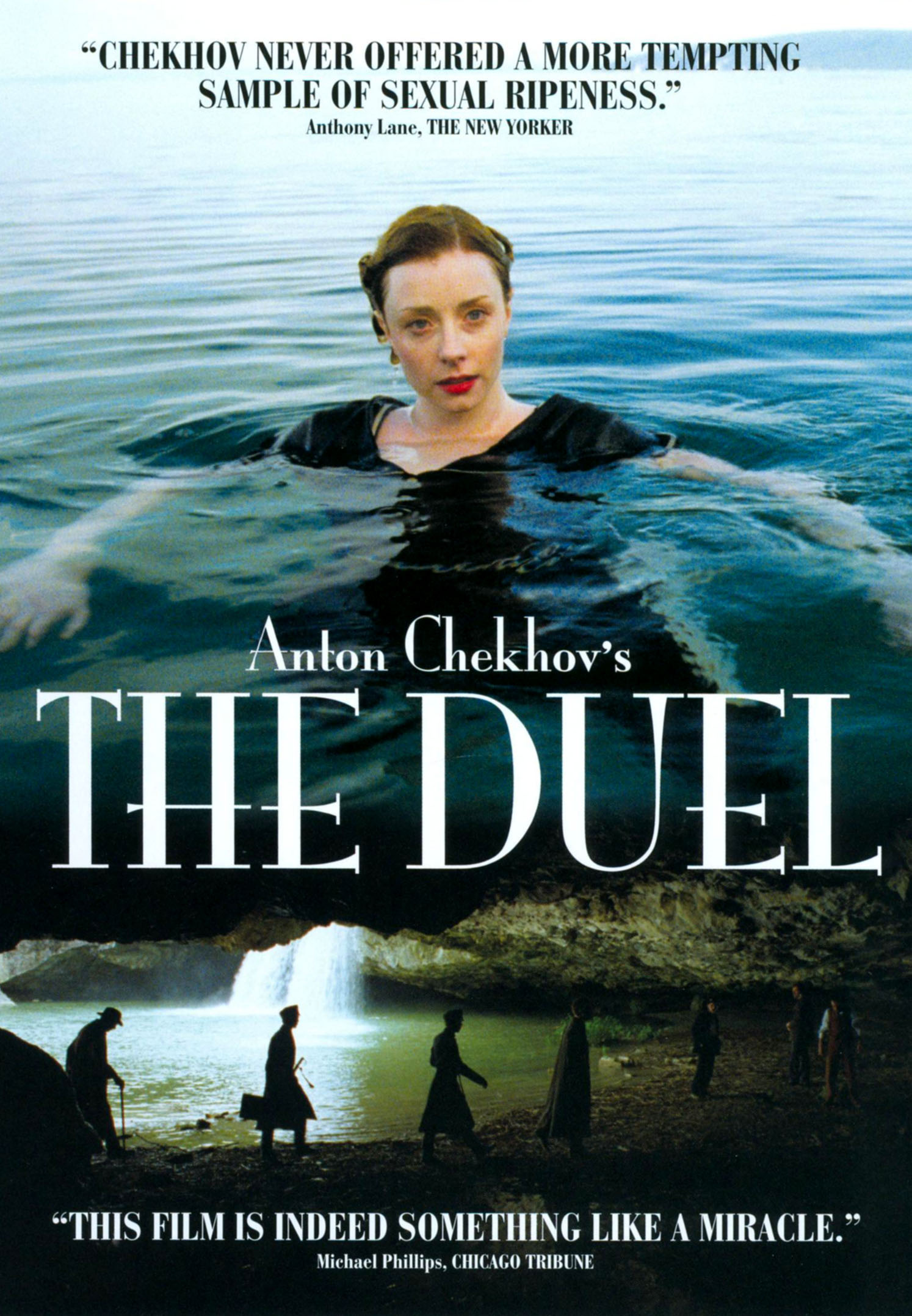
The Duel! The Duel!
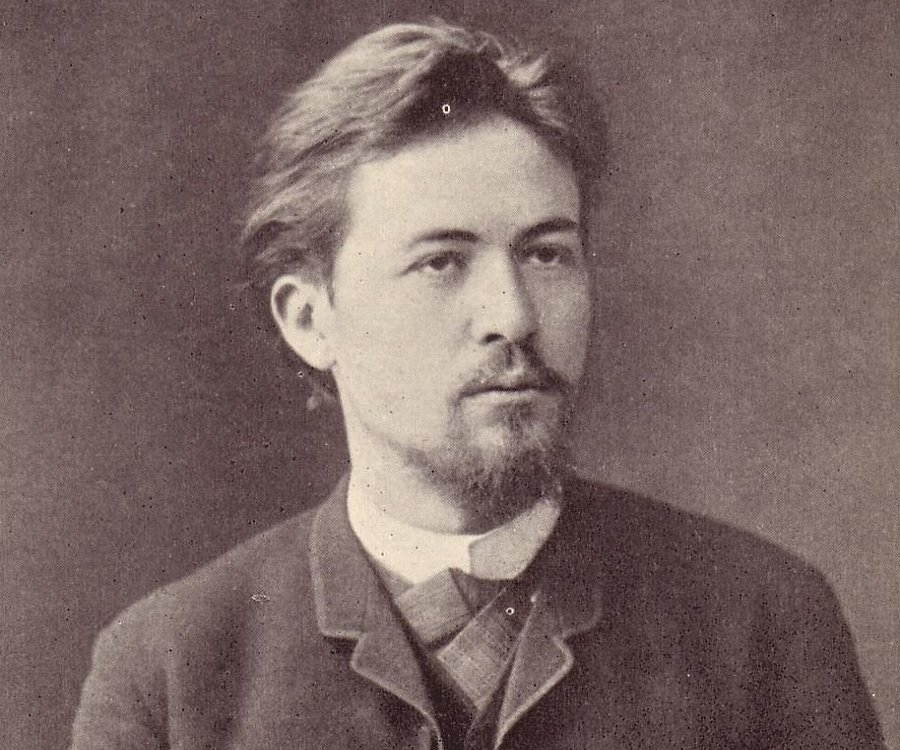
At one point while reading this short novel, I burst out laughing so loud that one could hear me from another room. First and foremost, Chekhov is a comedy writer. I'm not talking about the kind of gentle and sad smiles with lamentation often associated with him, although those are present too, occasionally. No, I'm talking about gags and jokes and mockery of human frailties.
I gotta admit it, I love this kind of mockery, which exposes how pathetic our lives are and how little our struggles mean. The existential laugh. It seems to be a fairly common theme in Russian literature at the time --- the futility of the intellectual angst over how to save the Motherland and her peoples from poverty and backwardness and the crushing bureaucracy and corruption blah blah blah. Throughout the novel, Chekhov made references to Tolstoy and Turgenev, which also made me laugh. And yet, as much as the novel is steeped in the time and place and those specific problems, I find it much more relatable and relevant to me and our times than anything else. The pathetic lives and anguish of these characters are instantly recognizable in people around me, including in myself. I would even venture to say that there are numerically more people today around the world that are Chekhovian than in 1890s Russia. They, no, we, are all wailing into the void --- "What should I do with my life?!"
Not that he provides a definitive answer, mind you, or a definitive non-answer, as he was too early for Modernism or Existentialism. The answer he gave is in the example of himself. On top of the piercing insight and the hilarious mockery, he remained kind and warm and able to empathize with pathetic losers that are us. Right now is a pretty bad time to maintain warm feelings about humanity (although when was it ever a good time?). I often wonder if our need for "society" is more of a hardwired instinct than a justified choice. Chekhov seems to be showing us one way of living: One can see the crap that is humanity and still choose to live without illusions and perhaps even love while carrying all the baggage. Why not? (No, the lesson is not to literally work like a dog to pay off your debts, unless that's what you want to do.)
Ever since I smelled a whiff of The Origin of Species in Turgenev's Fathers and Sons, I now see it everywhere (LOL). There is a German character in The Duel who is constantly spewing social Darwinism. It's quite chilling to consider how prescient this character is (and he is German too!), but I can imagine that view might have been popular at that time, before we had the hindsight of the real horror it is capable of inflicting. Nevertheless, a man like Chekhov can instinctively see through this bullshit, no matter how smart or rational it appears to be.
Yes, that's why I love him, because Chekhov inoculates us against bullshit and despair.
The Ending of Le Samourai (1967), Explained
A quick online search after watching Jean-Pierre Melville's Le Samourai confirmed my suspicion: The plot is very rarely understood by E...