刚在广播上听见,觉得东西结合的调调很有趣。赶快记下来省得忘了。
Kenny Garrett's Tsunami Song.
Sunday, October 9, 2011

Friday, October 7, 2011
New Scan Cook

在 PBS 的数码副台上看见一个挪威做饭节目,说实话饭看上去也就那么回事儿,但是主持人 Andreas Viestad 特别逗。他总是在室外做饭,很多时候是阳光明媚(但是看上去不暖和)的夏天,但也有一集是飘着小雪的冬天,他穿着大衣在户外示范 cheesecake 的做法。今晚看见的节目里,Viestad 在湖边树林里搭了两块平石头,下面烧树枝,在石板上烤面包和牛排,然后面包夹牛排,涂上芥末权当蔬菜,我看得笑死了。还自己跑到湖里去捉小龙虾 (crawfish),手指被夹得痛,把小龙虾煮了之后得意地说: Revenge is a dish best served hot. 笑死我了。很北欧的幽默。
Miles Davis
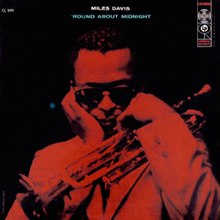
In general I'm drawn first and foremost to piano, sometimes to bass, and am very rarely affected deeply by any of the brass.
Yet, listen to this Davis' rendition of "Round About Midnight" (Thelonious Monk's standard). It is soooooo intimate, so raw but tender. I'm so taken by his trumpet portion that I have tears in my eyes. It is not to say John Coltrane's tenor sax in the second half is any less, but it is just not as personal and vulnerable as the first half and the ending.
Now I want to get Davis' recordings.
Here is a piano version by Monk himself. Also beautiful.
Tuesday, October 4, 2011
Lehrer vs. Gladwell
Jonah Lehrer and Malcolm Gladwell are an interesting pair of writers. They have covered many of the same subjects or, when they seem to cover different subjects, I soon realize that they are actually examining two sides of the same coin. I have not seen either of them acknowledge the influence of the other writer, yet their shared concerns are too numerous to ignore.
Take, for example, the topic of too many kinds of toilet papers or pasta sauces on the supermarket shelves. Lehrer thoroughly investigated the neuropsychological mechanisms of choosing in his book "How We Decide" and continues to write about it (see his recent blog entry here). He complained about feeling paralyzed standing in front of the countless brands and types of toothpastes.
Tonight I stumbled on a video of Gladwell's talk about the marketing evolution of spaghetti sauce (BTW, I think he is wrong about the "authentic" Italian sauce) he gave in 2007. It is as if he was giving a direct answer to Lehrer: Look, I'm giving you a history lesson to explain why there are so many choices for every product in the supermarket and why it's not a bad thing! (On this issue I actually side with Lehrer, as I too am sick of being overwhelmed by too many choices with hardly any substantive difference. But Gladwell is also not wrong about most people feeling happier when they imagine that there is a product "just for them.")
Take, for example, the topic of too many kinds of toilet papers or pasta sauces on the supermarket shelves. Lehrer thoroughly investigated the neuropsychological mechanisms of choosing in his book "How We Decide" and continues to write about it (see his recent blog entry here). He complained about feeling paralyzed standing in front of the countless brands and types of toothpastes.
Tonight I stumbled on a video of Gladwell's talk about the marketing evolution of spaghetti sauce (BTW, I think he is wrong about the "authentic" Italian sauce) he gave in 2007. It is as if he was giving a direct answer to Lehrer: Look, I'm giving you a history lesson to explain why there are so many choices for every product in the supermarket and why it's not a bad thing! (On this issue I actually side with Lehrer, as I too am sick of being overwhelmed by too many choices with hardly any substantive difference. But Gladwell is also not wrong about most people feeling happier when they imagine that there is a product "just for them.")
Sunday, October 2, 2011
The Winter Thief

Jenny White's novels, especially this one, remind me of GRRM to an extent. Both seem to have a coolly detached and fatalistic view of the powerlessness of individuals (including kings and pashas) swept by the currents of history. Fatalistic, but not cynical, an attitude derived from their uncommonly vast knowledge of and clearheaded understanding of the real histories of nations and politics.
Her delineation of all the forces at play in and around the Ottoman Empire at that particular moment --- January 1888 --- is almost as impossibly complicated and unbearably tense as the moment before King Joffrey ordered the beheading of Ned Stark. International socialists, Armenian nationalists, Ottoman bureaucrats and secret police, Kurdish troops, everyone has his or her own agenda. Everyone is at odds with each other and, as we already know, bureaucrats who are supposed to be on the same side are more dangerous than your enemies, and the knife is more likely to be plunged into your back than your front.
The macrohistorical elements are beautifully and credibly weaved together. The political landscape is accurately drawn. The ultimate effect is a sense of inevitability and pessimism, especially if you know that the storm brewing and temporarily averted in this book did arrive a couple of decades later, in real life, with its full force of mayhem.
Yet while reading it I was frequently bothered by small flaws that buzz around like gnats around the light on a summer night. Not bad enough to erase the accomplishment in other aspects, but annoying enough to damage my enjoyment. Most of characters are distinct enough thanks to colorful ethnic details, but their motivation from one scene to another or in certain moments are crude and unbelievable. Transitions from scene to scene are sometimes sloppy and illogical. Dialogs and relationships are occasionally unrealistic. The author lets slip her weakness in plotting with some awkward narrative choices and overlapping exposition.
These flaws are not enough to make me throw the book down. In fact, her pacing is excellent. I didn't zip through it in one day like I did with "The Abyssinian Proof," but did stay up till 2 am to finish the last stretch.
White is simultaneously sharp and sloppy. Most important , besides the plotting problem, I can't help but feel deeply unsatisfied with the uneven characterization. Something, a crucial ingredient for a great storyteller, is missing. I can't quite name it, but this ingredient has to do with a deep and organic insight, an unconscious and instinctive understanding of the heart. White seems to lack this instinct and fake it with overly intellectual analysis and argument.
GRRM, on the other hand, has this instinct in astonishing abundance.
Saturday, October 1, 2011
Hugh Laurie: Let Them Talk
昨晚看电视正好撞上大半 Hugh Laurie 到 New Orleans 拍摄的音乐会特辑节目 Let Them Talk。他请到一些颇有分量的当地音乐家跟他合作录制,挺有气氛的。Laurie 自己演唱加弹奏钢琴。
Hugh Laurie 唱得,嘿嘿,真的不咋地,至少我这么觉得。(Tom Jones 被采访的时候哼哼唧唧地说 Laurie 唱歌很,那个啥,有点象那个谁谁,而我,咳咳,那个啥啥,挺喜欢那个谁谁的。听得我乐坏了。)但我觉得他的钢琴还不错。更重要的是,我跟他的口味十分近似!他最迷 Blues ,选的歌都很好听,让我多次胳膊上刷刷地起鸡皮疙瘩。这是真爱啊 --- 可以从他痴迷的眼光里看得出,我对此非常理解和认同。
Hugh Laurie 唱得,嘿嘿,真的不咋地,至少我这么觉得。(Tom Jones 被采访的时候哼哼唧唧地说 Laurie 唱歌很,那个啥,有点象那个谁谁,而我,咳咳,那个啥啥,挺喜欢那个谁谁的。听得我乐坏了。)但我觉得他的钢琴还不错。更重要的是,我跟他的口味十分近似!他最迷 Blues ,选的歌都很好听,让我多次胳膊上刷刷地起鸡皮疙瘩。这是真爱啊 --- 可以从他痴迷的眼光里看得出,我对此非常理解和认同。
The Elegance of the Hedgehog (spoilers)

对我来说这本书很适合听有声版。如果是读字版的,肯定早就不耐烦扔一边儿去了;但是在上班路上一边开车一边一只耳朵听,两个读书者(一老一少)声情并茂,倒很有趣。尤其是稚气的童声抒发哲学感慨,效果很逗。
小说写得好像哲学教科书,基本上没什么情节,仅有的少量情节也都是滥俗的童话套路,可有可无。我听着听着,每句话里都少不了前缀后缀的复合词,忽然就想起 William Zinsser 写过的拉丁语系和英语的差别。拉丁语系的语言风格就是层层叠叠,绕来绕去,充满 flourish。古英语传下来的词儿和风格则质朴直接,简洁有力。不过现代英语亦吸收大量拉丁语词汇,令律师们疯狂滥用得不像样儿。
Hedgehog 中唠叨的学术气,不知是作者自身职业的浸淫还是拉丁语的天然文化遗产,我偏向于后者。但是同时,不知怎么作者让干燥无水分的人生思辨和哲学感慨听上去有种游戏的轻松感,我疑神疑鬼地觉得她对一老一少两个主角的 “深刻思考” (Profound Thought #4) 和高雅情趣其实带有点不太辛辣的调笑意味。对哲学系学生和教育系统大发牢骚尤其真实加逗人。
提到 Renee 喜欢的侦探小说时冒出 Michael Connelly 和 Henning Mankell 的名字来,不禁让我微笑。可惜我不看战争与和平,不知道能不能算得上品味有文化。
小说结尾让我联想起 "One Day",一般的 contrived,但是在这里倒也不让我多么反感。第一,我私心猜想,作者这么写,会不会是因为下不了手制造一个彻底的灰姑娘与王子从此幸福 ... 的结尾 --- 尤其是让读者脑补一对老头老太彼此上下其手乃至宽衣解带的情景!第二,结尾时 Paloma 的口气真是太日本小说了!想必是有意模仿日本小说中经常干掉主角,然后剩下的主角挥着小拳头发誓要“勇敢地活下去”这种桥段。
The novel struck me as setting a perfect tone of lightheartedness. Indeed a lighthearted tone is perfect for a philosophy professor's novel. Best leave the heavy and complex and "heart of darkness" stuff to real novelists.
Subscribe to:
Posts (Atom)
The Ending of Le Samourai (1967), Explained
A quick online search after watching Jean-Pierre Melville's Le Samourai confirmed my suspicion: The plot is very rarely understood by E...
