It's December 2016. The thoughts of December 2015 have been haunting me lately. They spring up at unexpected and minor provocations and hit me smack on the nose.
My mother was first hospitalized in July 2015. The second time was October. The third and last time was Christmas Day.
What pop into my head nowadays are all these mundane details in memory, sharpened by the anxiety and horror in those moments.
For example, what just occurred to me a moment ago was the adult diapers she had to wear during her hospitalization, which were sometimes replaced by urinary catheter in order to collect urine samples for lab analysis. The discomfort and indignity of being in a hospital really irked her, and each time she was desperate to go home, particularly the last time.
She was always quite particular about her appearance and comfort, both of which cannot be maintained in that environment. I am much the same way. Even as a child I was not very tough in rough conditions. I chafed at noise and other disturbances and required a slightly compulsive level of cushiness. When my dad took me on a trip to Hunan, I was miserable in hot, crowded trains buzzing with mosquitoes, suffering in agitated silence. So I understood her irritation with the hospital gown, the inability to bath or shower for days, the endless needle pricks, and the lack of familiar faces and voices around her. I understood, in my bone, her horror and hatred of spending night after night alone in a hospital room.
All three times, I flew to LA and visited her every day. The second hospitalization lasted almost 10 days and frayed everyone's nerves. One day she complained to me that my brother was too selfish to come visit her and avoided his responsibility by "sending his younger sister to do all the heavy lifting." I secretly agreed with her and resented his absence. Later however I realized that his avoidance was driven by a terror, because he was weaker than I and much, much more afraid of the stench of death. I was not. On this particular issue, I am quite tough.
I still am not afraid of death, but I am afraid of hospitalization, just like she did.
Showing posts with label daily horror. Show all posts
Showing posts with label daily horror. Show all posts
Sunday, December 4, 2016

Wednesday, August 31, 2016
"Your English is so good"
In a feature on the Chinese pianist Yuja Wang in the latest The New Yorker, written by the famed writer Janet Malcolm, I was struck by a particular paragraph ---
This attention paid to Wang's English, in her accent and grammar, is fascinating to me, probably because I have been told many times something similar. "Your English is so good. You hardly have any accent. How old were you when you came to America? Where did you learn English?"
Do I feel offended by this? Well, oddly enough, not when I was on the receiving end of what is intended as compliments, but yes when I read this paragraph by Malcolm.
I have heard that such compliments are considered a "microaggression" nowadays, which I do not necessarily disagree with. Contrary to the movement about microaggressions, however, I don't want to tell people to stopping saying such things to me. I don't want people to stop expressing aggressions, especially micro ones, to each other.
I don't know if I can explain clearly why I think that. There are many reasons. At least one of these is that the expression of microaggression reveals something about the person who is delivering it. The expression itself reveals something about Janet Malcolm, and my reaction to it reveals something about myself. Exactly what that something is is not easily described.
What exactly is it that drove Malcolm to comment on Wang's English? Did she expect Wang to speak English with a Chinese accent or Chinglish and was surprised? Wang started living in North America since 14 (she's now 29). Is it surprising? Or is it because, as a writer, Malcolm is particularly sensitive to languages, particularly accents and grammar? Or did she feel threatened by Wang on an unconscious level and felt the need to emphasize Wang's otherness?
Why am I touched by this paragraph? Perhaps I have always wondered why people complimented on my English and the lack of accent. I shouldn't have dismissed it as mundane compliment and missed the opportunity to understand them more deeply.
In principle, I do not think it is good to prohibit people to express microaggressions, or even macroaggressions. I do not believe in repression and suppression because I believe they lead to explosion. To deny others' aggression is to deny my own. If I want to be allowed to express a full range of my own emotions, then everyone must be allowed as well. As long as we don't kill each other, some verbal expression of aggression may be more healthy than pretending to be perfectly harmonious and perfect.
Without aggression, life would be so lifeless, and we would never have a glimpse into Janet Malcolm in a piece she wrote. We'd never get to know each other, even if such knowledge is always colored with our own projection.
Yuja speaks in fluent—more than fluent—English, punctuated by laughter that gives one to understand that what she is saying is not to be taken too seriously, and that she is not a pompous or pretentious person. Occasionally, there is the slightest trace of an accent (vaguely French) and a lapse into the present tense.
This attention paid to Wang's English, in her accent and grammar, is fascinating to me, probably because I have been told many times something similar. "Your English is so good. You hardly have any accent. How old were you when you came to America? Where did you learn English?"
Do I feel offended by this? Well, oddly enough, not when I was on the receiving end of what is intended as compliments, but yes when I read this paragraph by Malcolm.
I have heard that such compliments are considered a "microaggression" nowadays, which I do not necessarily disagree with. Contrary to the movement about microaggressions, however, I don't want to tell people to stopping saying such things to me. I don't want people to stop expressing aggressions, especially micro ones, to each other.
I don't know if I can explain clearly why I think that. There are many reasons. At least one of these is that the expression of microaggression reveals something about the person who is delivering it. The expression itself reveals something about Janet Malcolm, and my reaction to it reveals something about myself. Exactly what that something is is not easily described.
What exactly is it that drove Malcolm to comment on Wang's English? Did she expect Wang to speak English with a Chinese accent or Chinglish and was surprised? Wang started living in North America since 14 (she's now 29). Is it surprising? Or is it because, as a writer, Malcolm is particularly sensitive to languages, particularly accents and grammar? Or did she feel threatened by Wang on an unconscious level and felt the need to emphasize Wang's otherness?
Why am I touched by this paragraph? Perhaps I have always wondered why people complimented on my English and the lack of accent. I shouldn't have dismissed it as mundane compliment and missed the opportunity to understand them more deeply.
In principle, I do not think it is good to prohibit people to express microaggressions, or even macroaggressions. I do not believe in repression and suppression because I believe they lead to explosion. To deny others' aggression is to deny my own. If I want to be allowed to express a full range of my own emotions, then everyone must be allowed as well. As long as we don't kill each other, some verbal expression of aggression may be more healthy than pretending to be perfectly harmonious and perfect.
Without aggression, life would be so lifeless, and we would never have a glimpse into Janet Malcolm in a piece she wrote. We'd never get to know each other, even if such knowledge is always colored with our own projection.
Friday, March 25, 2016
Los Angeles
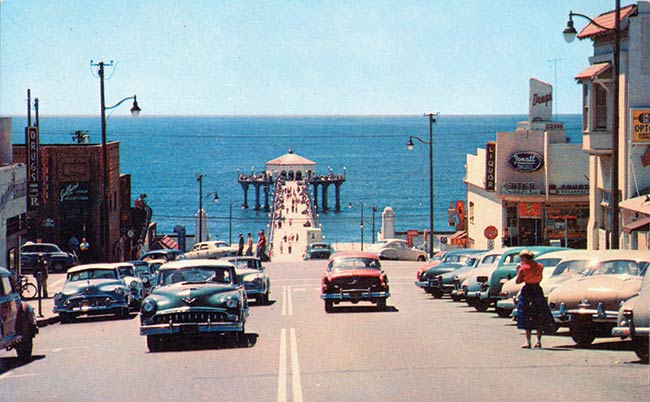
I lived in Los Angeles for six and a half years. After I moved to the East Coast, I continued to go back to visit family every year. And yet, whenever I am reminded of LA, it still invokes a strange sense of unrealness in me. It's the blaring, glaring, blinding, relentless light that eats your brain.
I suppose the harsh and pervasive sunlight is not limited to LA. Phoenix? Palm Springs? Las Vegas? There may be numerous Western cities like LA, but LA was the place where I called home for a substantial part of my life. By now I have been living in Washington DC for more than a decade. Here, or in New York, in London, in Auckland, I can imagine making a normal and real life for myself, in which I could feel a solid sense of my existence in the sun, rain, snow, or breeze. When I dream of the streets and views of LA --- always seen from inside a car, of course --- they are still like a dream. So strange, so alien, so fake. A plastic, glossy sheen over everything, the whole world bathed in JJ Abrams' signature lens flare.
Jumbled, ugly low buildings along six-lane boulevards. Stretches of land without a patch of shade. Highways and streets crammed with cars with not a single human figure exposed in sight. Like in a dream, the LA faces always turn away, not interested in breathing a word or throwing me a glance. Perhaps that is the root of this unrealness. Even though people are no friendlier in another metropolis, at least I can surround myself with strangers and feel like I am walking among the living. LA is like a ghost town, devoid of warm bodies. That is why I knew I could never find love in that city. That is why, though I think of it with nostalgia from time to time, I can never call it home.
Saturday, June 27, 2015
The Dolezal Case and Outsiders
One can never tell exactly what motivated Rachel Dolezal to pretend to be a black woman. Besides all the complexes and embarrassment that she has provoked in many Americans, black and white and, oddly, transgendered people and their advocates (fascinating how they got mixed up in all this), there is a kernel of recognition of a common --- perhaps even universal --- phenomenon. Here is a person who at some point feels that she does not belong in her environment and wants to find the sense of belonging elsewhere. She wanted to find the sense of belonging among black people, for whatever reason, and was willing to pile on lie after lie to get it. Is that so strange?
Coincidentally, I saw a documentary about Broadway musicals a few weeks ago. The short version is that nearly all notable Broadway musicals were written by Jews (except Cole Porter). They wanted to talk about their feelings of being outsiders in the American society, but in the musicals they chose to express it through other outsiders rather than Jewishness. Hence we got "West Side Story" with Puerto Ricans, "South Pacific" with Polynesians, "Showboat" with blacks, even "The King and I" with reversed roles between whites and Asians. And the kicker is that everyone loves them. Not only the immigrants who all see themselves in the disguised Jews, but even the dominant white audience find themselves in the stories of outsiders. This sense of being excluded from other people and therefore alone in the cold outside has to be a feeling that is universally appealing.
The stories of social outcasts and outsiders are the mainstream of literature and other forms of narratives. That is the irony. If the majority feels alone, are they alone in their likeness, or are they alike in their loneliness?
I wonder if there are people who never feel a sense of isolation and loneliness from time to time. Extroverts? Bullies? Psychopaths? It seems obvious that they are either nonexistent or definitely in the minority. For most of us, what would it take to rid oneself of the sense of being alone in the universe once and for all? Maybe nothing. Maybe that is just one of the permanent human conditions that we want to escape but have to live with, like the inevitability of birth and death.
Another phenomenon that had baffled me until I understood the universality of loneliness is fandom. Average people identifying with famous people in various fields and projecting themselves onto these strangers. People feel such a deep connection and kinship with flickering images or words of the page or glimpses from faded pictures. In the fans' mind, the self and the idol merge into a strange entity that is neither the same nor separate. The idol's success feels sweeter than the fan's own success, and the idol's failure more bitter. The animosity between two opposing camps of fans can be intensely vicious, despite the lack of real conflicts or harm to the celebrities in question. Anyone with exposure to figure skating would be familiar with the venomous and vehement battles between fans of Yuna Kim and Mao Asada, or Michelle Kwan and Tara Lipinski, or Plushenko and Lysacek. I am not immune to this type of sentiment, even though I never understood why.
Now I think I do. Public celebrities serve as a conduit for our need to escape the feeling of being alone outside the crowd. Their function is two fold. In their public glamor and glory, we boost our own sense of worth through projection. In sharing our adoration with other fans we get a sense of togetherness and belonging to a larger group. What wouldn't we do to come inside, away from the cold, even if for a moment of hallucination and self deception, like the little Matchgirl in the Hans Christian Andersen story. Note that Andersen was a very typical outsider and, with his stories about being the outsider, moved millions of readers.
Of course, the more realistic and less hallucinatory realm where one escape the loneliness is family. But family carries their own risk of disillusion. Knowing someone so closely and intimately can dispel the sense of belonging and heighten the feeling of difference. Fantasy togetherness with strangers, on the other hand, can be as perfect as your imagination can achieve.
Thus the space created by the Internet is most curious. The people you are sharing message with on the other side of email or Web site or group chat are real. You feel like you know them, but not too much to dispel the sense of belonging. If you know how to play this game, you can be as close as you want without being too close to be reminded that, in the end, we still each live out here.
Oh, and another irony. Every time I read about how lonely it is "at the top" for famous people (or superheroes in comics) --- being so famous that they cannot mix with ordinary people and have to keep to their sad loneliness as celebrities, I laugh. Isn't the point of being famous to be universally admired and never be left out (again)? Yet, somehow, by being "special" one might exclude oneself from the common experience of feeling alone and insignificant.
Sunday, May 3, 2015
The Palace
Last night I dreamed of the palace again. This has become a recurrent dream in recent months. The building is always somewhere nearby, in downtown DC or on the National Mall, behind one of the Smithsonian museums but easily. Or it might be just past Old Town Alexandria, between the red-brick buildings and the river. Or it was a ten-minute walk from home, across a field of waist-high grass and behind willow trees.
On the outside it is not gigantic but exquisitely complex. Topped with a golden dome, the deep blue frames and colored glass form intricate patterns. Whenever I visit it in a dream, it is always with someone --- family, friends, or just Sam, but never alone. It's a hidden gem that I show off to them. We have to first pass through a plain and ordinary building and a courtyard to see the grandeur of this palace.
At the sight of the dome and the glorious walls, a gentle gladness and calm excitement wash over me. We enter the palace and up the spiraling stairs. No royalty live here; it is an art museum, like National Gallery of Art. Let me show you all the good stuff, I say to my companions. It feels like home.
Thursday, January 1, 2015
Moral Enforcement in Chinese Culture
最近朋友发给我一些杂文作家刀尔登的文集。很好看,尤其是对于我这种不太了解中国经典书籍的人来说,程度不深不浅,正好。其中留下印象最深的一句是说起孟子和多数的X子论点是,治国怎么治呢?把人民都变成好人了,国家就万事大吉了。 换言之就是改善民风,或“提高人民素质”。
一想果然如此,这或许是我见过的对中国文化最精辟的总结。The Chinese culture is in fact individualistic, but it is not the American kind of individualism. It's all about the perfection of individual morality.
实际上从汉朝至今这套政治理论是中国文化的主流,跟庞大而复杂但很实效的官僚结构并存。Throughout Chinese history, the ruling class (including the intellectual-bureaucrats) can't leave the ruled masses alone with their thoughts. The pursuit of refinement of morality has never ceased. The dream that utopia is a place where some pure-minded people live has never been completely abandoned and runs deep in the Chinese culture.
Of course, Chinese people are not and have never been better than anyone else (whatever "better" means). Nevertheless the political machine has its insidious effect. Chinese people are perhaps more preoccupied with individual morality than most other cultures --- When it's impossible to be the perfect person myself, I can always demand it of my neighbors.
人性之稳定和现实的力量令人叹为观止,中国人并未达到统治者努力推广的完美程度。或许这才是李约瑟难题的答案:为什么中国没发展出近代科学呢?因为大家都忙着去道德完善人民群众的思想了。
连老子也不能脱离当时的风潮,他的理论也是通过控制个人的性格和行为而达到政治的理想境界。或许在人口有限的当时这并不是完全无理的推测,把集体群众看作个体的机械总和。但是后来人口涨到面目全非,但政治理论仍然念念不忘提高人民个体的思想素质,也是挺奇怪的。人民真的会因为洗脑政策和自我完善而变得方便控制吗?毛似乎已经证伪了这个理论,但是被证伪的理论仍不停地被拿出来回收利用。
If the Chinese culture can be summarized into one sentence, it would be "You there -- Don't think bad thoughts."
Tuesday, December 30, 2014
Procrastination
Apparently the "war" on procrastination has been raging around the world. Hanging out on the Chinese twitter, I saw how the issue has become a fashionable epidemic among the ambitious and upward-mobile Chinese youths. Hmm. And of course self-help books that claim to cure your procrastination problem fill up bookshelves in the only bookstore left in my neighborhood.
I don't have any remedy to cure anybody's procrastination. I am bothered by my own apparent tendency to put off doing things that are unnecessary but not enjoyable, sometimes, occasionally. I can't cure myself or anyone of occasional laziness.
The thing is, I just recently realized that institutions and even companies that are supposed to be ruthless money-driven machines procrastinate, and far worse than any individual person. People put off not only doing their work but making decisions that affect others' work downstream. And the problem is rampant. Especially by the end of the year, all the previously unmade and delayed decisions have snowballed into a gigantic snowball that swallow a bunch of innocent bystanders who did nothing to contribute to the others' indecision and laziness.
Yeah, indeed, when institutional procrastination is far worse and destructive than minor transgression by individuals, why beat oneself up over it?
It's perfectly logical for institutions to procrastinate than individual persons, because an individual knows the direct and first-hand effect of delays in doing laundry and taking out trashing, but the effects of procrastinating on making decisions and doing work in an organization are almost completely painless, until your boss or colleague comes to your office and looks at you with disgust and reproach. It's all the more painless when employees on salary see no difference in their paycheck, regardless of how much they have slacked off.
Corporations are not people, and people seem to know that instinctively. That is why they don't give a shit at work.
Friday, April 11, 2014
The Dog Park
The other day I took a detour on the trail across the street and went to the other side of the Four Mile Run river. A fence appeared on the trail, but the wire gate was unlocked, so I pushed it open and walked through. Before long a dog skipped down the path, unleashed. Then another. On a wooded opening clusters of dogs were yapping and snapping at each other --- I couldn't tell whether they were serious or just playing. It dawned on me that I had entered a dog park.
I had never been surrounded by so many dogs in my life, not to mentioned unleashed. Of course, the humans were also hanging around, an indifferent eye on their pets. There were various breeds, sizes, colors, and looks. A yellow one, medium size, hopped over and sniffed me. I pretended not to notice. Another ran toward and then skipped past me.
Research says dogs read people better than people. I wondered if they could see the flutters in my chest. I was a little nervous. Anyway, none bit me. Some of the humans shot me a puzzled glance, as I had no dog with me. I passed the dog park uneventfully, all the while wondering why the canines running free did not begin tearing into each other's flesh despite that looked like fake fighting. But they didn't.
As I shut the exit gate behind me, I wondered if people had wondered the same about people.
Monday, March 31, 2014
Living in Each Other's Dreams
The weather was atrocious today. Nevertheless I dragged Mr. S out to lunch at a fancy Thai restaurant we used to visit a lot but had not been back to for a year. On our way home the wind picked up and the rain turned into little ice pellets bouncing off the car's windows and hood. After some grumbling about the foot-dragging winter, we got into a discussion about an article reporting on research about ... well, the subject is not important, but I began to argue that the abstract representation of something that induces a projected, simulated experience in a person's head is not the same as actually having a real experience.
Then it occurred to me that this is an issue that has plagued my mind recently. When we watch a movie, when we read a book (especially but not limited to fiction), when we watch TV (including reality TV), are we not living in a simulated experience and feel emotions induced by a representation of experience that is NOT REAL to ourselves? Of course one could trace this back to storytelling by the fire pit ("Once upon a time...") and the drawings of hunting scenes on cave walls. When people listen to or watch (or both) an abstract representation of other people's adventure, they feel as if they were going through the same adventure and experience a part of the same feelings, emotions, and thrills (etc., etc.), all in the safety of their own caves or living room.
I'm sure someone --- probably a philosopher or a psychologist --- has described this odd phenomenon. Humans can experience something without actually doing anything for real. The fake experience, induced by abstract representation of others' actions and experiences, can induce a sense of actually being there and doing it. Sometimes it can feel very real.
So the line between reality and induced armchair experience is blurred. An extremely ambiguous example is playing computer/virtual reality games. You are doing something for real, but most of it is fake. The threat is fake, but the adrenaline rush is real. A number of recent experiments show that the brain cannot tell the difference between reality and fake reality, and a clever VR trick can even create an out-of-body experience for real.
Now that we don't NEED to do much of anything in daily life any more, do we need real experience any more? We don't have to craft our own table and chair from wood, build our huts from clay and straw, cook our meal on fire, and harvest our own grains any more. If we want to know what it feels like to make things, we can watch programs on HGTV or the Food Network. We don't have to actually make things.
I remember the stirring fascination I felt watching the TV program "Alone in the Wilderness", in which a man made a living alone in Alaskan forest, building his own house, carving his own boat, catching his own fish. Also the Swiss novel "Heidi," which describes, in meticulous and credible details, the mountain life ranging from milking the cow to herding goats. Importantly, "Heidi" suggests that doing these things are so easy that even children can handle them. --- And so can you! But you don't need to bother. You can get all your satisfaction from projecting your mind into these people on the pages or on the screen.
Pushing the life a little farther, one could argue that many other experiences can be felt without doing anything. Can we eventually simulate all experiences, including the most instinctive pleasures, such as, uh, the tingling of smelling the woods on a clear autumn morning? All without moving your butt out of the chair!
Living someone else's experience through an abstract representation or a vivid medium is like living in a dream, a dream shared by me and the other person, because there is an eerie sense of both being and being surprised in either case. When I wake up in the morning and read the twitter feed or emails of news of the world I have missed in my sleep, it is not unlike walking straight into another dream. Throughout the day I share my friends' and colleagues' experiences through emails and messages, and the world's collective experiences through news and Web sites. In fact I have not left my chair, and my hands have not created anything tangible besides an electronic copy of some words and numbers that exists inside the machine.
Note that "someone else's experience" could be merely someone else's made-up experience, like fiction. In such cases, the author is dreaming and I enter his or her dream. The difference is the author has more control and spends more effort. I'm just a lazy consumer of the dream created by the author and deservedly have less control.
The question is this: If there is no difference between real and simulated experience, if we get the same emotions and reactions from nonreal representation of life, why live for real? Why do things for real? Why touch and hold real objects? Why eat real food? Why love real people? Why make anything real? How much of my life is real and how much is a dream created by others and shared by me?
Why not stay in the continuous, endless dream?
Sunday, October 27, 2013
A New Restaurant
Today we decided to try the newly opened Copperwood Tavern in Shirlington. The place is lavishly decorated to appear rustic, with copper tubes running overhead and wooden benches and tables polished like metal. It is rather impressive.
An extremely petite young woman with a head half of the size of mine and weighing about 75 pounds greeted us and took us to a table. Dark hair, dark eye shadow, pale skin. Then came our waitress, who looked like a taller and less emaciated copy of the first one. I looked around and spotted a third waitress with the same style of hair and makeup, also in her early to mid 20s. Hmm, I thought, has the manager hired an army of young women and groomed them in the same way?
On the table were two glass jars that pretended to be rustic cups. I wondered whether rural people really do drink water out of glass jars. A couple of waitstaff, obviously lower than the army dark-haired petite young women, were walking around pouring water from a glass bottle with a wooden stopper, like one of those restaurants that are too fancy for an ordinary pitcher, as if the water was not collected from a tap.
"What would you like to drink?"
The hubby got iced tea and I got hot tea. He ordered biscuit with gravy and I ordered a burger.
"With fries or salad?" The girl with dark hair and dark eye shadow asked.
"Salad, please." I said without hesitation.
Some minutes later, she came back with our beverages. Some further minutes later, she came with the food. On my plate was a pile of soggy and lukewarm fries. I sighed but was not in the mood to get it changed.
"Anything else?" She asked.
The hubby wanted more ice tea and I asked her to add some hot water to my cup.
In no more than three minutes she came back with another glass of iced tea and asked me with all seriousness: "Do you mind if I just add hot water to your tea?"
I stared at her, tongue tied, and nodded.
Five minutes later she was standing at the two-person table next to me, apologizing to the gray-haired couple. With a pair of reading glasses on his nose, the husband was pointing at the check, noting that the record contained an incorrect entry. I could only vaguely make out that they were charged something they did not order. The young waitress nodded and apologized again and took the check back for correction.
I made a face to the hubby, "There's something wrong with her. Would it be rude if I suggested she see a neurologist?"
The burger was too dry, and the beacon on top interfered with the flavor. I pulled it out.
The hubby is an aficionado of grits so he ordered one. It came in a fancy little iron pot. "How was it?" The waitress asked.
"Can you tell the chef it is way too salty?" He said mildly. He almost never complains about anything and is usually horrified when I make a fuss about some inadequate service in public. It is a rare occasion that he would lodge a complaint.
The girl apologized and went back to the kitchen. Soon after she came back and whispered something with a red-headed young man hardly older than herself. She then leaned over and told hubby that the chef couldn't make him a new order of less salty grits, but the manager would take it off our bill.
Throughout the meal she had been unwaveringly polite, but we left with a bad taste in our mouth. If only they had put half of the money on decoration into better food, I'd be a lot happier. All the wooden counters and copper faucets are nice, but they are not edible.
Tuesday, October 15, 2013
The Horror of the Sun
The first two days in LA were a bit overcast, cool and pleasant. Then it turned hot. For the past few days the blaring sun has become increasingly unbearable. I have forgotten how much I dislike days like these.
A darkness hides in too much light. It springs on you when you leave a dark room. For a split second the brightness dims your eyes and you feel oozy and lost. This feeling lurks constantly under the blinding desert sun. Yesterday I was stuck on the freeway for two hours --- I had forgotten how much I hate this too --- and even with the sunglasses on, the effect persisted. An invisible monstrosity lurks in the inescapable light.
The effect is hypnotic. The sunlight numbs and makes the mind sluggish. The eye sees more sharply but discerns less clearly. Thoughts are muffled. Time loses its edge. The brain is suppressed and submerged so that nothing floats to the surface.
In the bleaching light nothing looks real, including the senses. The world is plastic and fake and horrible.
Tuesday, October 8, 2013
Something and Nothing
My friend Terence wrote a hilarious piece today about the eternal question of "Why is there something and not nothing?"
So, it dawned on me --- What is nothing? Do we know what it is? In our world, it seems, there is no place where nothing exists. What we previously thought to be vacuum in space turns out to be an endless stretch of dark matter and dark energy. Our universe is filled with something. So what is this "nothing" we think exists?
If nothing does not really exist in the universe, then why are we pursuing it? Where did this idea of nothing come from? Ah, therein lies the rub. Our concept of nothing comes from a lack of consciousness --- the space-time before our birth and that after our death. But in fact we are fundamentally wrong. The nothingness before birth and after death is purely subjective. Something existed before we know it and will exist after we cease to know it. Just because we know it now, does not mean its existence is dependent on our knowing.
Saturday, August 31, 2013
Decline
The local TV station showed a bunch of interviews with the producers, director, and major actors on Detective Montalbano series. Something the producer said about the series location caught my attention. He said he went all around Sicily looking for a place that could stand in for the fictional Vigata. When he got to Ragusa he knew he had found it. The place was nearly deserted. Hardly anyone lived there. No hotels, no restaurants, no ice cream parlors. Nothing. It was a forgotten place with beautiful churches and streets and houses that had been abandoned. "It was like a faraway place," the producer recalled. Now, of course, Ragusa has become a hot tourist destination thanks to the popularity of the Montalbano series.
The mental image of a deserted town with crumbling past glory fascinates me. I am living in an era of human history that saw unprecedented population growth nearly everywhere in the world. I can only experience the fall of civilization and the gradual emptying of cities through books and movies and ... wait, there are hardly any movies or books depicting the decline of civilization, because movies have also been existing in the era of unprecedented population growth.
I have heard of only one nonfiction book that explicitly describes the details of decline over time: The World Without Us by Alan Weisman. George R R Martin likes the theme of declining worlds too, but I haven't read those novels. Perhaps the subject is too depressing for most people to write about.
In reality various civilizations have undergone this "emptying" process in history, from Alexandria of Egypt to Maya cities to the Silk Road. Books usually describe the excavation of ruins but not while the civilizations are transformed into ruins. People are still hanging around but the numbers dwindle and houses stand empty and crumbling slowly. I wonder what it's like to live in the midst of the decline.
Wednesday, August 1, 2012
推理
最近几天浑身发痒,从头皮到腿,而且是那种不太具体的痒,头皮没有头屑,身上有四个看上去象蚊子的包,但是所痒之处不限于蚊子包。于是,第一,先把床单和枕套扔进洗衣机里用最热的水洗一遍,无效。第二,在蚊子包上厚厚涂一层可的松软膏,蚊子包倒是好点了,但是浑身其他各处还是时不时发痒。第三,最近天热粘嗒嗒的,一天洗两次澡 ,更痒了。这两天又热又痒,搞得我心情烦躁暴跳如雷。
今天上班时开始胡思乱想,在网上查了半天 bedbugs, mites 的信息,越看越浑身发痒且心惊肉跳,差一点就要约时间看医生。还好残存一丝理智,打电话给某同学问他有无发痒有无红包,某同学表示一切正常。我还不放心,回家后掀了床单把床垫细细摸一遍,确认无 bedbugs 迹象。
最后终于推理出真相:四个蚊子包应该是蚊子包,因为上周末刚刚到河边去走过一圈。浑身发痒应该是最近每周两次去游泳,加上洗澡太勤,皮肤过分干燥的结果。去药店买了 oatmeal 洗澡水,希望用了之后可以缓解症状。
痒是一种心理成份很重的现象,我发现,越看 bedbugs 的文章和网站,身上就越痒,绝不是幻觉,或者也许所有的痒都是心理作用。忽然发现痒和 paranoia 有本质上的近似之处,如果有人做一下 MRI 扫扫脑子,说不定能发现二者集中的区域是一样的。
Sunday, April 22, 2012

Wednesday, February 8, 2012
Snow White
Why oh why are fairy tales always so damned illuminating? Yikes!
See Grimm's Little Snow White, Translator's notes #2:
Are you fucking kidding me? It makes so much sense!
I wish I was a fairy tale historian or somethin'.
See Grimm's Little Snow White, Translator's notes #2:
Some differences between the edition of 1812 and later versions:
Beginning with the edition of 1819, the Grimms add the statement that Snow-White's mother died during childbirth, and that her father remarried. In the first edition, presumably the version closest to its oral sources, Snow-White's jealous antagonist is her own mother, not a stepmother.
Are you fucking kidding me? It makes so much sense!
I wish I was a fairy tale historian or somethin'.
Saturday, January 14, 2012
Mr. Fox
It has been a month since I read Mr. Fox, but I thought about it again today.
Typical meta-fiction, obviously. Oyeyemi is certainly not the first person to revisit fairy tales. I too find fairy tales fascinating, having devoured many of them in childhood. A truly globalized endeavor for a provincial kid, it was.
Anyway, Oyeyemi's take on fairy tales focuses on gender relationships and romantic love. For me, however, the mind lingers on the terror and violence in the original stories, all of which seem to be derived from the same origin:
Bluebeard
Fitcher's Bird
Mr. Fox
I realized that the logic in these stories and the mechanisms of coping with the violence and horrors are very similar to how my brain dismantles nightmares within a dream. I don't know what that means.
Friday, November 11, 2011
The Chute
It was about eight in the evening when I decided to take the cardboard Amazon box to the garbage chute on the tenth floor. The chute is dark and dirty and stank of the seasonal mixture of garbage of a highrise apartment building. In summer, the ghost of rapidly rotten fruits and food rushes out of the pit and hits you in the face. But it is autumn now, so the stink is vague, hollow, with a slight chill of some unknown substance slowly disintegrating into some other unknown substance.
The wall into which the chute opens is hidden behind a door in a small, windowless alcove. A thoughtful design to thoroughly block the stink from creeping up the giant garbage receptacle in the basement. Tonight, however, the little alcove was lit by a dim light bulb on the verge of going out any moment, making the small enclosed space seem especially isolated.
I gripped the handle on the chute cover and pulled it open. With my head slightly turned sideways to avoid being hit by the stink, I thrust the cardboard box into the gaping black hole. Suddenly, with a damp breeze, a soft, shapeless, semi-transparent blob arose slowly out of the darkness and floated, like a jellyfish in deep sea, toward me, toward the light.
I gave out a scream and slammed the cover shut, and rushed back into the hallway, running until I reached the door to my own apartment.
Wednesday, November 9, 2011
Take Shelter

I was not as impressed with Take Shelter as I had expected --- perhaps I had expected too much. In general, the movie leaned pretty heavily toward the "paranoid schizophrenia" context (ie, subjective delusional point of view), rather than toward the "apocalyptic horror movie" genre. The mood is beautifully created. I just thought the filmmaker could have gone farther. The dream sequences are pretty fantastic, but the movie could easily have used 2-3 more such segments --- even though I was shaking in my shoes already.
One day about a month ago, I was driving home on Rt. 66 from work and got caught in a torrential downpour. On the radio, the news station was blasting tornado warnings in just the same area. The roads were so slick with water that the car was nearly floating. Plus I could see nothing but a blur outside my window and hear nothing but the mad beating of the rain drops. I pulled over to the shoulder several times, heart pounding, hand shaking, breathing hard. It felt like the end of the world, and there I was sitting alone in the car.
According to the currently known of laws of physics, all that has happened still exists in the space-time continuum, and so exists everything in the future. The undetermined nature of time is but an illusion. The future is there, only it is out of the reach of our cognition. So I often wonder what is ahead of now, this moment, for the little speck in the universe that is I, that has already happened, waiting for my senses to enter and surround it and make it real for the sorry little brain in my scull.
Sitting in the car alone in the rain, I wondered whether a short (time) distance beyond was my car swirling in a funnel cloud. The future is right there but I cannot access it. Oh well, at least on that day the world did not end, and nor did I leave Kansas.
So, what will happen has already happened, and the only barrier is our knowledge. We are the way we are, because a large part of our nature is rooted in our oblivion of what lies beyond now. I suppose there could exist a different creature, a creature that sees every spot in the space-time continuum or even just the segment of their finite life span, a creature that has symmetrical memory of the past and future. Such creatures would feel, think, and behave differently from humans, obviously. How? I don't know. I only know that for these creatures there would be no such thing as hope.
********
Come to think of it, our sense of the past is also an illusion. The past exists in a physical sense outside of our awareness, just like the future does the same. Our knowledge of the past, however, exists in the now, in the lazy but continual sparks between neurons or the patterns of a few particular neurons somewhere in our brain, now. It has nothing to do with the actual physical events in the past, just like the girl in the photo, which I am looking at, is not the same thing as the small human female I was 30 years ago. What we are holding in our hands is not the actual past but rather a (now) flickering shadow of the past.
In other words, we have a sense of the forward direction of the flow of time, only because we have memory. Without memory, we would not know what time is. (Of course, like the stars and aliens, time exists outside of human knowledge. Or does it?)
Subscribe to:
Posts (Atom)
The Ending of Le Samourai (1967), Explained
A quick online search after watching Jean-Pierre Melville's Le Samourai confirmed my suspicion: The plot is very rarely understood by E...
