Search This Blog

Showing posts with label fantasies. Show all posts

Wednesday, October 18, 2023

The Haunting of Hill House (1959)


Shirley Jackson seems to be enjoying a moment of revived popularity right now. Her major novels, The Haunting of Hill House and We Have Always Lived in the Castle both got a screen adaptation in the past few years. There is a sort-of-biographical-but-not-really movie made starring Elisabeth Moss. 

While I am in general very sensitive to horror stories and movies, reading "The Haunting of Hill House" was not a particularly terrifying experience, even though I did it mostly at night in the dark. It helps that there is no blood and gore, no hacked-up corpses, no severed limps or gouged eyes anywhere in the book.

The novel is written in a very subtle style, which rapidly shifting perspectives, abundant hints and inferences, and omissions that are as meaningful as words on the page. For example, in one scene involving three characters, we see only two conversing, and the silence of the third is where the drama lies. Deceptively simple but technically sophisticated, the novel was recognized as a masterpiece and a finalist for the National Book award. 

There are a number of components in the novel, including an pervert Victorian-era father who probably abused his daughter in a chilling but very brief segment in Chapter 6. Lesbianism is also hovering significantly in the background, not only in the character Theodora but also the bond between Theo and Eleanor, the main character. However, at the heart of the novel is undoubtedly Mother. 

I looked up a few reviews of the novel. That Hill House represents a mother figure is widely accepted: the soft bed, plush chairs, excellent meals cooked by Mrs. Dudley, enclosed rooms (suggestive of the womb). It mothers all four characters who gathered there to investigate it: Professor Montague, future owner of the house Luke Sanderson, and two women with supernatural talents, Eleanor and Theodora. However, Eleanor is the center of the story and the most susceptible among them to this mothering. It took me a while to be convinced that none of the other characters would feature prominently in the relationship with Hill House, which somewhat hampered my appreciation for the novel in the first half. (Actually, I was waiting for some of the side characters to be killed by the House.) 

The roots of Eleanor's susceptibility are vaguely suggested through her history of having spent almost her entire youth, from 21 to 32 years of age, caring for her ailing mother, with no social or personal life outside of the confinement and obligations. All this took place before the opening of the novel, and we only see glimpses of her resentment and desire to escape into independence. What kind of a mother was Mrs. Vance in her illness? There is only a mention of "small guilts and small reproaches, constant weariness, and unending despair." In a word, inadequate. The roles of mother and daughter were reversed, and Eleanor had to mother her mother for 11 years. Thus, the House seems much more welcoming and fits into her desire for a mother. 

(If you do not wish to be spoiled, stop reading here.)

Some reviewers have put forth a theory that postulates that most or all of the haunting in the novel, such as strange noises and writings on the wall, are in fact generated by Eleanor instead of the House, as she has telekinetic abilities. I am in the camp against the theory. I think the House exists as an independent being that sometimes but not always responds to Eleanor's unspoken wishes and desires, which is in fact what most mothers do (respond to and fulfill the wishes of their babies without verbal/linguistic communication). 

While some reviews consider Eleanor's mental evolution throughout the novel as a disintegration or descent into madness, I don't agree. Her mind is increasingly merged with the House (her new mother figure) over time, and her wish to "come home" is then written on the wall. It is indeed Eleanor's wish, which is why Theo the telepath asked "Did you do this?" to Eleanor's rage. 

Among the residents in the House, Eleanor is obviously the closest to Theo, who at first represents an alternative life to Eleanor's, an inspiration and aspiration for her future life. Over time, however, Eleanor turned on her. Although the author somewhat obscured the heart of their quarrels, I am reasonably certain that it is caused by Eleanor's effort to turn Theo into a mother figure and Theo's refusal. This is made clear only in the penultimate chapter:

Theo said carefully, "She wants me to take her home with me after we leave Hill House, and I won't do it."

Luke laughed. "Poor silly Nell," he said. "Journeys end in lovers meeting."

The response from Luke is significant because the quote "journey's end in lovers meeting" is repeated throughout the novel. However, romantic or sexual attraction is sorely lacking between Eleanor and other characters, either male or female. This love is therefore not sexual but rather parental and primitive. Theo's rejection to be Eleanor's request to be the latter's mother is the trigger that pushes Eleanor into the arms of Hill House. 

While we have all heard of Oedipus Complex and its effect on our mating habits -- at least for heterosexual persons, women's relationship with other women is often heavily influenced by their relationship with their mother, especially if the original relationship is unsatisfactory. What Eleanor seeks, with despair, in other women is a new, better mother to replace her inadequate one. Hill House is the only one willing to give it to her.

The male characters sort of fade into the background. There is a brief segment in which Luke flirts with Eleanor and floats the possibility of a romantic relationship. Is this a suggestion that Eleanor is not a lesbian or has a crush on Luke? No. Reading the text closely, it is apparent that Eleanor is merely contemplating a potential escape from her family and old life through marriage. Luke is trying to seduce her by whining that he had no mother and "No one ever loved me," hinting that he too is seeking a mother. This could work with women who want to mother others, but Eleanor is the opposite. That is why she reacted violently:

No, she thought, you are not going to catch me so cheaply. I do not understand words and will not accept them in trade for my feelings; this man is a parrot. ... that maudlin self-pity does not move directly at my heart. 

A baby cannot be a mother, especially after she had already played a mother for 11 years. Her rage and her despair lie in the condition that no one would mother her and give her the satiated infant experience. 

Late in the novel, Mrs. Montague and her male "friend" made an exasperating appearance. Although their function in the novel is unclear, Mrs. Montague is a hilarious character who constantly shushes her husband, the benevolent father/authority figure in most of the previous chapters, rendering him completely impotent. This odd threesome marriage may be an echo of Shirley Jackson's own marriage, in which her husband Stanley Hyman, a college professor, constantly flaunted his affairs with his students. One of them even lived in their house for a while. Perhaps she serves as another argument for the impossibility of escape through marriage, perhaps it is just comic relief. 

The extraordinary opening of the novel lays out the central premise: 

No live organism can continue for long to exist sanely under conditions of absolute reality; even larks and katydids are supposed, by some, to dream. Hill House, not sane, stood by itself against its hills, holding darkness within. 

The absolute reality that drives Eleanor insane is that she cannot have a mother. This is a true human condition, as all mothers are more or less inadequate to a human infant's need. Mothers are human too and all humans have limitations, especially in the insufficient capacity of telepathy and empathy. Infants wish for an omnipotent mother who can read their mind, but this mother does not exist. For some who have had less mothering than most, their hunger is bigger, more urgent, and more desperate, and therefore they are even less soothed by the lukewarm relationships with other people. For them, the absolute reality that they eventually face is a world in which no one comes when you cry, and this is what Eleanor gradually realizes in the final chapters. She cannot escape her absolute reality through "normal" relationships, with either men or women. Her only path is to return to the womb, and it comes true in the end: the warm, dark, silent, absolutely safe confine in which one never moves.

Tuesday, June 6, 2023

A Wizard of the Earthsea


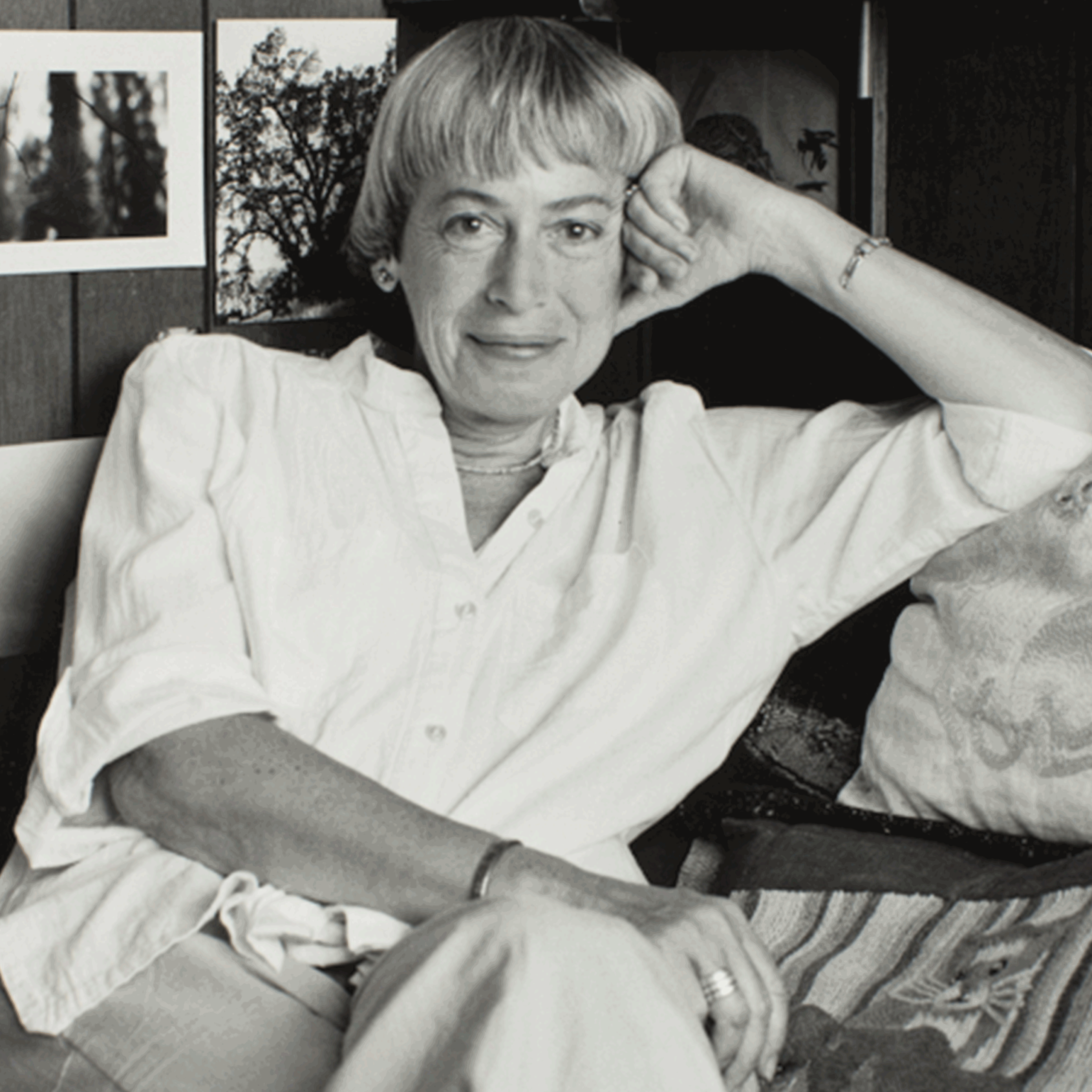
One night twenty years ago, I went to see Ursula Le Guin at Folger Library, where she accepted the PEN/Malamud award. It was a bit of a trek from Gaithersburg, Maryland, but I had fallen in love with her novel "The Lathe of Heaven" and her Taoist philosophy. She was a white-haired diminutive woman. At the award, she read one of her short stories about an all-female expedition that reached the South Pole and decided to keep it secret. At that time I did not understand the ending, but now I do. Even in my ignorance, by the end of the reading, tears were streaming down my face. 

Some years ago I picked up the Earth Sea trilogy but could not get past the first chapter. Yet another Arthurian fantasy about wizards and magic centered around a boy who will grow into a great man. A tiresome trope of "the chosen one", I thought. A week ago it was again recommended to me as an example of an unusual exploration of power and its use. So I started again. My first impression was entirely wrong. It both is and is not the Arthurian fairy tale. 

There is indeed a lot of worldbuilding and magic and other traditional fantasy elements, but it also subverts many of the common tropes of the genre. The novel starts with a heroic achievement by Ged as a boy, setting up an expectation that he is destined to be a great hero through a series of conquests and elevation of his talent and skills. But no. The novel is a journey of self-discovery and self-reflection. It's a psychological adventure disguised as fantasy adventure.  

Le Guin had an unparalleled talent in writing severe hardships and quiet stoicism. She is really one of the toughest writers I have read. The ordeals she routinely put her characters through are punishing and merciless. So it is all the more extraordinary that none of it is at all cynical or nihilistic. One closes her books with warmth, humility, and affirmation of life. 

The novel was written in 1967. For over half a century, the fantasy genre, the YA genre, and the YA fantasy genre all exploded in popularity. Yet still the torrent of stale tropes continues to flow, and very few works are nearly as subversive, almost revolutionary, as Le Guin's. 


Sunday, November 13, 2022

The Princess and the Queen


After finishing the first season of HBO's House of the Dragon, I hastily read the novella on which the series is based, "The Princess and the Queen", published in 2013. The novella is not that interesting, as this fake-history format barely provides any room for character development. The reader has zero opportunity to bond or identify with any character. Nevertheless, it is easy to see that GRRM has some degree of emotional investment in three characters: Prince Daemon, his final lover Nettles, and another bastard dragonrider named Addam. As for the rest of the aristocracy of the Targaryen court, he has shown very little sympathy for either the Greens or the Blacks. He is more interested in the random nature of history and how the average people are crushed regardless of who rules. The story might also be a sly ode to the surprising power of an angry and desperate populace, which is not something the American TV industry or culture is interested in, and I doubt the series will be able to do it justice in future season(s). 

The novella itself is not all that good, but I am glad I finally read it. Why? Because it is obviously the clue to the laughable dumpster fire that is the ending of the Game of Thrones series. In the last two seasons, without any ASOIAF materials to go on, the pathetic incompetence of Benioff and Weiss was on full display with various dead-end plot lines and out-of-character characters and stiff, trite, cringy dialogs and nonsensical twists to hastily wrap up the series. The worst choice was in the disintegration of Daenerys Targaryen's character and her demise. It's not that she could not, theoretically, become a megalomania and threat to civilization, but the way to get there is a prime example of how lazy, unimaginative, and dumb the writers are.

Regardless, it has now become clear to me that they did not even come up with that storyline with their own mind, which is not surprising. Nearly everything they had independently come up with was either stupid or nonsensical, or both. The only interesting ideas and twists in the series, some executed well and some poorly, came from GRRM. One could safely bet that Sansa's betrayal of Uncle Littlefinger came from GRRM, even if not done in the way shown on TV, while the death of the Night King at Arya's dagger did NOT come from GRRM. Now I can also safely bet that Daenerys' turn into a tyrannical idiot after her occupation of King's Landing also came from GRRM, except not from ASOIAF but instead from Rhaenyra. In addition, the writers took the idea of the scorpion, a dragon-slaying weapon akin to shoulder-launch missiles, from this and perhaps other related stories.

It is curious to observe that all the other 5 or 6 prequels in development were killed off by HBO, while the only 2 series that have received enough money to show up on our screens are both based on a single idea of a woman in power who is stupid and tyrannical and is severely punished for her folly. There is one remaining series in development, which centers on the most boring leads in the ASOIAF, Jon Snow. How very predictable.

Anyway, now that I am fairly confident that GRRM did not tell the bozos the full ending of the series, I have my own idea about how Daenerys came to her demise. As I previously pointed out, the final chapter of Book 5 in ASOIAF previewed the battle between her and the army of the Others. That is the end. She and the Others will perish together, bringing about the end of the winter and leading Westeros into a new cycle. Even The Princess and the Queen has demonstrated GRRM's fondness for mutual destruction. I don't think he can resist the elegant symmetry of such an ending.

Thursday, June 22, 2017

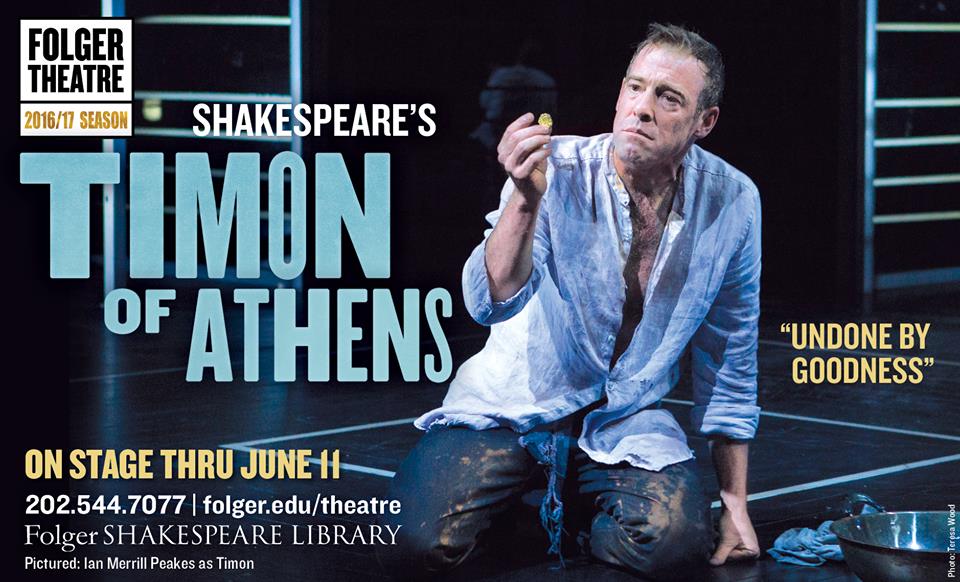
Timon of Athens


During the intermission of Timon of Athens at Folger, I eavesdropped on a discussion among the 3 persons (who looked like a mother with two teenage children) sitting next to me. The boy kept saying, "His motivation is unclear. Why is he so strange?" He was referring to Timon's showering his "friends" with money and gifts at his own peril. It seems unsatisfactory that Shakespeare should obscure such bizarre behavior or personality. The mother pointed out that such is the tradition of Greek tragedies, and don't forget the play is intentionally set in ancient Greece.

I couldn't help but inject myself into the conversation. "Why does Gatsby throw big parties every night?" Well there's an easy answer --- he wants to announce his presence to the girl across the bay. He wants to demonstrate that he is no longer poor and undesirable. He wants to show Daisy that he now deserves her love.

Is that so different from Timon of Athens?

I pointed out to the boy that bizarre behaviors are common among rich people, contrary to popular American mythology. For every Warren Buffett, you have dozens of Mercers and Kochs, and those are the "normal" ones. The director Robert Richmond modeled his Timon on the legendary weirdo rich man Howard Hughes, with the tics and OCD.

Nevertheless, Timon's desperate need for friends, along with his inability to find any, stabs you straight in the heart. Do we really not feel his motivation in our gut?

If Shakespeare were a true misanthrope, he would confirm Timon's worst nightmare that he truly does have no friends and there truly is no love between people. However, Shakespeare clearly was NOT a misanthrope. In a brilliant bit of casting, Richmond made his steward and one true friend Flavius into a woman. There is a tinge of sexual tension between Timon and Flavius that remains unresolved. Flavius represents real human relationships that Timon is unable to grasp. If we are still too dense to buy into Timon's extreme distrust of humanity, there is another character, General Alcibiades. While he takes revenge against the ungrateful treatment of his fellow Athenians like Coriolanus, his motivation is different from the latter. He is not banished for his own ego; rather, he tried to defend and save a friend. Even in a play that serves up the most angry diatribe against humanity, there is friendship and loyalty.

Maybe this is why Shakespeare's tragedies are so addictive. They're bleak, but they're not all that bleak. He is not an extremist.

Saturday, January 7, 2017

1913 or 1938?

I have been chatting with my Chinese American friends for weeks about the geopolitical and global economic outlooks in the next few years. Whichever way I look at it, the barrel of dynamite sitting between China and US is going to blow up in some shape or form. Both sides need it to blow up, because they have run out of alternatives. They just can't help themselves. Martin Wolf of the Financial Times recently compared today to the eve of WWI. The similarities are striking.

Mr. S refuses to heed my paranoia, but I continue to plot my doomsday scenarios. Not that I want the worst to happen, but it really does seem the most logical outcome given the current conditions. All the other options are rapidly receding into the fog.

I have to admit that, beneath the anxiety and dread there is a sliver of thrill. I was born in 1973, barely escaping the horrors of the Cultural Revolution. I never thought that, in my lifetime, I would witness such historical events as Hemingway or Christopher Isherwood or my parents did. From moment to moment you don't even know whether you will survive the next day! Is there anything more life affirming?!

The somewhat comforting elements of peace are two: 1) China does not have nearly enough long-range nuclear warheads to attack across the Pacific Ocean. 2) At the moment Russia has very little reason to get into any conflicts with US (Why would he? Putin's going to run the show of American national politics.)

So I'm sitting here on the brink, dangling my legs over the abyss, and shivering with a morbid curiosity. It is like the moment immediately after the boy king Joffrey unexpectedly had Ilyn Payne chop off Ned Stark's head, and I'm watching in the crowd through the eyes of Arya Stark or Uncle Yoren, with only a vague anticipation of the storm of swords to descend. There's also a faint whisper that I should write it down --- what it's like to live in January 2017 --- and take a snapshot of the sharp smell of snow halfway between the clouds and the earth.

I suppose we'll find out what is going to happen to the world, once George R. R. Martin finishes his damned book The Winds of Winter.

Friday, June 17, 2016

A Unifying Theory: ASOIAF

While the Game of Thrones TV series have turned into fan fiction of the ASOIAF novels (or, as some may say, parody), this fan fiction has the advantage of having learned the grand finale from GRRM himself. The main characters' fates and big story arcs will likely to be generally consistent. For example, Jon Snow has been resurrected. Arya Stark is heading back to Westeros. Cersei Lannister will blow up King's Landing with wildfire. Daenerys Targaryen has tamed Drogon. Looming events include the dominance of Littlefinger Petyr Baelish and the Others and their zombies swarming over the Wall.

In the two novels plus 11 chapters released to date, a trend that is more pronounced than geographical convergence might be the spiritual "homecoming" of major characters. Daenerys has changed her principle from "If I look back I am lost" to re-examining her past. Jon Snow was about to ride to Winterfell before getting stabbed by Bowen Marsh and co. Tyrion, oddly enough, connects to home by selling it off to Brown Ben Plumm and his Second Sons army.

The human Arya may not be heading home up to the chapter "Mercy," but her constant warging into Nymeria suggests that her spirit may have already returned. Most notable, Bran's "return" reaches into the past of not only his family but the entire history of First Men and Children of the Forest, native populations of the ancient and mythical North. This, perhaps, is the grand and ultimate homecoming that the story is heading toward.

Thus we are faced with a question: What is home? What is the origin or true identity? Here another pattern emerges. Some of the main characters are not human but rather beasts. Below are the definite cases:

Sunday, April 10, 2016

War as Human Sacrifice (2): Explicit Cases in ASOIAF

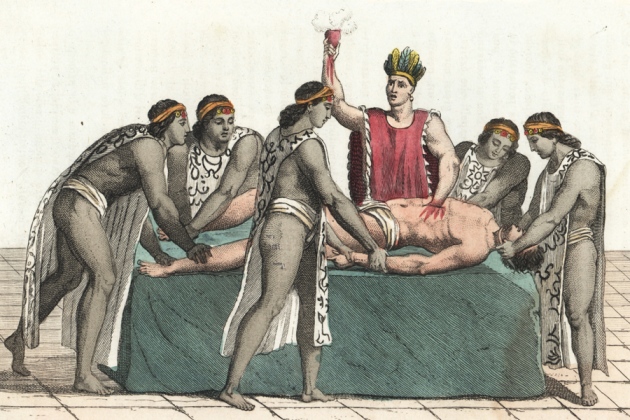
An Aztec priest removes a man's heart in a sacrificial ritual and offers it to the god Huitzilopochtli (from handcoloured engraving by Giulio Ferrario's Ancient and Modern Costumes of all the Peoples of the World, Florence, Italy, 1843)

Human sacrifice is one of the many threads underlying the A Song of Ice and Fire series. I have become increasingly convinced that the Unifying Theory of ASOIAF must contain this idea. I am trying to compile a list of as many human sacrifices in the novels as I can remember. There are probably more.

Old Gods of the North

In ADWD, Bran sees through the heart tree (the one in Winterfell?) the past, present, and future. His visions are described backward in time: First he sees Ned Stark, his father, sitting under the tree. Then an earlier scene of a boy and girl fighting with wooden swords, presumably Lyanna and Benjen Stark. The time is then fast rewound to much earlier times in the North, when he witnesses human sacrifice by the ancient people. The victim's throat is cut and blood flows into the roots of the tree.

It is generally believed that the Children of the Forest conducted human sacrifice to the Old Gods. This tradition has led to the speculation that Jojen has been killed and fed to Bran by the Children in the underground caves. Even if Bran has not drunk Jojen's blood, the fact remains that human sacrifice is part of the Old Gods' requirement and necessary for their powers.

R'hllor of Asshai 

The Azor Ahai myth shows that human sacrifice is also a foundation of the religion of R'hllor, also known as the Lord of Light. The ancient mythical hero forged his magical sword Lightbringer, the weapon against darkness, by driving the red hot flaming sword into his wife's heart.

Side note: Forging a perfect sword with human blood sacrifice is a proto-myth I am very familiar with from Chinese folklore. It's traced back to as far as over 2000 years ago. Whether the original story initiated in India, the Middle East, Asia Minor, or China, I have no idea.

As far as we have seen, Melisandre is the only red priest who does human sacrifice through burning. Neither Thoros nor Moqorro has burned anyone yet. On the contrary, Thoros has given life (sort of) to Berrick Dondarion seven times. Nevertheless, we cannot deny that human sacrifice appears to create powerful magic for Melisandre that allows her to assassinate enemies.

If we were to believe that Shireen Baratheon is really burned as a sacrifice to R'hllor, the concept of human sacrifice is definitely a part of this religion. Not only is king's blood especially powerful (with reference to Mayan religious sacrifice rituals), but child sacrifice is apparently more desirable to the god than decrepit old people, just like human society.

The Others

So far the novels have not directly described human sacrifice in these creatures, but the TV series have probably given it away in a Season 4 episode. At the end of this episode, we see an Other carrying one of Crastor's babies deep into the land of endless winter and places him on an icy alter. Their leader, identified as the Night's King, picks up the baby and turns his eyes blue.

Note the element of not only human but child sacrifice here. The question remains: Why do the Others demand so many male infants from Crastor? He is practically manufacturing babies for them over the years. It has been speculated that, by the constant perverse offerings, Crastor has maintained peace with the icy creatures and kept them from attacking the Wall. Is Crastor in fact a saint who is responsible for the long summer by sacrificing his own, uh, production? Alternatively, the Others may have been training a special operation troop with converted Crastor's babies who will serve some special purpose during their invasion.

Side note: We should keep in mind that GRRM has said that the Others are not dead or zombies, and they are not evil. There is an underlying logic for their behavior and migration, which is an integral part of the seasons. They don't eat brains and they probably don't exist just to be humans' enemy. This is a key point that has been ignored by nearly every interpretation of their nature.

Many-Faced God

We have learned nearly everything about this god of all gods from Arya's perspective. Human sacrifice is not as apparent in this religion as the other ones in the novels --- or perhaps it is the most apparent. What is the mantra of Faceless Men? Valar Morghulis. Valar Dohaeris. All men must die. All men must serve. What the hell does it mean? Why are these phrases together? Are Faceless Men merely an organization of hired hit men who assassinate for money? Not at all. They are servants of the Many-Faced God. Their service is to kill, ie, to take lives. All men must serve. They kill to serve their god. Hence death is a service. Hence death is sacrifice. They are the high priests at the alter, cutting out the heart and draining the blood of the offering.

Jaqen H'gar has explained to Arya (and us) the workings of the religion right in ACOK. Arya has saved 3 lives, including his; therefore, she has "robbed" his god of 3 lives that were supposed to be offered. To appease the god, Jaqen must kill 3 people --- maybe they have to be of her choosing, or maybe he just likes her --- to pay the god back. In other words, he must give the god his due sacrifice. The balance is then restored, and disaster has been prevented.

Where Are My Dragons?!

This is perhaps the best evidence that the hidden connection between human sacrifice and magical powers is part of the original plan for the series.

We are told that Mirri Maz Duur's magic is blood magic. When Daenerys begs her to save Khal Drogo's life, she does, but it is later revealed that his (sort of) life is gained by killing Dany's unborn baby. A life for a life. Blood for blood. The balance must be maintained (sounds familiar?). When Dany gives birth to the dead baby and understands this transaction, she gives Drogo the gift of death (again, sounds familiar?). She then burns 3 bodies in the pyre: Drogo, her child, and Mirri Maz Duur. Three lives are sacrificed in fire, a common practice in history and echoing Melisandre's approach, to an unnamed god. Which god is this? We don't know, although Mirri Maz Duur was from Asshai like Melisandre.

The god repays her sacrifice without fail. From the ashes she hatches 3 live dragons. Three humans for 3 dragons, not to mention at least 2 of these lives are of royal blood and 1 is an unborn fetus. This is exactly how magic works. This is how the god works across this entire world from Asshai to Westeros. It is almost certain that the Faceless Men are correct --- There is only one god in this world, taking different shapes and worshiped in different ways by different tribes.

True, neither the Seven of Andals nor the Drowned god of the Iron Island appear to fit the pattern of the above-cited gods. Are they different supernatural forces or merely different faces of the same god? It remains unclear but GRRM has no doubt mapped it out from the start.

War as Human Sacrifice (1): Early GRRM and mythology

In a recent conversation with a friend about A Song of Ice and Fire / Game of Thrones, the idea of war as a ritual of human sacrifice was raised. As soon as I heard this idea, my brain itched. I have seen or heard of it before, but where?

Seven Times Never Kill Men

This novella is one of the few works in which George R.R. Martin has mentioned the god of war Bakkalon. Unlike "Soldier" of the Seven Gods, Bakkalon takes on the striking image of a pale child. An odd image, unless you connect it with the theme of war as a form of human sacrifice, particularly of the young. Some how, war --- or violent conflict since the dawn of humanity --- always revolves around the young.

The human warriors in the novella, known as the Steel Angels (sounds like the name of a biker gang), worship Bakkalon with fervor. They have invaded an alien planet by slaughtering the natives, a peaceful species of furry animals called Jaenshi.

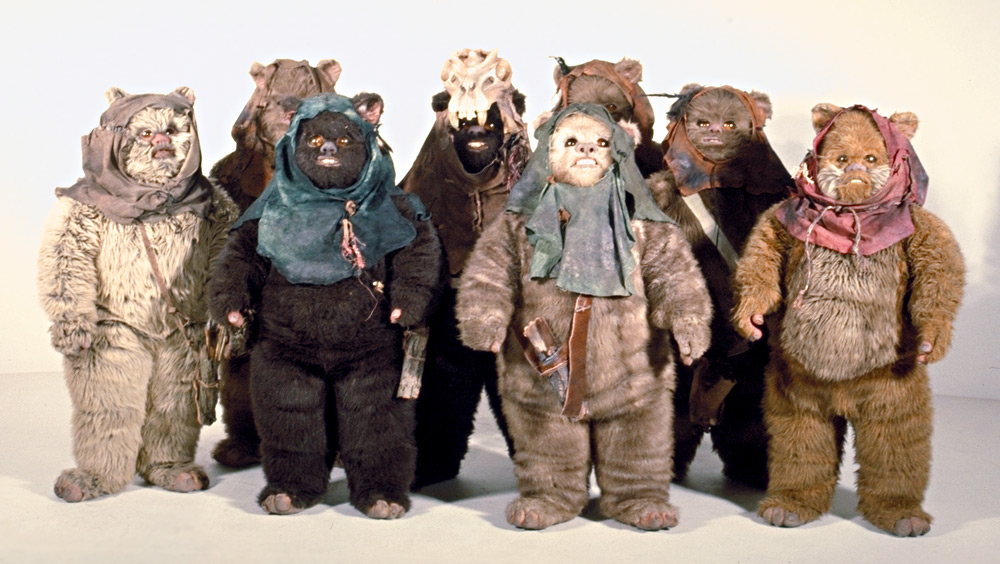
The Jaenshi probably look like Ewoks of Return of the Jedi, because George Lucas was apparently inspired by this story when he wrote the screenplay and even gave the original illustration to his character designer as a model for Chewbacca. Jaenshi children are cut open and hung on the walls of Steel Angels' stronghold.

Published in 1975, the parallel to the Vietnam war is unmistakable. Unlike the Viet Cong, however, the Jaenshi seem utterly incapable of picking up weapons to defend their homeland. Instead they huddle around and worship their own god, who seems equally indifferent to their death and suffering. Only a handful reluctantly follow a human leader who tries to organize an armed resistance.

Meanwhile, the Jaenshi god begins to appear in the dreams of the prophet of Steel Angels. He sends out a platoon of Steel Angels to seize the god's statue and bring it back to their camp. The feeble rebellion was swiftly crushed, unlike the bloodless, romantic battle in Return of the Jedi. The violent aggressors win. Or do they? A year later, we are told, Steel Angels have begun to sacrifice their own children on the wall ...

The symbolism is a bit more explicit in this story than it is in ASOIAF, but in ASOIAF the idea is subtly pervasive. Children are fed to the god of war. Even the (apparently?) winning side cannot escape this bloody human sacrifice. The children of Tywin Lannister and Cersei, Roose Bolton's son, and Walder Frey's hundred offspring, they are hardly luckier than the Stark children. And there are the commonfolk orphans, associated with Brotherhood Without Banners, who are attacked by the Brave Companions in AFFC.

In Seven Times, GRRM does not make clear to which god the human children were sacrificed, Bakkalon or the Jaenshi god. In parallel, who's to say for what the American young men fought in Vietnam? It might be the indifferent universe (for getting drafted, for example), or the military industrial complex, or the anti-communist, freedom-and-democracy idealism. To which god were they offered? That is a central question that continues to haunt the Vietnam generation, GRRM included.

Mahabharata

I finally scratched the itch in my brain and remembered where I had heard of this war-as-sacrifice idea before. The battlefield of Kurukshetra, on which millions of warriors across ancient India came to fight and die, has been interpreted by many literary critics and historians as an alter of human sacrifice for the gods.

In a society like ancient India and Sparta (and possibly the Persian empire), the warrior class is destined to die on the battlefield. It is the duty they are born into, assigned by society. The ultimate and perfect warrior in the epic, Bhishma, explains that Kshatriyas must attain his honor and glory through killing and being killed on the battlefield. The poem repeatedly asserts that anyone who dies on Kurukshetra goes directly to heaven.

The super-massacre on Kurukshetra described in the poem is both viscerally exciting and highly ritualized. It is both realistic and symbolic, particularly with the mythical meaning of war and death intertwined in the story. The conflict is not only the culmination of a family battle over the throne. In the multi-layered epic, it is also a war between the gods in heaven and the asuras underground, which is very likely a representation of historical conflicts between the invading Aryans and native tribes in India. Philosophically, the war symbolizes dharma and adharma (not the same as the Christian good versus evil), as explained in Bhagavad Gita.

The war, described as daily battles with arbitrary rules of conduct for both sides (not unlike the Trojan War in Homer's poem), seems highly ritualized. Aren't killings just killings? Yet modern warfare between nation-states is different in execution from violent conflicts in primitive societies (see Jared Diamond's The World Until Tomorrow). Even though modern wars are as much about resources and territories as ever, the way they are conducted is relatively confined. Indiscriminate and random killings are no longer accepted by civilized societies --- No, they only send young men to shoot and stab each other in a confined area, very much like Kurukshetra.

With the disappearance of mandatory draft (or conscription) and increasing use of remote weapons (drones, missiles), war is becoming ever more abstract to us. Except, somewhere in the world, blood of the young is still spilled by the bucket and we are usually not very clear why. The practical goals and intent of wars are ever more difficult to discern. The meaning and goals of violent conflicts, such as those purportedly for religion and ideology, are becoming increasingly psychological rather than material. I wonder how an alien observer studying humans would make sense of our warfare. Would they interpret it as a ritual in which we compulsively engage, a destruction we instinctively inflict on ourselves?

But I digress. The battlefield as an alter on which the blood of young men is sacrificed to gods is not an uncommon concept in the realm of Hinduism-Buddhism. Again I am astonished by how the ancient Hindus were able to get straight to the heart of the matter.

Saturday, September 27, 2014

Connexions: Star Wars and GRRM, etc.

A few weeks ago when I tried to find some analysis of the mysterious and baffling novella "And Seven Times Never Kill Man!" by GRRM, Google turned up a series of articles about how George Lucas "stole" an illustration for this story to create his Chewbacca. The case originates from and is convincingly argued here by Binary Bonsai.

The illustration on the cover of Analog (July 1975) was by the famed sci fi artist John Schoenherr, who also did the extremely influential illustrations for Dune.


Star War's art designer Ralph McQuarrie mentioned being given a sci fi magazine cover by Lucas, which significantly helped define the image of Chewbacca during the pre-production for SW.

Of course, besides the appearance, there is probably no thematic correlation between Chewbacca the character and GRRM's novella. It couldn't anyway, since the script for SW was probably finished when the novella was published. However, Elio Garcia, the host of westeros.org and the authoritative living encyclopedia of all things ASOIAF, noted an obvious parallel between the story and a key plot in Return of the Jedi. (Alas, Elio is not an encyclopedia of SW and mistakenly called Ewoks as Wookies.)


The story of Ewoks strongly echos that of the Jaenshi in "And Seven Times Never Kill Man!" The Jaenshi is a kind of intelligent non-human species living on a jungle planet. The illustration by Scheonherr above is a Jaenshi.

Analog describes the story as "realities of a very rigid society conflicting with what looks like a pushover primitive tribal society; and we find out where the strength really lies." Yes, the Jaenshi don't have screechers, laser handguns, or blast cannons. They are clearly based on all the pushover tribes that have been colonized throughout human history. Such encounters of civilizations have served as the inspiration for many such stories. No wonder the story resonated with Lucas. I agree with Elio Garcia that Lucas was probably influenced GRRM's story, consciously or unconsciously, when he wrote ROTJ's Ewok story line, which was written in the early 1980s.

Perhaps ROTJ tries to rewrite GRRM's bleak story and fulfill our own dream of the underdogs beating the big bad wolf. I can understand this urge. The same routine is recycled once again a couple of decades later by James Cameron in Avatar. Of course, Avatar also more substantially ripped off Disney's animated movie "Pocahontas", as illustrated by someone apparently named Matt Bateman. But still. The connection to ROTJ and Ewoks is there too.


I do wonder if Cameron has read "Seven Times" though, because Avatar also lifts a certain mystical "collective consciousness" that was hinted at in the story. OK, perhaps such a concept need not come from GRRM. Isaac Asimov described such a planetary consciousness in his Foundation series known as Gaia (written in the early 1980s). This series eventually merged with his Robot series. Similar ideas may be widespread in the sci fi community. In GRRM's story, however, the planetary consciousness is not at all clearly described. In fact he worked really heard to conceal it. Still, in Avatar the natives prayed to and connect to the trees, which is not unlike the Jaenshi priests rubbing their godly pyramids. 

Anyway, regardless, all of these examples of a non-human and possibly collective consciousness represented in different ways by GRRM, Asimov, or Cameron (but not Lucas) may have come from an original source. The oldest source I can find is Solaris by the Polish conceptual sci fi writer Stanislaw Lem. Solaris was written in 1961 but translated to English only in 1970. Surely at least GRRM and Asimov would have been exposed to it. The mysticism in Solaris in some ways must have also influenced GRRM. Comparatively, however, GRRM is more earthly and humanistic. In 1975 he was not yet 30 and I doubt he can ever be as detached or philosophical as Lem is. His satire of militarism, religious fanaticism, and egoism is evident in "Seven Times." He must have been thinking of the Vietnam War and the conservative political forces at the time. (Ironically, 40 years and a few more wars later, the American conservatives remain much the same, thus keeping the story as fresh as it was then.)

Both GRRM and Lucas were of the Vietnam War generation, so it might be another reason the story left such an impression on the latter.

On a side note, although we humans instinctively reject the idea of a collective consciousness outside of our own consciousness, how could we know for sure? Much convincing argument has been made about the illusion of free will. If the Greenseer is able to reach anywhere in space and time and all creatures and minds, how could we ever tell what is our own mind and what is that planted by the Greenseer with the old gods? (Readers of ASOIAF would get this reference.)

Wednesday, October 23, 2013

A Dream

Every so often I would have a recurrent dream. I was walking in a stretch of grassland, with home behind me --- not far away --- and some destination ahead of me within walking distance. Lately the destination has been a grand and magnificent palace with a golden tower or dome. Like many palaces in Europe, it is possibly a museum, because in one of the dreams I was taking a group of people to on a tour.

Last night the journey was unusually vivid. The trail was surrounded by green and delicate ferns as high as my knees, gently swaying in the wind, and the prairie spread to as far as the eye could see. I was convinced I could get there very soon, perhaps in half an hour. The vision was so sharp that I could count the number of ridges on the leaves.

This is home, I thought. I have lived here all my life and know every path and every turn in the grass. Everything felt familiar. I had taken the road from the home behind me to the tower before me a thousand times. How fortunate that glamor and beauty are so close to home. The sweet anticipation before I get to the happy destination.

Saturday, December 8, 2012

A Fish in the North Sea

A giant fish lives in the North Sea. Its silvery smooth body stretches for thousands of miles. When it turns, millions of tons of seawater churns up small fish from the bottom. When it flips its tail, islands far away are drowned in a tsunami. It swims in the familiar north sea but dreams of the strange south sea. The birds that fly between the two ends of the world tell stories of pink and purple coral bushes as large as islands, the sky that remains blue for years to decades without a shred of cloud, and the waves that glow green in the black night.

The fish is giant, but the world is vast, and there is much it has never seen. His heart yearns for the south sea.

So one day, when the air stirs with brewing wind and the sea stirs like boiling pot, the giant fish leaps into the air and morphs into a giant bird with brilliant white wings stretching for thousands of miles. It rises with the wind lifting the massive wings that tremble and shudder, struggling with the new way of swimming, swimming in air. Soon the bird learns to glide, glide with the flow of the air, just like it used to glide with the current in the ocean, the tips of its wings sensing and adjusting to the tiny turbulence.

The north sea retreats rapidly, ten thousand miles below. For a fleeting moment the bird is touched with melancholy, and it whispers goodbye to home and friends. The world opens a new dimension. It rises higher and higher, above layers of gray clouds, until it is bathed in blazing sunshine. A freedom sweeps through its entire being.

Tuesday, February 14, 2012

Patricide

So, this is an unavoidable element of masculinity. I must admit that everywhere I turn I see symbolic patricide as an essential element of a man's coming-of-age ritual. In John Hughes' movies, for example. The conflict between father and son is as universal as anything out there.

I used to think the Freudian interpretation of Hamlet is crap, but after listening to the MIT psychology lecture I must admit it is exceedingly fitting. The patricidal impulse is simultaneously satisfied in killing the stepfather and absolved in the idolization of the real father.

Whether the mother plays a role as the prize of the struggle I am not entirely convinced. It seems that even in a world without women, sons would always have to fight their fathers to become an adult male.

Matricide, on the other hand, might not be clear cut. As a female person I can attest to that. The conflict between the attachment and the competition is far from resolved by penis envy. Obviously girls also need a ritual to enter womanhood, but that is explicitly accomplished physiologically, so perhaps they need no symbolic rite of passage such as matricide? Nevertheless, the competition for male attention is definitely, indisputably real, hence the Snow White symbol. Nevertheless, I wonder whether the competition would remain fierce if the presence of man is removed...

Ack, I need to go read "Man and His Symbols." Hope they discuss Woman and Her Symbols as well.

Thursday, September 29, 2011

西游记

昨晚某同学在看一本ABC作者的漫画书,剧情掺入了西游记的一些内容,跟华裔美国孩子的日程生活平行兼混合起来。某同学问西游记到底讲啥的,我就给他略述了一下小说的内容。说着说着,忽然意识到西游记原来是社会讽刺小说,讽刺了从上到下社会各界人士,包括在西天遇见的图书馆门卫,甚至还很有后现代主义地把佛教和道教混在了一起。简直就是 ... 格列佛游记!其实我也没读过格列佛游记,但是大约知道作者是借用神神叨叨的情节讽刺社会上各色怪现象和人性荒谬。难怪毛自比孙悟空,二者的确都是占山剪径的 bandits 头头。

The Ending of Le Samourai (1967), Explained

A quick online search after watching Jean-Pierre Melville's Le Samourai confirmed my suspicion: The plot is very rarely understood by E...