Search This Blog

Thursday, December 29, 2016

The Odyssey

Throughout my formative years, my father would tell and retell his journey out of the countryside in the spring of 1945, his hometown, at the age of 20 years, crossing the line between Japanese occupation and Chinese Nationalist control, to arrive in Chungking, the wartime capital of the Chinese government, and pass the college exam to open a new life for himself.

Mother did something similar at 55, when she officially emigrated to Long Beach, California. A new country. No job. A new language. No social or professional network. But she did not recount this experience nearly as much as Dad did, for a variety of reasons. Regardless, it was no small feat. 

Lately I think about these events often. Their meaning is not entirely clear, but that's OK. There are probably many ways to interpret them, some of which are contradictory, including the two instincts at odds: to migrate and to settle. What are we but contradictory creatures? It's not human to be without contradictions.  

Isn't it funny that The Odyssey is a story both about adventures in strange land and about going home? We're driven to go, go, go, if for no other reason than evolution.

All this calls into question the idea of free will, which, I think, is a problem plagued with ambiguous and muddle definition. A key problem with free will is its being mixed with the problem of conscious thoughts. If we define free will as conscious, reasoned, language-driven choices, then I am almost certain free will is an illusion.

(Consciousness has unfortunately been elevated to an absurd degree by people who consider themselves "scientific" in recent years. This is at least in part motivated by the urge to perpetuate our narcissistic needs to feel oh so special. We have to hold on to our specially favored position in the universe, if not by the rumor of 23 grams of soul, then by the quantum-fueled mumble ... I mean consciousness. But I digress.)

But, what about the unconscious will that might be free in its own way? What about the unconscious drives that push us out into the unknown world, forward and backward, faraway and here? Could it in fact be free nevertheless? Or not? One thing is for sure though, that the will is neither logical nor consistent, and full of contradictions in itself. 

Sunday, December 4, 2016

In the Hospital

It's December 2016. The thoughts of December 2015 have been haunting me lately. They spring up at unexpected and minor provocations and hit me smack on the nose.

My mother was first hospitalized in July 2015. The second time was October. The third and last time was Christmas Day.

What pop into my head nowadays are all these mundane details in memory, sharpened by the anxiety and horror in those moments.

For example, what just occurred to me a moment ago was the adult diapers she had to wear during her hospitalization, which were sometimes replaced by urinary catheter in order to collect urine samples for lab analysis. The discomfort and indignity of being in a hospital really irked her, and each time she was desperate to go home, particularly the last time.

She was always quite particular about her appearance and comfort, both of which cannot be maintained in that environment. I am much the same way. Even as a child I was not very tough in rough conditions. I chafed at noise and other disturbances and required a slightly compulsive level of cushiness. When my dad took me on a trip to Hunan, I was miserable in hot, crowded trains buzzing with mosquitoes, suffering in agitated silence. So I understood her irritation with the hospital gown, the inability to bath or shower for days, the endless needle pricks, and the lack of familiar faces and voices around her. I understood, in my bone, her horror and hatred of spending night after night alone in a hospital room.

All three times, I flew to LA and visited her every day. The second hospitalization lasted almost 10 days and frayed everyone's nerves. One day she complained to me that my brother was too selfish to come visit her and avoided his responsibility by "sending his younger sister to do all the heavy lifting." I secretly agreed with her and resented his absence. Later however I realized that his avoidance was driven by a terror, because he was weaker than I and much, much more afraid of the stench of death. I was not. On this particular issue, I am quite tough.

I still am not afraid of death, but I am afraid of hospitalization, just like she did.

Thursday, November 3, 2016

The Logical Conclusion

Elizabeth Kolbert's short article "How Can Americans Trust Donald Trump" in the New Yorker struck me with her incredulous tone. It's as if the more he lies the more people believe him with more certainty and fervor. She is not alone. I've seen this incredulous tone many time from many writers in the mainstream media.

When I first moved to this country almost 24 years ago, I knew nothing about it, except a few pieces of American pop culture that had been deemed culturally clean and "healthy" enough to be imported into China: The Carpenters, the movie "Love Story," and a few country songs. It took me a very long time to pick up things from incessant consumption of television (especially Law and Order), radio in the car, and summer blockbuster movies. That was before the InterWeb became the black hole that sucked everyone in.  

During college, in the late nights driving home from my intern pharmacy shifts, I caught Rush Limbaugh on the radio and some guy called Lyndon Larouche. It was not very interesting and I paid them little attention. I had no idea what it was all about.

After I graduated from university, on my first job as an editor at a biomedical journal, one of my colleagues, a copyeditor, told me some weird things that I had never heard on the radio or read in newspapers --- outlandish stories about UN black helicopters, secret prisons, government conspiracies, and plans to enslave the American people. She had grown up in rural Maryland and all her friends were farm kids. They all believed these rumors. I had only heard vaguely about Ruby Ridge, Waco, and the Elio Gonzales affair, but never thought there was a vast conspiracy behind all of them. But she made it all sound so real.

Tuesday, November 1, 2016

Sundance Sings the Blues

I have not watched NBC's "The Voice" for a few years but stumbled upon it again this season. My favorite singer of this season is immediately and undoubtedly Sundance Head.

He wears a cowboy hat and picked Blake Shelton as his coach. I don't know country music but I assume he's a country singer. It was a bit odd that I'd automatically prefer a country singer over everyone else, because the genre is never my cup of tea.

Out of curiosity I looked up Sundance's audition song, "I've been loving you too long." It turned out to be an R&B oldie by Otis Redding. Thanks to YouTube, I found out that Sundance Head has covered other blues songs, including At Last. He may look country but his heart is clearly in blues. No wonder... As a person so totally unschooled in music, I am drawn to blues by instinct. Is it me or is it just that blues is universal?

Monday, October 17, 2016

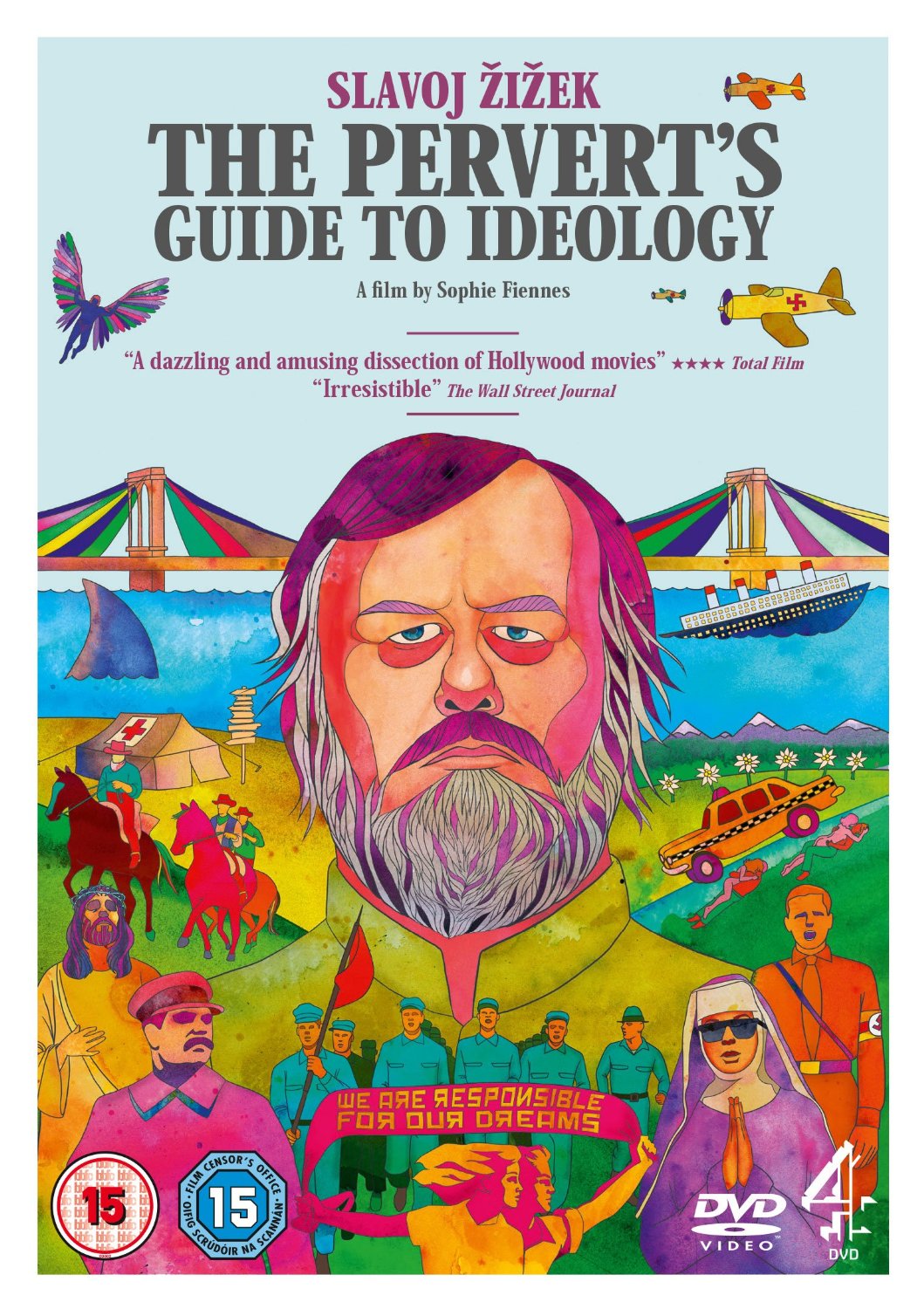
"Scandal" and Zizek's Ideology


Coincidentally --- or perhaps there is no such thing as a coincidence --- I was watching Zizek's psychoanalytical discussion about film and ideology while starting on Season 4 of Scandal.

What seemed like a conventional romantic trope to keep the two lead characters apart in Season 1 has become a bit of a joke in Season 4. Olivia Pope and President Fitzgerald Grant have overcome each apparent external obstacle between their union over the first 2 seasons and by now are resorting to transparent self sabotage.

The need to keep the lead characters apart until the climax (pun intended) of the story has long been explained to me. The audience's pleasure is derived from both the process of prohibition and the eventual release/payoff in comedy or the lack of in tragedy.

Beginning in Season 3 and continuing through at least Season 4, the obstacles to the "happy ending" between Olivia and Fitz are expressed in repeated outbursts with increasingly absurd logic. Take, for example, the scene after Olivia is rescued from her captors. She said, I cannot be with you because I am angry at you, and I'm angry at you because you started a war for me. He said, but you'd have been dead if I hadn't started a war, and what would I have then? Over and over, Olivia is posing her refusal in the most airtight loop that gives him no way out. All answers are wrong, and all options are null.

Her other even more absurd reason of refusal illustrates Zizek's explanation of ideology to a T: All these people, herself included, have cheated in Grant's election. A fake victory requires absolute commitment to make it real by his effort to be a spotlessly awesome leader. In other words, she is saying, "I did bad things to put you into the White House, and I feel guilty about it, so I am depriving myself --- and you particularly --- our union in order to satisfy this guilt."

So, if Olivia fundamentally does not want to be with Fitz, why does she --- or Shonda Rhimes --- continue to string the audience along? Perhaps more important, why do the audience continue to watch this obviously doomed romance? As Zizek points out, ideology is about having your cake and eat it. You satisfy both the id (pleasure) and the superego (guilt) by both indulging in your desires and feeding your guilt. Rhimes continues to insist that Olivia and Fitz must and must not be together. The fantasy of Vermont is perfect because it is forbidden. That is the only way to have your cake and eat it.

Wednesday, October 12, 2016

Mr. Robot Season 2: Interpretation (1)


Like many viewers, I was totally puzzled by Elliot's story line in Season 2. Nothing of apparent consequence or forward motion happened to Elliot. All the conflicts and drama occurred to the other characters: Darlene has killed someone and watched her boyfriend killed. Angela has infiltrated Evil Corp and nearly defeated Philip Price, before falling under White Rose's persuasion. Dom DiPiro almost gets killed, twice, and almost solves the case single-handedly. White Rose, Philip Price, Joanna Wellick, and even the CTO played by Brian Stokes Mitchell all have plenty of action that, in the end, makes sense. (White Rose's logic may be a bit opaque but it's definitely there.)

What did Elliot do this season? He got himself jailed (in a pretty minimum security place, it seems) for the minor hacking and dog-robbery he committed in Season 1 against his psychotherapist's boyfriend. His goal, of going to either jail or his mother's house, was the same: to stay away from computers and the Internet and, in turn, to prevent his alter ego, Mr. Robot, from doing further damage to society. For over half of the season, Elliot does little more than arguing with himself --- we should remember this point because it's important. Meanwhile, he is involved in a self-contained story loop, in which the jail warden, played with menacing sympathy by Craig Robinson, is running an online black market site much like Silk Road. During all this, Elliot has several hallucinatory episodes and/or dreams that seem to go nowhere and do not pay off by the end of the season. The forward move of his is to help Darlene and Angela hack into FBI.

And then, by the final episode, he is suddenly reunited with Tyrell Wellick, and it becomes clear that he and Wellick had long planned to execute Stage 2 of their grand conspiracy (ie, the revolution), which would destroy Evil Corp's paper financial records, and that this whole scheme is carried out with the support of and perhaps direction from White Rose, who may or may not represent the interest of a foreign government.

So what is the point of all the meandering of Elliot's story in the first 8 episodes? Why does Sam Esmail spend so much screen time doing nothing? Is this merely artsy-fartsy self-indulgence?

Upon second viewing of Season 2, I realized that my mistake lies in my conviction that Tyrell was killed by Elliot/Mr. Robot at the end of Season 1. But that was wrong, and all subsequent deductions were wrong, too. I should have realized that killing someone and disposing of his body did not require 3 whole days. When Tyrell showed up alive, the entire Elliot story line must be re-interpreted from the start.

(Continue after the break)

Sunday, September 18, 2016

Overlap

Driving is an activity that has fascinated me from the start. I would be driving on the road, keeping a reasonable distance from the car in front of me, changing to the lane on my left, slowing down to make a right turn, or stopping and starting at a stop sign. All the while I wonder, why does not car crash into mine? Why does everyone drive with respect to others? Why do I? More baffling perhaps, how do we know? Why do we trust each other not to suddenly accelerate or decelerate or jerk to the left or right or blow through a stop sign or red light? Obviously, some people have done these things, but it is an amazing rarity in the larger context.

Yesterday, I was making a left turn. The oncoming traffic slowed and stopped for a pedestrian crossing. A gray Ford something drifted into the middle of the intersection, blocking my way. After a second and a half, the car pulled up closer to the SUV before it, leaving me enough room behind it to make the turn. I was struck by how this exchange between me and that driver, with whom I didn't even have eye contact through the glare on the windshield. It was only after I made the turn that it struck me. 

We read each other's mind. 

That person in that car saw me waiting in the left-turn lane and, for a moment, we were both thinking the same thought and knew it. "Please pull up a bit, so that I can pass." 

It would be presumptuous to say that this is a human ability. Just like I have always thought that it is presumptuous and narcissistic to assume that consciousness is unique to humans. 
********
A separate but related question. What would it be like if we didn't have language? 

Sure, we could still communicate, but not nearly as much. How much though --- if we had no language and had to smell each other instead? 

[Movie trailer voice] In a world, where people have no words to talk or write to each other, and have to use no verbal means to express needs, wants, demands, requests, orders, pleads, and desires.

Such a world would seem absurd and laughable to us now, but there must have been a time when humans lived without language, a time when we "talked" to each other with our eyes, faces, hands, body, and, if we're desperate, a grunt or two. What was it like?

Perhaps, when thoughts got too complicated to express with looks and gestures, someone drew a picture.

Abstract thoughts and symbols are always considered a human specialty, but there is no genetic codes for them. It's not a physiological characteristic like the opposing thumb or upright walking. They are an ethereal ability that may not develop without early learning. There is nothing written in our body to guarantee that we can think in symbols for real and imagined objects and actions and emotions and ... an intangible thing known as causation.

And yet, I have a suspicion that language also broke something in us. A crack opened between thoughts and feelings, between knowledge and experience, between learning and instinct.

Without complicated sounds and symbols, we can tell each other how to make cars and agree on laws and morals, and we can also, more easily, lie to each other. 

The Ending of Le Samourai (1967), Explained

A quick online search after watching Jean-Pierre Melville's Le Samourai confirmed my suspicion: The plot is very rarely understood by E...