Search This Blog

Sunday, December 20, 2015

Mr. Robot


I have been a little obsessed with this series lately. Binge-watched Season 1 twice, with some of the segments more than twice. Not being a computer person, what I have picked up is the psychoanalytical parts. I'm guessing the author/showrunner Sam Esmail has probably been analyzed himself. In interviews he admitted to having had OCD and anxiety disorder. Plus he grew up in New Jersey, close to New York City. It's not far-fetched that he is proficient in the psychoanalytical theories.

Putting aside the computer hacking stuff (which is generally regarded as pretty authentic, though not that I could tell) and "Fight Club" references (which Esmail flaunted rather than concealed), the first series can be interpreted as using hacking as a metaphor for psychoanalysis. Psychoanalysis (which is back in vogue within the psychotherapy community now after all the shortcuts have more or less failed or faded) is essentially hacking one's own mind. While most of us do not have out-and-out dissociative identity disorder like the main character in the series, we all repress and suppress some things in our mind, as Freud pointed out over a century ago. The unconscious is a huge part of the human mind but inaccessible to our conscious thoughts. Psychoanalysis tries to "hack" at least some of the hidden mind, but behavioral therapy tries to fix us without this. Brilliant.

Separately, Esmail himself has admitted that he was in part inspired by the Arab Spring movement. It took me an unnaturally long time to realize that my visceral reaction to this part of the story --- young people trying to "change the world" --- is connected with my own experience with the 1989 Tiananmen Square incident. It was a traumatic event to my generation, even though I never directly participated. I have tried not to think about it and all the complicated feelings it stirs up. See how this works? We all have things we want to hide from our own mind. The Chinese government has been able to scrub that event from most Chinese people's memory, more easily than "1984," thanks to computers, the Internet, and the Great Fire Wall. What "1984" has gotten wrong is our own complicity in the forgetting. The power forcibly erases it from the digital world of knowledge, while people voluntarily erase it from their mind to forget their feeling of powerlessness.

Thursday, November 26, 2015

The World Until Yesterday: Notes #3

After discussing subjects of social structures --- children, elderly, conflicts and war, and tribal boundary and travel --- Jared Diamond made a thesis on risks of daily life. Here he made only a passing mention of an observation that struck a cord with me: People in pre-literate societies talked a lot. They talked all the time about everything and all the time with each other. Given the limits of their daily life and tribal size, they inevitably have to repeat things over and over in conversation. Diamond notes that most anthropologists are initially surprised by just how much chatter goes on in a traditional society. People drift in and out of sleep at night and talk with each other intermittently, unlike we in modern societies who sleep through the night in one block (which is well established as a phenomenon since only the industrial revolution). In one instance, he heard two New Guineans talking for an hour about a pile of sweet potatoes.

Why do people talk so much? Diamond gives several reasons: 1) They can't write things down and go back to the records, so talking and repeating verbally can help them remember stuff. 2) They have no modern diversions like books, movies, TV, the Internet. 3) Incessant gossip is critical for their safety. 

The last part is critical because information can mean life and death --- Someone spotted fruits for foraging some distance southwest of the camp; someone spotted lion tracks nearby; someone got killed by a fallen tree in the woods yesterday; someone has fallen ill with suspected witchcraft; etc. Now it's become apparent that we moderns are no different. The exchange of information is critical too for our survival. The difference is that we don't have to get most of the useful information from talking to others all the time and try to remember by constantly repeating it. We can learn from books, newspapers, TV, YouTube, and the all-mighty Google. We can write things down and look them up later. 

This is an astounding realization, for I just never realized how much humans survive on sharing information

I have been wondering for quite a while lately about why we seem to have the tendency to be "addicted" to the Internet and uncontrollably reach for our Smart Phones every idle moment, despite the sense of stress and anxiety and being overwhelmed. No doubt, we are naturally predisposed to collect and share information, and the predisposition --- be it genetic, epigenetic, or some yet unknown mechanism that is vaguely known as "instinct" --- is too simple to distinguish useful information (eg, how to make fire and track animals) and useless information (eg, what shit came out of Donald Trump's mouth today). We are the species that gossip. 

----------------------

This realization brings up the question of the Jungian concept of "collective unconscious." I used to dismiss it and things like "ancient memory" that passes down generations as pseudoscience, but now I'm not sure. These instincts --- whatever the biological mechanism --- are real, such as the instinct to gossip, the fear of snakes or spiders, and the irresistible charm of fireplace. Where did they come from and how did they transmit over time? I don't know, and I find a genetic basis to be very unlikely. 


Saturday, November 21, 2015

The World Until Yesterday: Notes #2

As a Chinese person growing up in the 1970s and 1980s, I straddled the traditional extended family model and the modern nuclear family model. Because of increased social mobility, both my parents have lived far away from their own families, so that we had a family size of 4 throughout most of my life. Nevertheless I had brief intervals of living at my maternal grandparents' house. So I can easily understand and identify with the family structure in primitive tribes described in the book.

Of course, my experience with extended family did not include some elements in small-scale tribes. For example, in hunter-gatherer societies, parents and children live together in close proximity. Children see their parents have sex all the time and imitate it in sexual games among themselves. This was treated with no particular alarm by adults. 

However, other family characteristics are very familiar: Aunts and uncles share childcare frequently (I played with my cousins and ate at my aunt's house countless times); grandparents take over much of the work; the specific role and boundaries of biological parents are blurry. This stirs up a lot of memories. 

When I was in the nuclear family with my parents and brother, I was in fact home alone most of the time. Both parents went to work, and my brother went to school. I often ran off to my cousins house and played there until my parents came home from work. This was the norm until I started school at 6 and a half years. But my memory of being in my grandparent's house is much stronger and more vivid. In their Shanghai house with narrow, steep, creaky wooden stairs, people came and went all day long, most of whom I knew not. My grandfather's father had three wives, resulting in a huge number of relatives with tenuous and ambiguous relationships. They randomly dropped in for a social visit and exchanged gossips and gifts, and then stayed for a meal. It was said that grandmother could never turn anyone out before lunch. I loitered with my cousins and uncles of the same age in the background, playing games of our own. Children were well fed but otherwise ignored. I never got a fraction of the attention in Shanghai as I did at home as the youngest child. Most of the time it was chaotic and confusing and had nothing to do with me. Yet I often recall the sense of peace and safety in my grandparents' house, with constant chatter (in the Ningbo dialect) and the smell of food. 

Diamond writes that anthropologists have documented their surprise at how far advanced tribal children are in social maturity, compared with children in Western countries. He attributes this maturity with their contacts with adults of various ages and generations all the time, while Western children have limited contacts with adults other than their parents and are often segregated by age in daycare and school. 

I wonder if I would have become a more social person if I had grown up in my grandparents' household. 

The World Until Yesterday: Notes #1


I'm reading this book very slowly, which does not mean it's any less fascinating than A Song of Ice and Fire or Mahabharata. What rubs me the right way about Jared Diamond's style is perhaps exactly what I consider my own hopeless deficiency --- He presents more facts than opinions. There is a distinct lack of posturing for his own self-image and position. The confidence in his facts and the modesty in his claims immediately elevate him above the likes of Steven Pinker and Malcolm Gladwell in my mind.

The first part of the book on violent conflicts (from small clashes to war) in primitive, small-scale societies immediately blew my mind and opened a new perspective on the shape of the world. Maybe I'll make some notes on this at a later time.

What compelled me to begin taking notes though is the second part about family structure and child-rearing tradition in primitive societies. There is an astounding range of child-bearing and rearing practices, from giving small children complete autonomy (eg, letting them play with knife and hurt themselves or by fire and get burned in hunter-gatherer tribes) to strict discipline and physical punishment (eg, in herding societies).

The variations are partially but not entirely determined by how they make a living. For example, hunter-gatherers are the most egalitarian type of society, because of the lack of personal possessions --- there is hardly anything to possess, and you can't carry much with you in endless trekking. They regard children as fully equivalent to adults, only weaker and smaller, and therefore deserve to make their own decisions (like playing with fire). In a hunter-gatherer band, a child who misbehaves is unlikely to hurt anyone but himself, and therefore is not a cause of too much anxiety. However, a careless or mischievous child can lose the family's precious animals in a herding clan, which therefore must be prevented harshly.

Another fascinating observation is that infants are surrounded by allo-parents (eg, aunts and uncles, grandparents, older siblings) nearly all the time in primitive societies. As soon as an infant cries, regardless of reason, he is usually touched or picked up within 10 seconds by his mother or an allo-parent or someone in the tribe. This compares with the practice in 20th century Germany (where Diamond lived in the 1960s) where mothers responded, on average, 1 to 10 minutes after their infants started crying, because of the cultural belief that children must be taught self-reliance and independence as early as possible. As a result, a primitive-society infant cries only half as much/long as an infant in a modern Western society.

I don't know how many books have been sold and how much money has been spent in Europe and North America on this very subject of whether babies should be picked up when they cry and how long parents should wait before doing it. Even a person with no children, like me, knows this is one of the most contentious subjects among parents and experts. Yet, shockingly, Diamond does not seem to feel compelled to take a side. He even admits that he and his wife were agonized by their children's crying when they tried to follow the advice of not picking them up too quickly. But he did not denounce the German approach as wrong, nor did he brandish research proving the long-term emotional damage this has caused in millions of disappointed children. He merely points out that immediate response to a crying child reduces, rather than increases his crying overall, according to some anthropologists' observational data.


Wednesday, August 26, 2015

The Death of Stringer Bell


I have been binge-watching The Wire lately. Just got to Season 3, Episode 11, which ends with the killing of Stringer Bell at the hands of Omar and Brother Mouzone, two killers with their codes of conduct.

Even for a show renowned for its gritty realism, the makers could not help injecting a bit of romanticism. In the empty house, Omar in a trench coat strolled through the door, shotgun in hand. A couple of pigeons flapped around him. Anyone familiar with the gangster genre would recognize an homage to John Woo. The connection here is no accident --- George Pelecanos, the DC crime novelist and writer of this episode, was involved in importing Woo's Hong Kong movie The Killer into the US in early 1990s. The movie caused a bit of a sensation in the cinematic circles and created a sizable cult following of the sub-sub-genre of HK gangster films that included Martin Scorsese.

And then, before his execution, Bell argued weakly that he was no longer in the criminal world and on his way to becoming a legit businessman. Then they shot him. This bit could very well be a nod to the famous climax in "Unforgiven" --- Gene Hackman exclaimed, "I'm not supposed to die like this. I'm building a house!" before Clint Eastwood shot him. Indeed, Stringer Bell was also a building a house, and had his sight on building a few more houses around Baltimore. It was his American Dream.

I can see why The Wire is considered possibly the best American TV series ever. I think the writing greatly benefited from Pelecanos' involvement starting in Season 2, which brought the plotting and characterization up a few notches from Season 1 while maintaining the gritty realism of David Simon and Ed Burns. Still, the series suffer a little from a few weaknesses inherited from Season 1, particularly the unfocused characterization of Avon Barksdale. Unfortunately Wood Harris, who played Barksdale, was one of the weaker actors in an otherwise strong cast. I can see the intention in the portrayal of the relationship between Bell and Barksdale, but I don't feel it. It does not hit me in the gut like many of the other characters in the series.

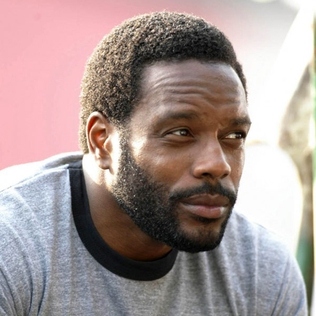
Cutty (played by Chad Coleman), on the other hand, is perfectly cast. Every time he is on screen I would feel a quiver in my stomach. The character is an archetypal man straight out of Pelecanosville, and Coleman conveys every bit of it with a mere look.


Wednesday, August 12, 2015

To Go Forward You Must Go Back

I was re-reading A Dance With Dragons out of order. Eventually I got to Jon Snow's viewpoint chapters, which are the least interesting part to me. But it proved necessary. About half way through these chapters, the pattern became unmistakable. I checked the eBook table of contents --- Indeed, the Jon chapters are almost always adjacent to Daenerys chapters with one exception. 

When George RR Martin split a planned Book 5 into A Feast for Crows and ADWD, the viewpoint chapters were not randomly arranged. Besides the obvious plot chronology issues, the close proximity of Jon and Daenerys chapters is no accident. The evolution of these two characters mirror each other in ADWD, and their paths echo Quaithe's prophecy to Dany --- "To go forward you must go back." 

For both characters, they seem to be going forward during most of the novel, albeit with great difficulty. At the Wall, Jon faces the demands from Stannis to support his campaign, internal strives with Bowen Marsh and other Night's Watch members, and the external threat from the Others and their wights. More important, he is torn between his own conflicts: To remain loyal to the Night's Watch as the 998th Lord Commander, or to heed Stannis' offer to become Lord of Winterfell and join the battle against the Boltons. In Meereen, Dany is pressed by enemies outside and within the city walls and torn between her duty to the people and her personal desires. Her internal conflicts are externalized as the chained dragons, Viserion and Rhaegal, who represents her wildness and aggression, just like Ghost represents Jon's. Both are able to temporarily restrain their wild, animalistic, and (possibly) lethal aspect of their nature and to stay human and civilized. 

The conventional arc is a journey of taming one's wildness and animal instincts and becoming a social being. In the end, the hero grows from an unattached individual to a leader of men and a member of society. However, here the journey seems to be take a sharp turn, at least in ADWD. By the end both Jon and Dany burst out of their "human" form and morph into their animal avatars --- Dany is spiritually merged with the biggest, baddest Drogon, and Jon enters Ghost after his human death. 

Before they reach this end, however, both also retrace their steps to the past. This is why the imagery of the "red doors" in Dany's memory dominated her thoughts and Jon is constantly reminded of his family and Winterfell throughout the novel. Dany's second burning in the fighting pit echoes her first burning in A Game of Thrones, and afterward in her wandering she is back in the Dorthraki Sea. Her adventures eastward has led her back, and the curse laid down 4 books ago is now reversed. Meanwhile at the Wall, Jon finally openly abandons his vow and the Night's Watch and chooses his family (ie, to rescue what he believes to be Arya) over Night's Watch. Both characters have come a full circle to where they started. 

This may seem contrary to the convention of the genre, but let's not forget that The Lord of the Ring trilogy is ended with a return to the Shire, and the Hero's Journey also concludes with his return to home. Of course, in those cases, the heroes return after victory rather than frustration or defeat. This is why it's so hard to predict where GRRM is taking the characters and the plot. 

Monday, July 20, 2015

Universal Exceptionalism

As recently as ten years ago, the single-origin and multiregional theories of modern human evolution were neck and neck, with perhaps more supporters for the latter theory, which postulates that very old (approximately 2.5 million years ago) archaic humans spread throughout the world, and humans living in different regions evolved separately into their current state. The fact that there is so much similarity among humans of different regions may be due to interbreeding throughout the history.

It was not until the rapid democratization of genomic analysis tools that the evidence firmly settles the argument in favor of the recent single-origin theory. This theory says that a single tribe/family was the only ancestors of all modern humans living today. Small groups of the tribe left East Africa and spread all over the world with astonishing speed and efficiency to become Homo sapiens. The exodus occurred as recently as 60,000 years ago, probably after a climate-related bottleneck (eg, the Ice Age) that cut their size down to a small number of blood relatives.

As these early humans migrate to northern Africa, the Middle East, Central Asia, Europe, northern Asia, and the Americas; and to Indian Ocean, southern India, and then the South Pacific, they replaced many other human species who had left Africa much earlier and inhabited these regions. It sounds incredible, doesn't it? The earlier human species took hundreds of thousands of years just to carve out a place for themselves in the world. They coexisted in relative balance but geographically separate from each other. And here came a few new cousins. Within 50,000 years, all other humanoid species were wiped out. Gone. Extinct. Homo sapiens alone dominate the world. The phenomenon is so extraordinary and out of proportion with previous history, no wonder it did not gain popularity until recently. It seemed more sensible if humans evolved on the time scale of a million years or so, as the fossils of other primates and humanoids suggest.

But the genomic evidence cannot be helped. Homo sapiens exploded onto the world with an exponential speed. Their routes of migration are illustrated on the National Geographic site The Human Journey.

Last weekend, my friend Helen made a profound observation about this subject: How did we not see this? Why couldn't we see that humans all over the world are absurdly alike, until the truth is forced on us? Looking back, the common traits are unmistakable. We all think abstractly and take to our symbols. We all have language. We organize society in nearly the same way. Despite cultural and historical differences, we instinctively understand each other like no other species. In "The World Until Yesterday," Jared Diamond described how remote islanders who had lived all their lives in primitive tribes could adapt to life in the 21st century within a just few years. And yet, we are naturally drawn to the theory that we separately evolved in multiple regions. Many Chinese academics still believe that the Chinese descended from Homo erectus pekinensis, whose fossils are dated to 500,000 years ago. Sorry to burst their bubbles, but the poor Homo erecus pekinensis were likely victims replaced by the ancestors of modern Chinese.

Why haven't humans preserved the history of leaving their original tribe behind or separating from their brothers and sisters and cousins? Without this tribal memory, when we encounter our long-lost cousins from another part of the world, all we want to do is to make war with them, rather than recognizing our shared lineage and hug each other. One possible explanation is that any history transmitted purely orally (before the invention of writing and means of recording writing) is fragile and prone to loss. But I think there may be something deeply embedded in human nature that drives us to believe in our own uniqueness. Funny how we are exactly the same in our narcissism and exceptionalism, which further supports the single origin theory. It is like what GK Chesterton pointed out, the two sides are in complete agreement, and therefore they go to war with each other.

Also ironic as hell is how we feel so lonely in this world that we set up massive telescopes and send out spacecrafts trying to find intelligent beings like us on other planets, even though we in fact lived alongside our cousins once upon a time and probably killed them all off. Perhaps all of these phenomena are manifestation of the same underlying trait --- we want to believe that we/I/our people are unique; we are perhaps the most aggressive and ruthless branch in archaic human species; when we encounter someone like us, we want to kill them or at least outcompete them rather than making friends; and last but not least, we are now the only human species left. We may not be inclined to the truth, but our bias may confer some kind of advantage. That is why truth is often hard to accept, even when it's right under our nose. 

The Ending of Le Samourai (1967), Explained

A quick online search after watching Jean-Pierre Melville's Le Samourai confirmed my suspicion: The plot is very rarely understood by E...