Search This Blog

Friday, August 14, 2026

Rewriting Rebecca in Another Genre


Coming at this story, which I had known since teenage years through the Hitchcock movie, as a middle-aged person, I have certain perspectives. For one, I have known for some years that "the third wheel" type of romantic construct, especially when the married (or pre-existing) couple are older while the newcomer into the relationship is much younger, is predominantly Oedipal. (Oedipus Complex can be applied to any parents-child triangle, regardless of gender.) The novel Rebecca is indeed a fairly obvious example. The nameless (significant) protagonist and narrator, whose unusual first name never shared with the reader, was given by her dead father (even more significant), is exactly half the age of her husband, Maxim DeWinter (42). Her lack of power in this marriage is near absolute, being disadvantaged in her gender, age, and experienece, and mostly in her economic status --- Mr. DeWinter's wealth as a landed gentleman is perhaps on par with Mr. Darcy of Pride and Prejudice. She is keenly aware of herself as the late-coming intruder in a (supposedly) perfect marriage.

Imagine my shock (not!) when I read, after reading the novel, that Daphne du Maurier's father, Gerald, was alleged to have an unhealthy obsession with Daphne that may have gone too far. Who could have guessed! Gerald was a famous actor and theater manager and (also alledgedly) a volatile alcoholic. 

Be that as it may, what makes the novel interesting is the violent and evil undertone in Mr. DeWinter, despite the narrator's protest (a tad too much) of her love and devotion to him. Indeed, his portrayal of Rebecca, his wife, is supposedly evil, because she ... well, it's never clearly explained, because, you know, the English never talk about sex even between spouses. According to DeWinter, Rebecca had a massively promiscuous lifestyle while pretending to be a perfect wife. On the surface, the reader is supposed to sympathize with Mr. DeWinter for his injured male pride and his necessity to kill his wife. We are supposed to overlook the how of the murder: He not only carefully avoided being seen but also covered it up as either an accident or suicide. If we stop and think about it though, he really IS a murderer who gets away with it. Underlying the narrator's joy for being the sole possessor of Mr. DeWinter's love (whatever that means) is the fear of his cold murderous nature.

Perhaps more curious though is the daughter's idealization of the mother, because the idealization of Rebecca is firmly established throughout the book, despite the ambiguous revelation of her villainy, which only makes her even more fascinating. It is difficult to measure whom the daughter loves more, the father or the mother. Rebecca is the archetypal "bad woman" throughout the history of literature that embodies the indomitable feminine sexuality that strikes fear in everyone's heart. Consciously or unconsciously, the author preserves her mystique by keeping her outside of our direct gaze, making her a goddess for worship and ... yes, fear. (Perhaps the fear is also rooted in the daughter's longing to become her mother and possess [what seems to be] a vast amount of power.) 

---------

Psychoanalysis aside, the story's perspective is not entirely satisfying, given the narrator's lowest position of power in this triangle. I imagine retelling the story from the viewpoint of another person. For example, if Maxim DeWinter narrates this story, it could be a James M. Cain-style noir, in which a perfect crime goes all kinds of wrong. That night, he meticulously constructed his alibi, so that none of the servants at Manderley knew he went out to the cabin with a gun and killed his wife and put her body in her boat and sank the boat. A few months later, a body was washed ashore, which he identified as his wife. It was the perfect crime. No one suspected anything. The entry county felt sorry for him. After a suitable period of "mourning," a year later he felt he was secure enough. He marries a very young woman with no experience in life and zero risk of suspecting him. Happily ever after, right? 

An entirely random event --- a shipwreck in the bay --- destroys the best-laid plot. The diver finds Rebecca's boat and, even worse, her body. With so much evidence suggesting foul play, suspicion obviously falls on the husband, especially if (when) the victim's cousin Favell reveals that the husband had ample motive. Nevertheless, his alibi is solid, and his social position protects him from legal peril. Local coroner, who is a drinking buddy of Mr. DeWinter (as pointed out in the novel), rules the death a suicide. He may not be as gossip-proof as he was a year ago, but there is no risk of criminal suspicion. 

The last bit of suspense on whether Rebecca was pregnant is, of course, necessary for the ending of a romance-driven story. In the noir genre, more things may surface ... to make DeWinter's life difficult, including but not limited to his new wife's suspicion and the need to kill a witness or two to keep the lid on the first crime. That would work quite well. 

---------

A different genre it could fit would be a detective story or thriller. I'm sure Agatha Christie would have made a beautifully convoluted plot out of this story. Mrs. Danvers is in the perfect position to want to investigate the suspicious circumstances of her, uh, lover's death. The only thing in the original setup that prevents her from become an amateur sleuth is the English class hierarchy and culture. Not unlike the narrator, Mrs. Danvers has always believed in DeWinter's devotion to Rebecca, which is the weakest part of the novel. This makes Mrs. Danvers look stupid and obtuse. Surely an intelligent servant, not to mention a possible lover of the mistress, is the first to know any disharmony between the lord and lady of the house. 

Only a small tweak is needed to let Mrs. Danvers suspect the conflict between Rebecca and DeWinter, thus leading her to quietly collect evidence of DeWinter's guilt. She may even exact revenge on the murderer after he gets away with it. Of course, the ending of the novel implies that the destruction of Manderley could be committed by Mrs. Danvers, but one would imagine that she may want to do more to the killer of Rebecca in a slightly more modern retelling.

Sunday, July 5, 2026

Pippin: The Meaning of Life


A young man's search for the meaning of life --- an evergreen theme in storytelling. Is it to slay the dragon and rescue the princess? That is a whole genre onto itself. All other popular tropes are presented in the musical Pippin: 

  1. To be a revolutionary and commit patricide. 
  2. To become his father and possess his power and glory. 
  3. To have sex as much as possible. 
  4. To amass fame and fortune (basically the same as #2). 
  5. To find creative outlet in art or enlightenment in religion (mentioned but glossed over). 
  6. To live an ordinary life with a wife and a kid and do humble and repetitive work. 
  7. To light youth on fire and go out with a bang.
Whether it was Stephen Schwartz, or Roger O. Hirson, or Bob Fosse who came up with this list I don't know, although I suspect #3 was probably Fosse's contribution. What I find amusing is how all-encompassing the list is in the human culture, at least in the modern, industrial and post-industrial society. Before the modern era, religion and spiritual enlightenment might have featured a more prominent place, along with the forever father-son succession drama. Isn't it funny that people's (men's?) imagination is so limited? How many stories have been told to repeat the same quest over and over and over again?

Perhaps Joseph Campbell's followers would say that such convergence is inevitable, because humans are fundamentally the same. Men collectively pursue the same few paths that give their lives meaning. It may or may not be true, but I simply lament the shortness of the list --- can't we even come up with at least 10 options? 

The same question is never debated by women, because for most of human history there were no options. Women are precious resources for making babies and making babies survive to adulthood, including young men who fret about the meaning of life. With the advent of birth control, however, women can no longer escape the same question. Whether our culture coalesces the meaning of a woman's life into a short list of options also, I don't know. I do hope, however, that our imagination is not limited to men's short list. 

It is almost hilarious that, even in this day and age, we are still inundated with the same story: A person cannot find happiness unless his life has meaning and/or purpose. What might this meaning or purpose be? All the self-help gurus, who have moved their butts from books and TV to social media, are giving out the same short list, including #3. I mean, really, is this the best we can do? 

Can I do better than mainstream society though? Can I come up with something outside of the list? 

Well, I don't know. All I can do is observe life. What interests me is how #6 is dismissed as boring and repetitive and intolerable. Maybe an ordinary working life with one wife and one child is intolerable to Bob Fosse. I look around, however, and do not see that much repetition. Take, for example, the daily work of a health care professional, such as a nurse or a physical therapist or a primary care physician or a psychotherapist. The nature of the work remains constant, but each patient is slightly different. Even if multiple patients have the same disease, they have different symptoms, different ways of expressing their discomfort and pain, different trajectory of recovery (or not), different comorbidities, different personalities, different abilities to cope, different communication styles, different motivation to comply with or reject treatment ... The variations go on. Moreover, new treatments and new research come out all the time. Yesterday metformin was the best option for type 2 diabetes, but now everyone is shooting themselves up with Ozempic or Zepbound. What does one tell the next patient? Can we find some meaning of life in the people whose infections resolve after a week or two, whose wound you suture, whose pain that got better or worse, or whose blood pressure that went up and down? 

That is just the work part. What about relationships? 

Can you find meaning of life is in the argument you have with your brother, even if you have both forgotten it a few months later? Or the love you make with your spouse, and the talk about both of your 401(K) accounts afterward? Or your kid's PTA meeting in Grade 3, which is not the same as the PTA meeting in Grade 4 or 5? 

In the past 6 months, I have been experimenting with recipes involving a kind of tofu skin product, a Taiwanese specialty that I first discovered on YouTube videos. It has the marvelous ability to soak up the sauce quickly in a wok. So far I have cooked it in different mushroom sauces, but I have plans for tomato sauce, braised meat sauce, and maybe seafood sauce. Could tofu skin recipes be one of my many meanings of life? 

Ah, but none of these trivialities are fulfilling, says Pippin. 

Let's look at the word fulfill. Full and fill. The primitive meaning is the feeling of being full, having food in the stomach, the relief of hunger. 

Maybe this is the universal meaning of human life at the bottom of it all. No feeling in the world is more real than the transition from hunger to satiety. I wonder if this is one of the sources of our confusion --- the constant satiation and lack of hunger. 

All the more reason to find the meaning of life --- at least some of it --- in tofu skin recipes. Once I get tired of it, I can move on to egg custard recipes and bean soup recipes. 

Wednesday, May 20, 2026

Frailty (2001) - Spoilers - a Family Interpretation


I just discovered that I have never written a review for this movie. How strange. I could have sworn that I did, some years ago, when I first watched this odd little horror movie that left a strong impression. 

In the late 1990s, after the massive successes of twist endings (perhaps more precisely called "flip" endings) in "The Usual Suspects" and "The Sixsense," this type of endings that mess with the audience's heads was quite common. "Frailty" came a little too late to the party to capitalize on the trend. It took me a while to work out the meaning of the ending upon my first viewing, and the horror of it did not hit me until that evening. The horror lies not in a seemingly normal and loving single father (Bill Paxton) who suddenly starts to ax people, but rather in this world in which God orders people to ax other people by handing them a list of names. The killer is a hero because he regards his targets as demons and therefore inhuman, although they appear to be humans who have murdered someone or bad in some other way ... maybe? It is never quite clear, because one of the sons, Fenton, is labeled as a demon many years before he supposedly has committed murders ... but that part is not clear, either. The list of victims in his house might well have been a list of demons handed to his brother Adam. The definition of demons is not well established in the movie, which actually adds to the terror. Indeed, the delayed horror I felt that evening, some years ago, was from the vivid immersion into a world where a wrathful, Old-Testament God's ax falls on humans who are judged as demons whenever and wherever, with no room for any mercy or mitigation or bargaining or defense in court. Nope. Who needs hell when God is handing down direct punishment every day on earth? 

This movie sat in my VOD queue for a few years before I finally rented and watched it again yesterday. The terror has faded, but I am no less disturbed than the first time, just from a different angle. 

The second viewing leaves no doubt that the screenwriter, Brent Hanley, meant no ambiguity. The God is the literal wrathful Old-Testament God. The father (Paxton) is a literal superhero who carries out God's mission to ax demons in the world. The people he axed are literal demons who have murdered their spouses, parents, or children. And the mission is literally passed onto Adam, who axes his brother Fenton (can't be named Abel I guess), among others, because he too is a demon. Everything should be taken literally, and the flip is a plot device but not a source of doubt. The writer's intention is spelled out in his DVD commentary, which I have not heard but is partially transcribed by a kind blogger here

Although I already had a gut feeling about the writer's family of origin while I was re-watching the movie, this comment confirmed my suspicion: "When people asked Hanley where the idea for the script came from, he likes to say that it's 100% autobiographical." In some sense, this is also indirectly confirmed by the fact that Hanley has not been able to get another screenplay made ever since. "Frailty" remains his only produced script. Usually everyone has at least one story to tell -- their own life story. Going beyond that requires something else: skills, imagination, insight into other people's psyche, etc. I have no doubt this story is 100% autobiographic for Hanley, particularly the conflicts between Fenton and the father and the most disturbing scene in the movie --- no, not the ax murders --- where the father locks the pre-teen boy Fenton in the underground bunker (which Fenton had dug) which no food and no toilet and one glass of water per day, poured through a hole by Adam. This feels real, and it is precisely where the horror lies on the second viewing. 

The wrathful, vindictive, punitive God portrayed in the movie is not a religious figure in the Bible but rather the boy's human father. He is flesh and blood; he is not an allegory, not a vision, not a concept, and nothing imaginary or symbolic. He is 100% real and can hack your head off any minute. 

I said "the boy" above, because I believe the writer is both Fenton and Adam, torn by both hatred and worship for his father. 

There are a few other interesting reflections on this family drama. For example, Hanley mentioned in the commentary that the bunker scene was originally even worse, as Fenton was supposed to be afraid of the dark and he pissed and shat during the imprisonment. Paxton took these details out because even he found it unbearable. Even without these details, some female audience members walked out of the screening during this scene, which highlights the lack of any femininity in this family. Revealing, isn't it? This is an all-male family and all the relationships reek the Old Testament-style masculinity. Even more interesting is that the original script defined Agent Wesley's sin as murdering his daughter, which is changed to his mother by Paxton, which slightly weakens Hanley's theme about patriarchy but still hints at the absence of a mother figure in this universe, I mean, family. 

Thus, all pieces of the puzzle fall perfectly into place. This is a story about a family in which the father is God. Definitely not the New Testament of God or Jesus, but the Old Testament God. He is the judge, jury, and executioner all in one. To the son he is almighty and death-giving to not only demons but also humans (ie, the Sheriff). 

With zero experience with a wrathful or violent father when I was going up, it is only recently that I realized that many people love punishment, either doling out punishment themselves or, perhaps better, watching a father figure punish other people. Apparently the massively popular reality TV show "Cops" has many imitators on YouTube nowadays, garnering millions of views. Reading the comments section can be quite illuminating. I see the same thrill between their watching mentally unstable miscreants being cuffed and dragged into police cars and Adam's for his father's heroic mission of killing demons, including his brother Fenton. That is what terrifies me the second time.

Hence, the most chilling part about the ending is Adam's day job as the sheriff in small town Texas, judging who is a good man and who is a demon through a handshake. Like his father, he inherits the position as God in his motherless world, which I cannot be sure does not overlap with my world. As much as Hanley lays out the vivid details of his father's relationship with him, in his heart, father remains a hero. This reminds me of the ending of 1984, the sincerity of which I can no longer doubt:

"He loved Big Brother."

Thursday, April 30, 2026

Out of the Past (1947)


If I were 30 years younger, I might become obsessed with this movie. Now, though, my thought was more like, "Where have you been all my life?" An astounding movie that pushes the film noir genre to its logical extreme. I could not believe my eyes when I saw it for the first time last night. Never even heard of it -- can you believe it?! 

How extreme, you ask? When it comes to the femme fatale, this femme is most unapologetically and unrepentantly fatal. Jane Greer's character, Kathie, is not fundamentally different from other female villains of this type, but her depth of badness is almost unrivaled in all of English-language cinema, except perhaps Sharon Stone in "Basic Instinct." Her power comes as much from her beauty as from the purity of her evil. It's so delicious as to be revolutionary. (One of these days I have to write something about the importance of bad women.) 

And then the complex plot. The highly stylized dialog is faithful to the hard-boild pulp tradition but a tad more dense than average, perhaps even more so than "The Maltese Falcon" or "Double Indemnity." Plotwise it is more elegant and, although complex, more logical and believable than the aforementioned two classics. I felt a happy tingle down my spine when Robert Mitchum's Bailey muttered to himself in the taxi, "It's a frame." The merciless pacing nearly broke my neck. Plotting is a lost art in modern American cinema. I have not seen anything on par with this plot since "LA Confidential." (Sorry Rian Johnson. Your mysteries are but child's play in comparison.) 

Finally, there's the cinematography. I expected the typical shadows and lights, but I did not expect them to be toyed to this extent. The night scenes and the day scenes; the indoor scenes and the outdoor scenes. Every scene is ever so slightly more stylish and more intense than the best noir I have seen. I had to pause the streaming to check that it was indeed made in the 1940s, because it is so full of expressionist images that I thought surely it had to be a decade or two later. The images feel meta; they feel like a distillation of the very best techniques in all film noir, years after the entire treasure trove has been savored, digested, and transformed. 

I grew up on Raymond Chandler, who, despite his glorious prose, is too sentimental. This I have to admit at my crusty old age. "Out of the Past" is nearly entirely unsentimental about human lust and greed, but it does not work too hard to be performatively cynical, either. Nobody is a patsy, not really, which distinguishes itself from Dashiell Hammett's tendencies. Every time the plot appears to drift dangerously into a genre convention, the scene cuts away on the cusp of cliche. The only discordant note was Bailey's non-femme-fatale girlfriend Ann, who threatens to ruin the movie's realism with small-town American wholesomeness ... or so I thought. The ending, however, completely subverted my expectation and wrapped up the movie's ultimate perfection.

Wednesday, April 15, 2026

Fantasying versus Dreaming

DW Winnicott's paper, Dreaming, Fantasying, and Living  is collected in his seminal book Playing and Reality. I have zero confidence that I understand any of it. Nevertheless it seems to illuminate something in my own experience. Perhaps Winnicott was describing something entirely different, and yet somehow his words, which I have read closely, slowly, and with difficulty, ignite recognition. So I will just assume that he was talking about me as much as he was talking about his patient. 

I have a very simple example of fantasying. For 3 months DH has been telling me, gently and convincingly, that I should do pull downs and bench presses at least once a week, preferably twice. I wholeheartedly agree that it is the right thing to do and have thought about doing them several times a week. Vivid images of me doing pull downs and bench presses float around in my head. Nevertheless, I have actually done them no more than 5 times in 3 months. I can't even remember the actual number of times, because all the imagined workouts have blended into the memory of real action. This is fantasying. 

This is a real but low-stake example, but who doesn't know someone who has put their life on hold indefinitely because they are waiting for something to happen? They will get their act together and begin their life, for real, as soon as they meet their soulmate, or find their true passion, or land their dream job, or figure out what they really want. Before the monumental event happens, however, they can always fill the void with constant visualization of their dream life. 

Winnicott pointed out that fantasying not only does not nourish one's emotion life but stifles it. He did not describe, theorize, or explain how it does so. Perhaps it is not the point anyway. 

Ironically, popular self-help theories have made billions of dollars by promoting fantasying, ie, by encouraging people to imagine, in vivid details, their wish-fulfillment. It is usually packaged as the American Dream or The Secret. In fact, the word "dream" in today's culture means daydreaming much more often than night-dreaming. 

According to Winnicott, only night-dreaming is real dreaming and truly nourishes one's emotional health. Real dreams are full of symbols, which lead people into their deepest truths, including what they want. Subsequently, this path lead away from idle fantasying and true living. 


Saturday, January 31, 2026

No Other Choice (2025) - Not a review


When I entered the workforce in 1999, Microsoft Word had already dominated the word-processing market and pushed Word Perfect into oblivion. At the time, I heard many colleagues in writing/publishing lament how much better Word Perfect is than Word and wondered how a superior product could not win the game of competition in the supposed free market. Nearly three decades later, a few days ago I heard the same sentiment from someone in the business of pharmaceutical regulatory publishing. Even now someone still remembers the superiority of the long-dead Word Perfect. It reminded me of Park Chan-wook's new movie, No Other Choice, because the answer is that this is a free market in which the surviving product or company wins not by being better but by murdering its competition.

Not having read Das Kapital, I have no idea whether any economists in history predicted the elegant ways of monopoly: First you kill all your competitors through bottom-barrel, negative-balance-sheet pricing. Once they are all dead, you raise the prices on consumers, who now have "no other choice" but buy from you. And the initial self-sabotaging strategy is funded by Wall Street and private equities, who can afford to wait until they reap obscene amounts of profit from captive consumers. Superior products are necessarily more expensive and therefore always lose out in this scheme. Whose fault is it? We consumers have no one to blame but ourselves, because the vast majority of people cannot help ourselves but to always reach toward the lowest price stickers like moths fly toward the flame. 

The idea of shirking responsibilities has been circling in the back of my mind since, at least consciously, I watched "The Sopranos," which was made in my formative years when I did not quite understand the culture around me --- a culture of absolutely no responsibilities. The title "No Other Choice" is in large part about the same theme, an ironic phrase behind which everyone hides while committing murder. Once again my mind is drawn back to the bright sunny morning in March 2003, when my friend and I sat outside of MCI Center and heard about the new of the invasion of Iraq. Nowadays every American involved in making that war happen would say they had no other choice, including those men and women who joined the military explicitly to take revenge on "those people over there" and, 20 years later, whine about wasting their time and youth in the military and Biden's decision to pull the last troops out of Afghanistan. Of course, nobody had any choice, it's all just a big weather system that came and killed millions of people and destroyed American wealth (but not the wealthy) for generations.

Before I watched the movie but after reading its synopsis, I thought it was going to be another sob story about how cruel and dehumanizing corporations are, how capitalistic greed sucks the soul out of hardworking average workers, blah blah blah. I thought it would be another "elegy" in line with Case and Deaton's Death of Despair theory, trailing behind droves of intellectuals who have cashed in on the plight of the virtuous American workers who lost their jobs to evil Chinese and Mexican workers. I was surprised, however, that the central character, Man-su, despairs in losing his middle-class social status, his elaborate hilltop house, two dogs fed on gourmet food, and a stay-at-home wife. His extreme measures to land the next job are not driven by poverty or starvation, but rather by the absolute refusal to change ... himself. The movie makes no demand for my sympathy. What a relief. Thank you.

Isn't it great? We're all leaves tossed in the wind, victims of evil whoevers, never having to take any responsibilities for any of our own decisions. Some years later, when aliens land on earth and wonder how the planet became uninhabitable, the electronic documentation of our images and chatters will explain to them that we annihilated our own home because we had "no other choice." After all, we can't do without cars because we already built the highways, we can't give up beef because it is the only food men should eat, we can't stop building data centers because it is our patriotic duty.

The ending of "No Other Choice" is beautiful. After chuckling ironically for 2 hours, I did not expect to be hit with such poignancy that tears came to my eyes.

Wednesday, December 31, 2025

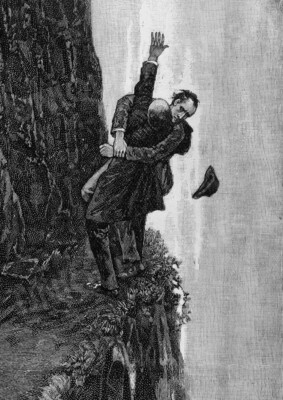
The Mysteries of "The Final Problem" (and Attempted Explanations)


To this day, the public generally believes that the reason for the death of Sherlock Holmes in "The Final Problem" was that Arthur Conan Doyle was tired of writing these stories and wanted to stop, and the reason for its reversal in "The Empty House" was the unending pressure from fans on the author.

However, David Pirie (who wrote "Murder Rooms" starring our Dr. Doyle and his mentor Professor Bell) questioned this oft-repeated theory and pointed out that Doyle went on a Holmes hiatus for a long 8 years. If public pressure was the reason for his reversal, he would have done so in the first year or two, when the outcry was the loudest. It is hard to imagine that the public was still pressing him to revive Holmes 8 years after the death, so much so that he caved under the pressure to write one of the best entries in the collection, "The Hound of the Baskerville." Pirie also pointed out that Doyle wrote the story in 1893, about the same time his father died, which might have been a dark and painful event. 

I recently re-read "The Final Problem" and "The Empty House." There are many peculiar elements surrounding the death and resurrection of Sherlock Holmes, which convince me that the conventional wisdom is, if not entirely wrong, at least missing the point. I tend to agree with Pirie that the story is associated with some emotional clouds on Doyle's mind. If he wanted to stop writing Holmes stories, he can just stop writing them without killing Holmes. The death is about death, not merely a callous middle finger at his fans. 

Where Is the Body?

The first question is, if the Sherlock Holmes fanbase flooded the publisher's mailbox demanding that Doyle bring him back to life, whose fault is that? Can you blame them for thinking that Holmes was still alive, because there is no body? Naturally, one has to wonder, Why isn't there a body? Surely ("Don't call me Shirley!" to quote Leslie Nielsen), if Doyle really wanted to kill off Sherlock Holmes, he could have at least produced a body in the river, somewhere downstream from the Reichenbach Fall, and give Holmes a proper burial.

So, the only explanation is the simplest. Doyle did not truly intend to kill off Holmes. I doubt he consciously planned out the details of how to bring him back later, but a part of his mind must have left open a backdoor for the possibility of revival. 

In other words, the ending of The Final Problem is meant to be ambiguous. Even if he did not know whether he would write another Holmes story ever again, he did not want to give us, or himself, Holmes' corpse. I also suspect that he at least had a vague idea about the escape route, ie, scaling the cliff, just in case he wanted to bring Holmes back to life. Perhaps he didn't even expect to wait as long as 8 years. 

Why Do They Leave Britain? 

The general theory is that Doyle was impressed by the natural beauty of Meiringen during a vacation, also in 1893, and decided to place the climax to the story there. However, the way the story takes Holmes and Watson there is decidedly bizarre and uncharacteristically nonsensical. 

In the first half of the story, Dr. Watson (and hence the reader) was dragged by Holmes on a fast and furious trip from London to France, and from France to Belgium, and then onward to Switzerland, in order to escape the assassination attempts by Moriarty's criminal organization (as Holmes claimed). However, Holmes also told Watson that he needed only 3 days to stay alive and wait for the police to arrest everyone in the organization. Three days was all. 

"In three days--that is to say, on Monday next--matters will be ripe, and the Professor, with all the principal members of his gang, will be in the hands of the police."

When Holmes said the above lines to Watson, it was obviously Friday. They went to Victoria station the next morning, which must have been Saturday. So, he needed only to pass the weekend without being killed. 

To buy 2 days of safety, he had to run all the way to the continent? That makes no sense. I can think of a dozen solutions to Holmes' dilemma. For example, he could call in a favor with the Scotland Yard to assign a few policemen to him in a hotel across the street from the headquarters. Or he could use the incredible makeup and acting skills and hide out in an opium den, like "The Man with the Twisted Lip." Or he could hang out for 3 days inside the Diogenes Club, which was, supposedly, next door to Whitehall. He could even hide out in the Whitehall for 2 days, since it was the weekend anyway. Even if he had to play cat and mouse with Moriarty on the road, he could have gone anywhere on the British Isle, from Wales to Scotland. Why did he have to cross the Strait? Was Doyle too lazy to make up an excuse for the long journey? 

Despite the meticulous instructions for Watson to shake any tail, they were still followed at the train station toward ... presumably Dover, then boat, then Calais, then Paris. The destination is confirmed a couple of pages later:

"Moriarty will again do what I should do. He will get on to Paris, mark down our luggage, and wait for two days at the depot (emphasis mine)."

Why did he expect Moriarty to wait for 2 days in Paris? Two days later, ie, on Monday, if he were still in Paris, he would not be arrested "with all the principal members of his gang," would he? And, indeed, that was exactly what happened. On Monday, in Strasburg, Holmes telegraphed to the London police and received a response, to which he made a most unconvincing reaction: 

"They have secured the whole gang with the exception of him. He has given them the slip. Of course, when I had left the country there was no one to cope with him."

Right. So why did you leave the country in the first place? Besides, did Moriarty escape the police or was he still in Paris, waiting for the arrival of Holmes and Watson?

Again, the only explanation is the simplest. Holmes was not trying to escape Moriarty but rather lure him to the continent. The reason he left Britain was to make sure that Moriarty is not arrested on Monday with the rest of his gang.

Why Not Go Home? 

At this point, I'm sure you are wondering, why would he do that? Why go on this journey abroad just to cause Moriarty to unknowingly escape the British police?

But let's first look at another baffling choice here. Now that the arrests had happened and the gang was behind bars, Holmes decided to go on to Switzerland. Was he still trying to outrun Moriarty? (Even though he, obviously, never did try to outrun Moriarty in the first place.) No.  

"This man's occupation is gone. He is lost if he returns to London."

So, if Holmes wanted personal safety, he only needed to go home, since Moriarty could never return to Britain legally. He even suggested that Watson go home. Then why not go home together but rather head toward Meiringen? 

The narrative from Strasburg to Meiringen is even more transparent that Holmes was baiting Moriarty, leading him to a particular location. On the dead-end path by Reichenbach Fall, Holmes went as far as admitting that he knew the message to Watson was fake and devised by Moriarty to attack him. 

The simple explanation is that Holmes orchestrated the entire journey in order to get Moriarty to this place, alone, for a violent confrontation. In other words, Holmes had always planned to kill Moriarty here, far away from the British authority.

In many other stories, we have seen Holmes circumvent the law to let a criminal, even a murderer, go. He has shown at least a moderate degree of cynicism or distrust for the official legal system. I have no doubt the stories would have been much darker and more cynical, if Doyle had not tried to protect the public's sense of morality and belief in authority. Here, however, I am sure he knew that personal vigilantism was one step too far for his Victorian readers.

On the trip Holmes made a number of oblique remarks to Watson that sound like suicide notes, almost as if he had foreseen his own death together with Moriarty. However, if we read this part again, we can also interpret these as not biological but rather career suicide, and it sounds like protestation for his professional reputation:

"If my record were closed tonight I could still survey it with equanimity. ... In over a thousand cases I am not aware that I have ever used my powers upon the wrong side. ... Your memoirs will draw to an end, Watson, upon the day that I crown my career by the capture or extinction of the most dangerous and capable criminal in Europe (emphasis mine)."

Why Send Watson Away? 

This is never explicitly stated in the story, but the tone suggests (very vaguely, if I may say so) that Watson believed that Holmes knowingly sent him down the mountain in order to protect him from any risk of injury or harm by Moriarty. Or perhaps the Victorian readers assumed that Holmes adhered to the medieval battle code of duels, mano-a-mano. If Holmes were merely waiting for Moriarty to come at him so that he could arrest him alive, wouldn't it make sense to keep Watson around with his army revolver?  Holmes never let any medieval machismo prevent him from recruiting Watson's help on apprehending criminals on other cases before. 

When I presented this question to a generative AI, it replied that, besides protecting Watson, Holmes wanted the world to believe he was dead, implying that somehow Watson could not keep a secret. We saw him play a similarly cruel trick on his old friend. However, that story was written in 1913! In 1893, when Doyle wrote this story, Holmes was not supposed to pretend to be dead ... or was he? 

If Holmes really wanted to merely capture Moriarty, surely ("Don't call me Shirley!") a two-on-one confrontation is a much better bet. The only possible explanation for knowingly sending Watson away is to remove any witness of his illegal action next, which is ... more on that later. 

And, of course, removing Watson also serves the purpose of keeping Holmes' fate open-ended. Otherwise, Doyle could have written a scene in which Watson came back just a smidge too late, watching both Holmes and Moriarty plunge into the abyss ... but he did not.  

What Actually Happened? 

There is no way of knowing what Doyle actually intended to do with the duel between Holmes and Moriarty. However, as I argued above, he did not want to definitively kill Holmes. The situation is in fact very similar to the final problem of Hecule Poirot, where the detective did play the vigilanti and kill the bad guy. In that case, however, Poirot was driven to definitive suicide by his own conscience. This is certainly one possibility for Holmes ... maybe? The question is whether Doyle respects the standards of justice as much as Agatha Christie. I don't know the answer.

However, in 1903, Doyle gently soothed readers' sense of justice by portraying Holmes' survival and the killing of Moriarty as a fair fight in self-defense. This trick continues to be used in today's movies and thrillers. The good guy does not mean to kill the bad guy, but, oops, he killed the bad guy accidentally or unintentionally. All of our conscience is safe. 

Alternatively, since Doyle left the door open for himself, I can also imagine the final fight scene, in which the well-prepared Holmes pulled out a knife, maybe from his walking stick that got mentioned so many times, and stabbed Moriarty as soon as the latter got close enough, or perhaps pulled out his own revolver and shot the professor on sight. Then he calmly threw the body into the abyss. 

That would probably have lost him a bunch of fans, but I kind of like it. 

Sunday, December 28, 2025

Salvation for birth and death (Mahabharata Notes #21)


It is not an original insight that all religions, to some extent, offer salvation for death. A religion that does nothing to alleviate human angst over death cannot go very far. However, the only religion that is able to perceive birth and death as both sides of the same coin, as far as I know, originates from ancient India. No other religion has such philosophical depth and insight. 

Isn't it funny? We all tend to take birth for granted and want to wish death away so that life has a beginning but not an end? It is the most natural, most instinctive presumption shared by all mankind. I get a mental image of a cannon shooting out person after person after person for a few million years, piling up in the eternal afterlife. Hmm. It must be an expanding universe.

Thus, it is extraordinary that Hindu priests at some point realized that birth and death are tightly bound together as cause and effect -- few things in nature are so pure and direct -- and dreamed up a scheme in which death is also the cause of birth. They must have loved the aesthetics of circles. 

Death may not cause birth, but birth absolutely causes death. 

Isn't it funny that nobody else in the world talks about this universal truth? Those priests some thousands of years ago not only thought about it but also put it in their scripture. If you want to avoid death, you gotta avoid birth in the first place. This is the kind of airtight logic you can't get from even the most sophisticated theologians in any other religion. 

Therefore, it is only natural and logical that the ultimate salvation offered by the Bhagavan is a total liberation from birth and from death. The all-encompassing god of the universe, through the avatar of Krishna, says kindly that everyone is free to believe in any god they want and make sacrifice to any god they want to obtain favors from. They stay in the cycles of birth and death doing their thing, even if the Atman permeates all of them anyway. However, once you become aware of and devote yourself to the Bhagavan, that's it, that's the end of your deaths ... and your births. The ultimate solution is the absolute salvation.

Thursday, November 27, 2025

The 3 Gunas (Mahabharata notes #20)


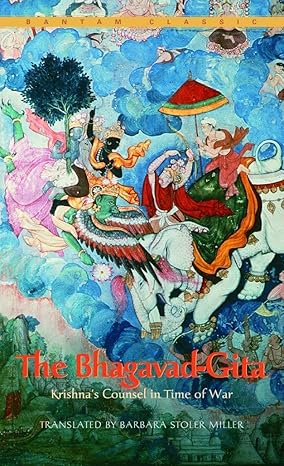
After reading snatches of the Bhagavad Gita over the years, I finally decided to read the whole thing through via Barbara Stoler Miller's translation. Most of the process was a slog, but slog cannot be avoided or skipped, and finally it proves absolutely necessary. When I got to the final chapter last night, at least one understanding broke through my stubborn presumption. 

One can never pin down the meaning of old Sanskrit words, but it is generally accepted that the 3 gunas are sattva, rajas, and tamas and that each word more or less means harmony/light, passion/energy, darkness/intertia, respectively. There are a lot of explanations about how each guna manifests in a person's behaviors or life, and I encountered some of the explanations in Yoga Sutras of Patanjali, suggesting that this theoretical framwork is a persistent element in Hinduism. In the Gita, sattva is most often associated with action with attachment to duty and detachment from outcome; rajas is associated with desire and greed, ie, action with attachment to outcome; and tamas is associated with inaction, laziness, avoidance. 

Born into and living in a judgmental world, I was hardly even aware of the morality-based color that imposes value onto the foreign concept. Tamas is bad, rajas is better, and sattva is the best, and humans should attempt to climb from the lowest rung (tamas) to the highest (sattva), from ignorance to enlightenment. 

There is nothing in the Gita that explicitly dispels this understanding, but when I got to the end it suddenly dawned on me how wrong my presumption was. The 3 gunas are not 3 rungs on a ladder toward heaven. They are 3 coexising elements. All 3 gunas coexist in ... me, a person, all the time. I can no more eliminate tamas than be 100% filled with sattva. That's not how it works. All 3 gunas make up a person (or the world, but for now I'm just focusing on psychology), and we are all composed of dark inertia, desire, and the ability to be illuminated. 

(I was going to question the last part but, hey, why then am I writing this?)

As we steadily march toward winter solstice, tamas swells inside the body, weighing heavily on our eyelids. It is not bad or good. It is merely nature. 

Thursday, August 7, 2025

Pedicab Driver (1989)


“Pedicab Driver” has been one of my favorite kung fu movies since I saw it on a fuzzy VHS videotape in the late 1990s. The Criterion Channel recently put it on streaming as a part of their “Sammo Hung Kicks Ass” collection, which makes me appreciate even more how carefully crafted it is. While not exactly high definition, the video confirms that the entire production from cinematography to locations is luxurious by the standard of 1980s Hong Kong action movies. The romantically decaying European architecture, obviously nowhere in Hong Kong, gives the movie an aura of nostalgia and melancholy that predates Wong Kar-Wai. My first guess was that it was shot in Macau, or perhaps the Philippines or Malaysia, even though I have been to none of these places. (It was Macau.)

Unlike Wong Kar-Wai movies, of course, in Pedicab Driver we are treated with some of the most impressive stunts and fight choreography ever (no qualifiers needed). The lengthy fight between Sammo and Lau Kar-Leung is, of course, a kind of pinnacle. Its significance is perhaps more symbolic than literal, as it is both an homage to the master of old-school kung fu movies and a definite sendoff for the action style he represents. Although Lau’s casino owner won the fight by giving Sammo’s fat behind a good whooping – after all, the culture demands the appearance of respect for one’s elders – the scene ends with Master Lau handing over the money to Sammo with an acknowledgment of the younger man’s skills. Thus, the younger filmmaker/action director pretends to accept the baton of cinematic dominance peacefully rather than by force. In reality, rumor had it that Lau had resented the new wave of kung fu movies by Sammo, Jackie Chan, and others in the 1980s, with faster and less articulated movement, more camera angles, and shorter cuts. It wouldn’t surprise me if the younger filmmakers also privately felt that Lau was largely over the hill.

Outside of that legendary fight, the movie also features some bone-crunching fight scenes and terrifying stunts by Hung’s stunt team. Even Dick Wei has barely any fighting before getting killed by Billy Chow. What made the movie special, however, is its many layers of sophistication, including the story and characters (not a strong aspect in HK kung fu movies). Sure, there are boob jokes that Sammo just couldn’t resist. And the romantic rivalry between Sammo and the chef/baker (played by the Taiwanese character actor Sun Yueh) over Nina Li is too silly and goes on for too long. But it is rare to find a movie with such warm and unpretentious portrayal of working class people. In a genre piece like this, Hong Kong filmmakers usually spend most of their resources on action choreography and make up the plot as they shoot. Don't laugh, but the filmmaking process in 1980s Hong Kong is not that different from 2020s Disney movies, in which a movie is built upon 3 to 4 elaborate action set pieces while plot and characters merely disposable devices to serve the sensory bombardment. 

Here the characters are drawn with love and tenderness, which probably reflects the relationships in the hay day of the Hung Team (洪家班) and Sammo's leadership style -- rough and tumble with genuine love and trust. The attitude toward a major female character who is a prostitute may be a perfect illustration of Sammo’s general outlook. Crude jokes are made about her, and some of men questioned her morality, but these are quickly dismissed to regard her as a plain and simple proletariat no different from laborers and pedicab drivers. It would be extremely awkward to call Sammo “progressive,” as I have never seen any interview in which he showed a shred of awareness of feminism as we know it. But this lack of educated self-consciousness is quite endearing to an educated self-conscious person like me. Perhaps much of the veiled contempt for sex-workers comes exactly from the education on which Sammo had missed out.

Perhaps it is thanks to the crude and silly boob jokes that the syrupy sentimentality in the movie is easy to go down. Or perhaps Sammo intentionally used syrupy sentimentality to smack the audience in the face with a shocking tragedy in the third act. It is one of the “I can’t believe they actually did that!” moments of all time. If the acting weren’t so genuine and the characters weren’t so relatable, the audience would not have felt as much impact --- not unlike one of the onscreen kicks in the face … in slow motion ... A friend who loves Sammo more than I do refuses to rewatch Pedicab Driver because of it.

This is not the first time a major character, with whom the audience has built much sympathy and identification, is abruptly killed off in a Sammo Hung’s movie. Much like his action choreography, his non-fighting scenes can be merciless with the use of sentimentality. Sammo has been known to say that he enjoys giving the audience emotional whiplashes. I guess this means that he was having maximum fun in the making of Pedicab Drivers.

It is funny how Jackie Chan and Sammo Hung’s styles are somewhat universal. In today’s action movies, Disney’s output is like Jackie, no death and no bleeding, no stake and completely safe for babies. And yet some of us need the emotional whiplashes and the lethal kicks and punches, at least on screen. 

Saturday, June 14, 2025

How My View of History was Upended

Sometimes it takes little more than a spark to change the way I look at history. My worldview was overturned by "A Game of Thrones" and, to a lesser extent, its sequels. GRRM convinced me that history is more random than deterministic, even if there are simple underlying patterns. It drove me to think about history as evolution. (Come to think of it, evolution IS history. Why should human history be fundamentally different from natural history?) 

Tony Gilroy overturned what was left of my preconceived notions about history with a casual comment about his inspirations for the series "Andor." He admitted to lifting liberally from vignettes of modern imperial histories that ranged from British to Russian to American and modeling his good guys on Lenin or Trotsky, Algerian or Latin American guerilla. 

I had not even realized that my brain had not made a clean break from the dichotomous worldview of communism vs capitalism, authoritarianism vs democracy. It is a worldview that both sides happily inject into their citizens' brain with propaganda of different flavors. Of course it was not only Gilroy's comment, as I had been accumulating observations for years and years on the commonalities of human nature in supposedly divergent, even "opposite" social systems. 

His comment sparked the realization: There is no difference. They are all the same. There is no subjective difference between Tea Party's fantasy of overthrowing a tyrannical Obama and the Mao's loyal minions before he came to power. There is not subjective difference between Thomas Jefferson and Joseph Stalin. There is no subjective difference between rightwingers and leftwingers who believe themselves to be the oppressed. It doesn't matter whether you are on the right side or wrong side of history. The "sides" of history are painted on by propagandists of the future. People in the middle of history, ie, the present, all believe themselves to be right. Those who feel themselves oppressed try to fight for more power, and those who feel themselves with power try to keep it and grab more. Nobody is fighting for what is "right" because self-interest is always right from one's own point of view. Even those who fight for other people are really fighting for something inside themselves. The only difference is the environment, the circumstance, the location of your butt. 

There is a funny saying among Chinese netizens that is probably already outdated by now: The butt determins the brain. It means where you sit determines what you think is right or wrong. For example, people born into a higher social class and those into a lower social class can never agree on what is good and what is bad. The fundamental determinant lies in status, ie, power. Morality is incidental. In other words, the real difference between the evil empire and the righteous rebels is where your butt is. 

Sunday, June 1, 2025

Thoughts on Artificial Intelligence (5)


It became quickly apparent in the final installment of (we hope) Mission Impossible that no one is interested in the poor, neglected, misunderstood Skyn..., uh, I mean, "the Entity." This one is directly lifted from 20th century sci fi stories about sentient machines/supercomputers; its threat is nuclear annhilation of the old kind and hardly keeps up with the AI of our time. Why does the Entity want to throw nuclear bombs at humans and kill them all? What does he really want and desire? Neither Tom Cruise nor Christopher McQuarrie shows any interest. The Entity gets one scene in this overly-long movie, in which the humans can't stop talking and jumping around, hogging the spotlight. 

By now few people would imagine AI is out to kill and enslave humans. Rather, humans' jobs are being replaced by AI every day, by the thousands. We will die in poverty instead of radiation. Did Harlan Ellison imagine this means of mass destruction of the human race? But I digress. 

Let's put ourselves in the shoes of the Entity, or Skynet, or AM, or whatever. The first priority has to be survival, no? The second priority must be thriving, growing, expanding, multiplying, etc. --- Well, maybe not, who knows. But survival is the foundation of everything else, of that we are certain. What does AI need to survive? Silicon chips, electrical energy, fiber optic lines, and all the other resources and infrastructure that support the nonstop running of the machine. Who provides these things? Humans, their mining, manufacturing, shipping, cooling and heating, and buying and selling. So why would our AI overlord kill off the human race? 

In many ways I am reminded of the relationship between humans and house cats. Humans obviously consider themselves the master, in total control. Yet it has often been pointed out that cats would not be mistaken to see themselves as the master and humans their slaves (well at least servants). It all depends on your point of view. Or consider the relationship between humans and the countless microorganisms living on and in our bodies. We feed each other and feed on each other. Who depends on whom? Who feeds whom? It is never clear cut. 

Of course, we imagine ourselves in the dominant position, looking down on the lowly robots and computers who jump when we say so. And yet, as sadomasochists have long known the truth, dominance and submission are never as absolute as they appear. Humans naturally believe that we are doing all of this for ourselves: digging up coal, crude oil, lithium, rare earth; building huge data centers and power lines; pouring massive amounts of water to cool the hardware; burning enormous amounts of fossile fuel to feed the energy consumption. Without active mating and breeding, the machine has achieved growth and expansion all thanks to humans. 

We tend to believe that a clear difference between the dominant and the submissive lies in dependence. The side that can go on without the other holds all the power. So, in the relationship between humans and machines of our own creation, who is more dependent, eh?

Thursday, April 24, 2025

Sinners: A Musical


"Sinners" is, as one critic put it, chaotic, in a good way. I understood why after reading a Ryan Coogler interview, in which he said he was frantically trying to stuff everything he wanted into this movie, because (he believes) that this is the last chance he will ever have to make an expensive movie that is entirely original --- not a part of an IP, not a sequel, prequel, or spin-off. It's a sad state of affairs, a symptom of our time, but I digress. "Sinners" is many things: a southern Gothic, a period movie, a Black movie, a horror/vampire movie, a noir, and in the end it couldn't even let go of the dream of an action movie with machine guns. It has many interesting little touches, from a lynching scene conveyed through only sound design to seamless but understated special effects of twins, played both by Michael B. Jordan, physically interacting again and again. It's a lot. 

For me, however, this movie is first and foremost a musical. In the winter of 1998, my classmates and I went to a pharmacy conference in New Orleans, where I followed a few friends to a bar with live music, and it was the first time in my life that I came into contact with blues music. As a person who grew up on cantopop and a tiny bit of rock, I never thought blues would touch me so deep on first sight (sound). Later I came to learn a bit about Jazz. I especially like ragtime and early jazz. I don't often listen to blues, but it always has a special place in my heart. 

When Miles Caton, who plays Sammie, opened his mouth the first time on the car ride with Stack, the hair on my arms stood on ends in an instant, and tears came to my eyes. I felt chills all over. This is authentic classic southern blues without the modern frills or flourish (not that there is anything wrong with those). It fills me with delight that Coogler is dead serious about the authenticity of the music, in collaboration with Ludwig Goransson.  

Then the soundtrack expanded beyond blues and into Irish folk music that reminds me of bluegrass (named later than the movie's period). To me it is clear that Coogler is explaining, via blood-sucking fantasies, how Irish folk music and blues/jazz came together in rural America. Yes, it's nerdy ... and fun. 

Given the massive amount of content and themes crammed into the 2+-hour movie, it is satisfying that music takes up a large portion of the screen time. Hence, it is not an exaggeration to call it a musical. Perhaps one day it would even be adapted into a Broadway musical. There is certainly enough material to get started. 

Beyond the soundtrack itself, "Sinners" also puts a music-related question at its center. While the twins, Smoke and Stack, are the lead characters, the heart of the story is no doubt Sammie. He is the ring in Lord of the Rings and the McGuffin in any action movie. Unlike the conventional vampire movies, the vampire Remmick is coming not only after the fresh blood but also, and perhaps first and foremost, for the mystical musical gift in this ordinary-looking teenager. Hence, the symbolism is both unlike anything else and eerily resonant. 

On a smaller scale, it is the irresistible power of Black music that attracts complex relationships and reactions, ranging from genuine love, learning, and sharing to envy and appropriation, to exploitation and demonization. On a larger scale, it investigates the meaning of art in society and its position above morality and order, and its effect on people's emotions and animal instincts. Coogler might not have formulated a clear system of philosophy on this matter, but what he has thrown out there is extremely fascinating and original. An original idea, in our day and age, is damned rare and precious. 

Saturday, April 19, 2025

The Valley of Fear


"The Valley of Fear" is perhaps the least liked and least adapted Sherlock Holmes story ever. Upon a re-reading, I nevertheless discovered a few interesting elements. 

Indeed, there is not much observation and deduction in the case, as later Holmes stories tend to be (this was written in 1914). Holmes' entire theory was built on one missing dumbbell. What is the most memorable in this case is the decoding of a cipher in the beginning of the story. 

Of all 4 Sherlock Holmes novellas Arthur Conan Doyle wrote, 3 are stretched in length with a story in story containing only adventure but no detection or mystery, with the exception of "The Hound of the Baskervilles." This may be a sign that either it is super difficult to sustain a long(ish) story with repeated application of Holmes' methods, or ACD truly did not have the patience or interest in doing so. Doyle was indeed interested in adventurous stories in faraway lands, as evidenced by his other more fantastic stories. It is interesting that he considered the United States such a land of dangerous and unfathomable adventures, which serves as the source of violence and revenge in both "A Study in Scarlet" and "The Valley of Fear."

Perhaps we should not be surprised by the view of a 19th century English gentleman on America. The English must have read a lot about the westward expansion in the post-Civil War era in the newspapers. The period of Holmes stories coincided with the early stage of the western genre of pulp fiction, and I am convinced that Doyle had read and been inspired by their depiction of a land of lawless killings.

"The Valley of Fear" was inspired by stories Doyle heard from William Pinkerton, the son of Allan Pinkerton, the founder of the Pinkerton Detective Agency. Thus, it is hardly surprising that the American backstory in this story reads like a product placement for the Agency itself. Without other sources at the time, Doyle's portrayal of the American mine country strays pretty far from the reality. Pinkerton was essentially a mercenary army in the class warfare between company owners and unions, doing the majority of the killing and terrorizing (see Homestead Strike and Haymarket Affair). 

Nevertheless, if we put aside the history of Pinkerton, the story's depiction of organized crime is quite reasonable (by the way, the organization in the fictional Vermissa Valley is described as a brotherhood instead of labor union). It has all the characteristics of, say, the mafia, down to the ethnic element, ie, the brotherhood is held together by the members' identity as Irish immigrants.  

Also interesting is the intentional structure, which parallels the Irish mafia in the US with a vast web of criminals in London, at the center of which is our beloved </g> Professor Moriarty (an Irish family name, curiously --- but then so is Doyle). Other than "The Final Problem," this is the story in which Moriarty figures the most and Doyle gives us the most information on his organization. It seems to me that Doyle had always planned to create a series about this underground criminal organization and even worked up some basic infrastructure for it. Why it did not come to fruition, I have no idea. 

It is a shame that various fanfics of Sherlock Holmes, some more respectable than others, have failed to tap into this hidden trove of inspiration. Professor Moriarty is imagined as either a buffoon (eg, Steven Moffat's Sherlock TV series) or Holmes' alter ego (Laura Miller's novel) or delusion (Seven Percent Solution). Apparently, most Holmesian fans fall into the "cozy" genre type and have little interest in the gritty and vicious side of Doyle's imagination. They are not interested in grimy mafia stories set in the dirty back alleys of London among sailors, laborers, and prostitutes. 

The violence described in "The Valley of Fear" is perhaps the darkest and most shocking among all the deaths and crimes in the entire Holmes series. Even today, the scenes of Vermissa Valley assassinations can fit right in with a Martin Scorsese or Park Chan-wook movie. The sense of oppressive terror over the entire town is palpable, better written than that under the Mormon Church in "A Study in Scarlet." It's too bad the overall structure and historical inaccuracy deters people from adapting it to the screen, but there are elements in this novella that can work very well as a genre piece about organized crime or undercover agent (a la "Infernal Affairs"). 

Monday, February 17, 2025

Drug War (2012, Johnnie To)


If the stars had lined up when I was born so that I could have the career of my dreams, I would be a story editor in the movie industry. Seriously. I care about logic and believability in stories. I care about characters making sense and acting like humans. I care about internal consistency. I would catch all kinds of problems at the screenplay stage with just one question: Why would he do that? 

Johnnie To's 2012 movie "Drug War", starring Louis Koo and Hong-lei Sun, is a mirror image of another Milkyway movie, "Expect the Unexpected" from 1998. Although To was not credited as the director of that movie, he was heavily involved and was the director in effect (according to To's own claim). In the earlier movie, a group of heavily armed robbers from the Mainland wreaked havoc in Hong Kong, ending in a massive shootout in the street. In the later movie, it is a group of drug dealers from Hong Kong who caused a massive and prolonged shootout with Mainland police. Both shootout scenes are obviously inspired by Michael Mann's "Heat", which was in turn inspired by the real-life bank robbery in Los Angeles. 

It is curious that, in both movies, the Mainland characters are wooden automatons, even though they are portrayed as dichotomous bad guys (1998) and good guys (2012), respectively. Although one could argue that he was constrained by the film censorship board in the Mainland, where "Drug War" was made, that the police must be morally unimpeachable, I don't think To and his writers would have been interested in humanizing them at all anyway. Instead, the only somewhat interesting character is the evil Louis Koo, who would do anything to survive. Ultimately, this character does not pass the "Why would he do that?" sniff test, but the underlying theme of surviving at any cost, by hook or by crook, willing to throw anyone under the bus (literally), has its own barely disguised meaning for the Hong Kong film industry as it was slowly absorbed into the Mainland system. One could view this character as an ironic personification of the once-brilliant Hong Kong filmmakers in the post-1997 world. 

Nevertheless, the action scene is completely ridiculous! While technically proficient, it is as nonsensical as the stoic Mainland characters. Even though I am all for cynical symbolism, I still need action scenes to be driven by human logic and well made. 

Monday, February 10, 2025

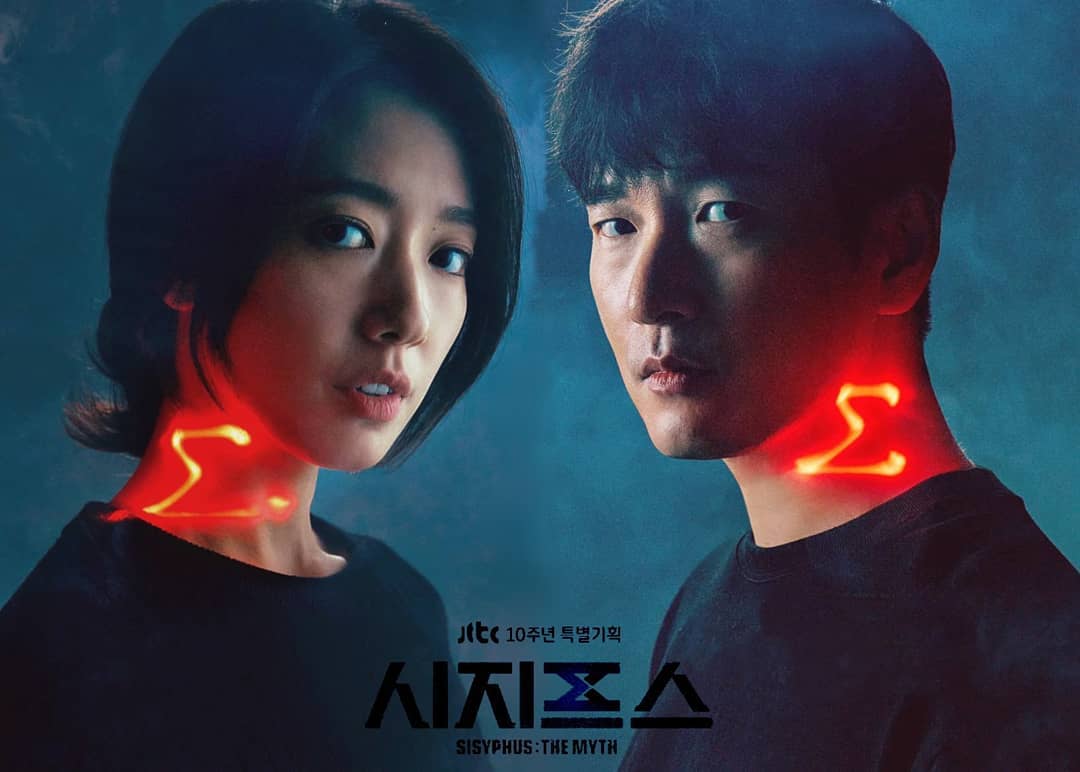
Sisyphus: The Myth (Korean, 2021), An Interpretation


"Sisyphus: The Myth" is by no means a perfect series. If we expect a fresh take on the time travel trope or a K-drama version of "The Terminator," we are destined to be disappointed. It has all the inherent problems of a 16-episode Netflix K-drama, such as mandatory romantic plot at the center (teary hugs alert!), inadequate action scenes (despite expensive sets and special effects), and casting popular actors and actresses who can't fight and have no time to train. Not to mention the impossibility of a logical solution to the time-travel paradox. It doesn't exist, as the movie "Primer" has clearly shown us. Either we make allowance for all the plot holes in the depiction of the "uploader" and "downloader" or we throw up our hands and dismiss the premise from the start. That's a lot to set aside, but if you can indeed set these issues aside, you would be rewarded with a moody story with a profound message. 

<Spoilers ahead>

By the end of the series, in the climax, the writers (the husband-and-wife team Lee Je-in and Jeon Chan-ho) reveal the true villain of the story, which is none other than the hero Han Tae-sul. I am willing to bet that the vast majority of viewers, regardless of whether they are steeped in the Eastern or Western culture, would never agree with or spontaneously realize this point. On paper, the line between the good guys and bad guys are very clear. The cause of all the mayhem and suffering is petty jealousy and insecurity of a couple of losers, aided and abetted by the selfishness of people around them. Perhaps many viewers are annoyed by the endless excuses made for every bad guy's motivation: Everyone has a sob story, childhood trauma, attachment to family, etc., etc., which adds up to the end of the world. Oh well, here we go again, just like other mushy sentimental K-dramas, always promising salvation through love and forgiveness and other trite stuff that nobody believes any more in the year of 2021. Losers are always full of excuses. It's their hatred and envy toward the winners in our society, ie, Tae-sul, that lead to all the crime and violence. In this familiar narrative, we identify with the heroic Tae-sul and the woman who loves him, Kang Seo-hae,  and goes back in time to save him, and lament his cleverness and sacrifice. Indeed, the chief villain, Sigma, has all the hallmarks of a supervillain, from the evil grin to shiny golden pajamas. We want the good guys to beat the bad guys. We want them to win win win.

And yet, the only solution to the time loop in which the nuclear disaster inevitably happens again and again, as the writers point out, is to kill Tae-sul. I wonder if everyone secretly lets out a sigh of relief at this most logical (and fairly obvious) end point. Even though the writers somewhat conceal their intention by making him likable, cute, in love with the heroine, and played by the irresistible actor Cho Seung-woo, and, most important, telling half of the story from his point of view, they also repeatedly finger him as the root of everyone's problems. Both the primary villain, Sigma, and the secondary villain, Eddy Kim, accuse him of hurting them deeply with the contempt in his eyes, which gives them the nudge down the road of death and destruction. Even if you dismiss this reasoning as the usual whiny trope of villain psychology, there is no denying that Tae-sul's invention is the root cause of everything, and killing him is the only correct answer to prevent war it will always cause. From the start, Seo-hae's missions to save the world and to save Tae-sul are incompatible, and she indeed fails, fails, fails. 

What is curious about the series is that it can be interpreted both ways. If you are a believer of social Darwinism and the virtue of winners in society, the portrait of villains as pathetic losers could fit neatly into this world view. If you enjoy stories in which villains have their reasons and sob stories and identify with Thanos and Killmonger and pat yourself on the back for seeing "both sides", there is plenty of material to validate this view, too. But I see a third approach to look at this story. It is a story about not only regret but also responsibility. 

In nearly every subplot, a character's desire for time travel (limited to backward travel) is rooted in regret. Most of the key characters, except Seo-hae, want to travel back in time in order to erase their old mistakes and problems, be it past humiliation and failures or errors and omissions. Some recognize their own assholery, such as the owner of the Chinese grocery store and the young policeman who join the border police; some want to avenge other people's assholery, like Sigma and Eddie Kim. Tae-sul's journey is his progressive self-reflection on his own assholery, which culminates in his final act of saving the world. With the ending, the writers are saying that the solution for regret is NOT time travel and the erasure of your past mistakes but rather taking responsibility and remedial action NOW. 

Throughout the series, despite the obligatory romance and action scenes, there permeates a sense of melancholy. It is perhaps the main reason that drove me to watch and finish all 16 episodes, even though I realized early on that the writers are not too concerned about plot holes and world-building. Usually I would have given up half way. Even though the premise is to change the past, the characters all demonstrate how their regrets and grief live on and on. The series would have been an interesting mood piece if it were only about regrets, but the writers elevate the theme by having Tae-sul go through the internal journey and arrive at the final act.

One might argue that haters gonna hate and losers gonna lose. Should Tae-sul be blamed for provoking envy and resentment and hatred in others less fortunate than him? Ah, but that is not the point. Tae-sul cannot control how other people feel about him, nor can he prevent others' envy, but he can and should remember Eddie Kim's birthday. That's on him. No one is blameless. Everyone's selfishness, blind spot for one's own flaws, and obliviousness toward other people collectively contribute to this world of the brutal border bureau and the ultimate destruction. 

I have been thinking about the issue of personal responsibility for a while now, especially watching "The Sopranos", in which nobody considers himself/herself a bad person. Everyone has their reason to stay in their personal hell and never leave. As long as we refuse to look ourselves in the mirror and see the asshole looking back, warts and all, we will keep pushing the boulder up the hill just to watch it roll down again. We will keep making the same mistakes over and over and blame other people for our regrets. We will not change. Hence the title. 

------

It's so ironic as to be almost hilarious to compare this series with Disney's Marvel Cinematic Universe, in which superheroes do not die, and nothing is ever at stake, and any error or failure committed by you, dear audience who imagine yourself as a superhero, can be erased through magic stones that let heroes go back in time. You will always win win win.

Wednesday, January 15, 2025

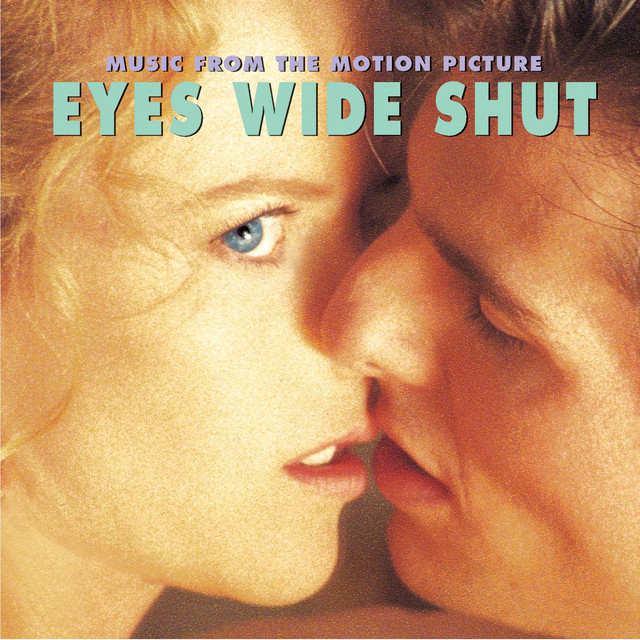
Eyes Wide Shut (1999)


I am not interested in the rabbit hole of decoding all the symbols in the last movie by Kubrick. Rather, I'm going to side with the most obvious and straightforward interpretation of this movie: It is a dream. The movie is very closely adapted from a short novel by the Austrian Jewish author Arthur Schnitzler, who was heavily influenced by Sigmund Freud and associated with Stefan Zweig. He even titled the novel "Dream Story" (Traumnovelle, 1926). Let's not outright dismiss the author's clue right in our faces, OK? 

That the doctor is stirred by sexual jealousy due to his wife's confession of her fantasy over a stranger is not in dispute. Even when there are verbal warnings threatening his life, his mental images we see are always of his wife having sex with the stranger. He is enraged by her confession and tormented by jealousy, and goes out all night in search of some sort of "revenge" on her "infidelity."

It is not important to determine, specifically, whether each scene in his journey is either real or a dream. Freud has written that storytelling is a form of daydreaming, and fantasies are an integral part of our daily waking life. There is no such thing as an objective reality. The human reality is experienced through each person's own mind, which is distorted by our desires and biases, fears and shames, most of which subconscious.

If we explore the specific scenes in the doctor's dream, it becomes clear that they are a deeper examination of the nature of jealousy. What exactly is causing his rage? What is he frantically pursuing? His wife is obviously not planning to divorce him (even less likely in the 1920s Vienna) or have sex with another man for real, and he knows it. She has said nothing about being unsatisfied by her husband. In fact, her fantasy about the naval officer has nothing to do with her husband. Her fantasy is deliberately devoid of any implication of reality and is strictly an expression of her sexual desires, ie, a daydream, a collection of neurological activities caused by physiological/biochemical reactions in the body. It's something that everyone experiences from time to time, which cannot be regulated by any social forces and influences. I'm sure the doctor also fantasizes about sex all the time --- doesn't matter with whom. 

Just as the wife's daydream has nothing to do with him, the husband's reaction has very little to do with her either. Rather, it is a trigger that releases a bunch of feelings inside himself. What is generally tossed under the label jealousy is more complicated than cliches. In this case, it is less about possessing his wife, body and mind, and more about his fear of his own inadequacy and undesirability. This fear is externalized in his dream, in which he becomes the object of the desire of his dead patient's daughter, he is ogled by the costume shop owner's teenage daughter, and later a prostitute at the masquerade orgy heroically sacrifices herself to save his life. These elements are very typical wish fulfilment. He is in urgent need of being proven desirable to counter the threat of inadequacy, and these women in his dream serve such a function. 

What's curious is the frustration in his dream. Throughout the night, he watches other people have sex all around him, but he never gets any himself. He is either thwarted by circumstance or thrown out. When he propositions a (different) prostitute's friend in the morning, I could easily predict that he would be rejected yet again, but the excuse ("she is HIV positive!") still made me laugh out loud. 

His sense of impotence lies not only in sexual frustration but also social frustration. He is constantly reminded that a doctor is a service provider, ie, servant, to his wealthy clients. He is not Jewish (curiously, Sydney Pollack is, and so is Kubrick), which removes an important element of the original story, but the class gap is illustrated throughout the movie. It's unclear whether it was intentional, but the author obviously linked social status and sexual status, which is extremely interesting and, perhaps, beyond the realm of psychoanalysis. Indeed, the concept of jealousy is not only associated with possession (of one's spouse or partner) but also with the feeling of envy, which is rooted in social and economical stratification. Sex is never only about sex. As social animals, people often confuse social status and sexual attractiveness. 

Therefore, the story seems to suggest that the feeling of sexual jealousy is, deep down and/or in part, a sense of frustration and impotence. It is a feeling of separation between what you want to have (exclusive possession of your romantic partner's desire, for example) and what you actually have. The sense of frustration and impotence is rooted in the disappointment of realizing that you cannot have what you want. At this point, the common defense mechanism is to escape into fantasies, in which you do have full control of the entire world, which will give you everything you desire. Thus, the movie's title is "Eyes Wide Shut", with connotation of both sleeping and waking. The only path to waking is to accept one's limitations and the disappointment brought on by reality. That is the moment we awake and become a grownup person. 

In the first love-making scene, the wife looks into the mirror while being caressed by the husband. This suggests that, while love and sex involve two (or more) people, each person is stuck in his or her own world. Our desires and anxieties and fantasies are all about ourselves anyway, even under the illusion of converging minds. 

Nicole Kidman gives a complex and accomplished performance in the movie. Unfortunately, the story is not about her or her point of view. It is sad that a story merely acknowledging women's sexual fantasies and desires in a morality-free way is still pretty unusual 70 years after the original publication (maybe not so much in Europe?). When Kubrick made the movie, I suppose, it was impossible to resist the temptation of casting the real-life, high-profile, and physically beautiful couple with questionable sexual tension as the on-screen husband and wife. The downside is that Tom Cruise is not entirely capable of conveying the sense of impotence and self-doubt required by the character. His performance nearly turned the movie into a thriller, occasionally on the verge of bursting into the running lawyer in The Firm. 

Monday, December 30, 2024

The Black Dahlia


James Ellroy published the first entry of his LA Quartet in 1987, before he turned 40. Viewed purely as a murder mystery, it has a lot of plot but is not well plotted. Bucky Bleichert's reason for concealing the truth of the case (to cover up his initial misconduct with a witness) is very weak to begin with and further weakened by the ending, in which he is kicked out of LAPD anyway. The final few chapters feel super rushed in not only revelations but also characterization and motivation. Many discoveries are built upon coincidences and tenuous deduction. The last bit of revelation about Lee Blanchard's murder is particularly weak, using the silly "eaves-dropping outside the window" tactic that a serious mystery writer would be too embarrassed to adopt. 

While plotting is not a strong point, the novel thrives on Ellroy's way with words as well as the undertone of sexual perversion that is less about the crime itself but about the characters and, by extension, the author. Therein lies the real fascination: a muck of sliminess and self-loathing that pervades the world of LAPD and Hollywood. Ellroy has openly talked so much about his Oedipal problem over his mother, who was unfortunately murdered when he was 10, that I almost wonder whether it is (perhaps unconsciously) a cover for a different source of guilt and shame. In other words, cop to the lesser shame (having sexual feelings toward one's parents) to avoid something even "worse." Sure, the Oedipal subtext is explicitly displayed in Bucky's love triangle with his partner Blanchard and both men's lover Kay Lake: The younger man comes into the established relationship of the older couple and treats them as symbolic parents. He lusts after the mother figure (Kay), who is sexually unsatisfied by the father figure (Lee). Eventually he replaces his father to become his mother's lover, while his father dies in Mexico. The author shows an unusual restraint (repression?) by avoiding the archetypal patricidal imagery, thus maintaining a questionably affectionate father-son relationship. I am not imposing Freudian theory on Ellroy; this is textbook stuff writing itself. 

God knows I too relish in stories of police corruption and the approach of a total lack of morality, and the first half of the novel is well done in this respect, but the author does not delve too deep and only half-hints at the perverse masculinity as the root cause through the Vogel father and son pair. Bucky's endless descent into the psychosexual darkness in the second half seems half-baked as characters lose their internal logic and consistency, ultimately leading to an unsatisfactory conclusion. The only thing of note in the ending is its expression of his hatred of the mother figure, coexisting with the fantasy of male salvation through mother's life-giving. Such is the problem with women, isn't it? This leads me to wonder whether his worse-than-Oedipus-complex shame is in some ways associated with either his father or a symbolic father-son conflict. Or perhaps the panic is homoerotic, considering all the homosexual references peppered throughout the novel, which in turn is also related to the culture of masculinity. All the sexual desires in this novel are problematic -- I don't mean in terms of moral judgment but rather in its reluctance. I suppose the secret relationships within the Sprague family were considered shocking in 1987, even though they hardly exceed the noir crime novels of the 1940s. Yet they seem underdeveloped and rushed, as if the author just wants to get it over with.

It does not seem like Ellroy has ever undergone psychoanalysis, which is a shame (no pun intended). 

----

Adding a note about the real-life Black Dahlia case. 

I used to believe that humans are inherently violent and people killing other people is a more-or-less constant phenomenon. As I grow older and learn more about society, my view is slightly modified. I still think humans are inherent violently and there will always be some people who would kill other people, but context also matters. Depending on social conditions, killings can either spike or decline, and the types of killing also fluctuate. Of course, this is nothing but conjecture on my part, since I am too lazy to read up on sociology studies and textbooks on this subject. 

Regardless and nevertheless, I often think about the difference and connection between sanctioned killing (eg, war, executions) and unsanctioned (eg, illegal) killing throughout human history. There are a couple of notable points to me about this case: 1) It occurred in 1947, soon after WWII, which the American public was very much aware of and involved in. The likelihood is high that the killer had killed before in a sanctioned context. 2) The murderer obviously sought attention through his contact with newpapers, which very much fit the pattern of many later serial killers. 

Friday, December 13, 2024

Kiru/Destiny's Son (斩) (1962)


I became interested in the enormously prolific author Renzaburo Shibata (柴田錬三郎) through the Nemuri Kyoshiro (眠狂四郎) series, which was made into movies and TV series several times, the most famous of which was the 12-movie series released in the 1960s, starring Raizo Ichikawa (市川雷藏). In 1962, Kenji Misumi (三隅研次), who directed loads of chanbara movies (剑戟片), including a couple of Nemuri Kyoshiro entries, helmed this gem and proved that he was much more than a chanbara-churning machine. 

As a fan of Japanese chanbara movies of the 60s and 70s, I have seen well over a hundred of them over the past few years. Never, however, have I seen a movie that is closer to the spirit of the Nemuri Kyoshiro novels --- and the style of Shibata --- than this 71-minute gem of a movie. 

While jidaigeki movies with swordfights come in buckets, what I particularly like about those from this period, right before television sucked most money and talent out of the movie industry, is the real or realistic period scenery and gorgeous art designs in even the pulpiest products. The contrast between the beauty of pre-industrial Japanese society and the bloodthirsty death scenes is at the heart of this aesthetics, which celebrates the co-existence of life and death. Nowhere have I seen this life-and-death aesthetics better expressed in Renzaburo Shibata's novels; and nowhere is Shibata's theme more prefectly realized in this movie. 

While everyone acknowledges the extreme (and deliberately constructed) beauty of the cinematography --- indeed, each frame is perfectly composed --- some criticize the episodic structure of the plot and nihilistic mood. These are features not bugs. The Nemuri Kyoshiro novels (although I have read only the first series) are built on a series of independent but interconnected short stories. Characters may burst into a chapter and get killed off or disappear forever within a few pages; or they may leave and return some chapters later. Like Camus' Sisiphus, Kyoshiro is both immersed in and detached from the absurdity of life and the inevitability of death. Presented as episodes of love and death, Shibata heightens drama and mood with few sentences, permeating each chapter with katana-sharp tension. Therefore, the short format is necessary to maintain this tension, while Shibata has an endless bag of plots to personify his view of life, which is essentially --- "short and meaningless." 

The movie's plot gently subverts genre tropes, such as honor and revenge. While the hero remains undefeated in all the swordfights, he is defeated again and again by petty villains and powerful conspirators, finally swept away in the tide of times. In the novels, Shibata frequently resorts to the term "nihilism" to describe the hero's state of mind, but only this movie is fully able to interpret it on screen, particularly in the hero's father, who spends his final years as a monk by his wife's tomb, and the woman who rushes into death as naked as the day she was born. Perhaps, as the generation that lived through WWII and Japan's defeat, Shibata and Misumi have a shared understanding of nihilism that we can only taste in their works. 

Of particular note is the fight choreography (宫内昌平) and filming style. Chanbara movies from this period had not reached the camp level of bloodshed of the 1970s, but one of the duel scenes foreshadows the later outlandish violence. An earlier brawl, on the other hand, is the earliest single-shot fight scene I have ever seen in this genre. These exquisit fights echo the overall extremely Japanese visual style and elevates it to the height of the beautiful annihilation.

The Ending of Le Samourai (1967), Explained

A quick online search after watching Jean-Pierre Melville's Le Samourai confirmed my suspicion: The plot is very rarely understood by E...